
About Thaddäus Troll
Lived 1914 – 1980 (aged 66). Thaddäus Troll was a German journalist, poet, writer and war correspondent.
Monument to Thaddäus Troll in Bad Cannstatt. The sculpture depicts the protagonist of Troll's 1976 play Der Entaklemmer Hans Bayer, known by the pseudonym Thaddäus Troll, (18 March 1914 – 5 July 1980) was a German journalist and writer and one of the most prominent modern poets in the Swabian German dialect. In his later years, he was also an active campaigner for libraries and for support, pension rights, and fair publishing contracts for writers. He was born in Cannstatt, a suburb of Stuttgart, and died by suicide there at the age of 66. The literary award Thaddäus-Troll-Preis is named in his honour.
Life and career Thaddäus Troll was born Hans Bayer in Cannstatt, a suburb of Stuttgart. His family had a soap-making business in the town. After he finished his secondary education at the Johannes-Kepler-Gymnasium, he worked briefly as a volunteer at a newspaper in Cannstatt. He then studied German, art history, comparative literature, theater, and journalism at the universities of Tübingen, Munich, Halle, and Leipzig, receiving his doctorate in 1938 from Leipzig University. which were under the command of the Wehrmachtpropaganda department of the Oberkommando der Wehrmacht (the army's supreme command), and politically controlled by the Reichs Ministry of Public Enlightenment and Propaganda. At their peak the PK comprised some 30 companies and 15,000 soldiers with backgrounds as journalists, photographers, artists, and film and radio personnel, who were charged with the task of recording their experiences and observations on the front in a form suitable for dissemination in the Nazi-controlled media.
After a three-month training period, in Potsdam, A report he wrote on the Warsaw Ghetto, which he visited a number of times, was used as the text for a photo essay published in the Berliner Illustrierte Zeitung. Much of his work was published in military newspapers, including reports from the Soviet Union about the daily life of the German soldiers, and the impoverished condition of the Russian population. He also wrote feature articles, including humorous and satirical pieces. After a sojourn in southern Germany and Berlin from the end of 1942 to August 1943, he was assigned to a different PK unit and served as editor of the army newspaper Der Sieg (The Victory) through its closure in early 1945, part of the time while based in Warsaw.
In his postwar life, Bayer avoided reference to his career as a PK war correspondent; decades later he stated obliquely that he looked back "with deep shame" on what he had seen and experienced in the war.
Bayer spent the end of the war in an English prisoner-of-war camp in Putlos, in the vicinity of Oldenburg in Holstein, in spring to summer 1945, and while there directed the camp's theatre. ) Bayer was a correspondent for Der Spiegel from 1947 to 1951, but during that time he also began a career as a free-lance writer. He adopted the pseudonym "Thaddäus Troll" in 1948, the name under which he is primarily known and chosen because he wanted his books to be on library shelves near those of his role model Kurt Tucholsky.
Although he was a supporter of the Social Democrat politicians Gustav Heinemann and Willy Brandt, Troll's approach to politics was essentially non-partisan and, like his poetry, was often playful. In 1950 he became one of the founding members of Werner Finck's Radikale Mitte (Radical Middle) party. Describing themselves as an "Association for Combating the Deadly Seriousness of the Time" and a "Parody Party", they were in favour of radicalism but opposed to extremism of both the Left and the Right. The party's symbol was a safety pin. In his later years Troll was an active campaigner for libraries and for support, pension rights, and fair publishing contracts for authors. He was one of the founders of the Förderkreis deutscher Schriftsteller, an organization that supports and sponsors writers in the German state of Baden-Württemberg, and served as its first chairman from 1968 to 1977. He also served on the executive councils and committees of (General Association of German Writers) and Süddeutschen Rundfunk (South German Radio). In 1978 he was elected vice-president of the German branch of PEN International.
After a lengthy and severe depression, Thaddäus Troll committed suicide in his Stuttgart apartment with an overdose of sleeping pills on 5 July 1980. He was 66 years old and had planned his own funeral before his death. At his wake the mourners were served his favourite dumplings and Trollinger wine. A Dixieland band accompanied him to his grave in the Steigfriedhof cemetery in Bad-Cannstatt. He specified no lengthy graveside sermons, only the Lord's Prayer and a reading of his self-written obituary. In the year following his death, the Förderkreis deutscher Schriftsteller established a literary award in his honour, the Thaddäus-Troll-Preis. That same year, Hoffmann & Campe published a posthumous anthology of his writings, Das große Thaddäus Troll-Lesebuch, which included Troll's self-written obituary.
Selected works Sehnsucht nach Nebudistan (1956), comic novel. Kindler Verlag Hilfe, die Eltern kommen! (1956), novel (revised version published 1964). Sanssouci Deutschland deine Schwaben (1967). Hoffmann & Campe Preisend mit viel schönen Reden – Deutschland deine Schwaben für Fortgeschrittene (1972). Hoffmann & Campe Wo komm’ ich eigentlich her? (1974), children's book based on Peter Mayle's Where Did I Come From? The Facts of Life without Any Nonsense. Hoffmann & Campe O Heimatland (1976), poetry in Swabian dialect. Hoffmann & Campe Der Entaklemmer (1976), adaptation of Molière's play The Miser. Hoffmann & Campe Deutschland deine Schwaben im neuen Anzügle (1978). Hoffmann & Campe Das große Thaddäus Troll-Lesebuch (1981), posthumous anthology of Troll's writings. Hoffmann & Campe Thaddäus Trolls schwäbische Schimpfwörterei (1987), posthumous collection of Troll's Swabian anecdotes and swear-words. Silberburg-Verlag
Studies Bischoff, Jörg (2013). Thaddäus Troll: Eine schwäbische Seele. Tübingen: Silberburg-Verlag. .
Don’t just read it —
keep it.
Full-length biographies made to live with: read them, listen on the way to work, watch them tonight.
- E-book
- Audio
- Video
Instant download · yours to keep · every purchase keeps this site free
Important facts
People in Thaddäus Troll's life
Named in this biography and alive at the same time


Related people
Same field, nearest in time

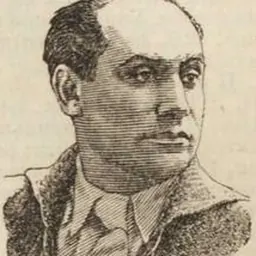


Contemporaries
People whose lives overlapped Thaddäus Troll's

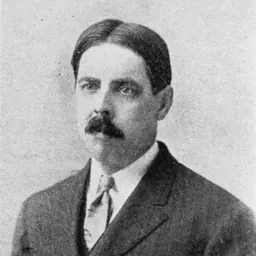

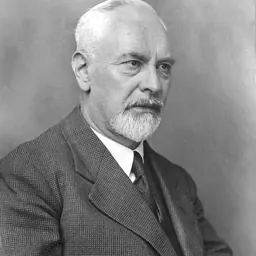
Frequently asked questions
Who was Thaddäus Troll?
German writer (1914–1980)
When was Thaddäus Troll born?
Thaddäus Troll was born on 18 March 1914 in Bad Cannstatt.
When did Thaddäus Troll die?
Thaddäus Troll died on 5 July 1980 in Stuttgart.
What was Thaddäus Troll's occupation?
Thaddäus Troll was a journalist, poet, writer and war correspondent.
What nationality was Thaddäus Troll?
Thaddäus Troll was German.
Sources & further reading
Cite this page
APA: Biography.guide. (2026). Thaddäus Troll. https://biography.guide/thaddaus-troll/
MLA: "Thaddäus Troll." Biography.guide, https://biography.guide/thaddaus-troll/.
Chicago: "Thaddäus Troll." Biography.guide. https://biography.guide/thaddaus-troll/.
Data last updated: 2026-09-20 · Spot an error? Report a correction.
Page generated 2026-09-27 04:57 UTC