
About Terje Rollem
Lived 1915 – 1993 (aged 77). Terje Rollem was a Norwegian military personnel and military officer.
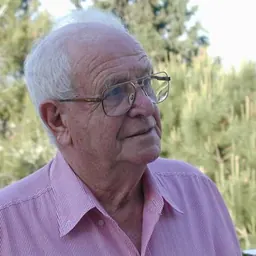
Terje Rollem (born Terje Rolld Martinsen; 16 September 1915 – 4 April 1993) was a Norwegian oberst and officer in Milorg during the German occupation of Norway. He is best known for assuming command of Akershus Fortress from the German occupiers at the end of the Second World War.
Early life Terje Rollem was born in Bærum Municipality to a clerk named Theodor Georg Martinsen and his wife Margit Dagny Berner Høglund. He grew up with his brothers Egil, Svein Thor, Bjørn and Dag. After taking exams at Holte Gymnasium in Denmark, Rollem entered Stabekk Upper Secondary School with a focus on realfag (emphasis on primarily science and mathematics). He finished the examen artium in 1934, and the next year began his military career at the Officer Candidate School for Kavaleriet (cavalry/dragoon branch of the Norwegian Army, lit. "the cavalry") located at Gardermoen army base. He attended two more schools in the years following: Wangs Vocational school in 1939 and Oslo Technical school in 1941.
Role in the Norwegian resistance Rollem was a second lieutenant conscript in the Norwegian Army when war broke out in Norway. Rollem began driving to the front at Trøndelag on 11 April 1940, two days after the invasion began. However, a German paratrooper landing at Dombås prevented him from reaching the front, so he travelled to Hamar to join up with the 2nd Dragoon Regiment (DR 2). With DR 2 Rollem fought in several battles to prevent the German advance, including in Gudbrandsdalen, and was at Åndalsnes when the Norwegians surrendered in Southern Norway. Among other activities, Rollem trained volunteers at Katnosa farm, a resistance base on the banks of Katnosa that was 50 soldiers strong. "Luckily Didrichson was more sensible than me," said Rollem in a January 1981 interview with Vi Menn. "He realized the importance of photographic documentation. That the transfer was a historic moment did not cross my mind. I was just concerned with my assignment. Today I am very glad the photographer was present." had been a renowned pianist before his involvement in the war, playing in venues all across Europe, such as in Paris, Madrid, and Royal Albert Hall in London. While imprisoned in Skien he kept in contact with Albert Schweitzer, a personal friend who he had toured with on piano with Schweitzer playing organ. The Norwegian guards were quite fond of Nichterlein and many asked him to sign the famous liberation photograph. Nichterlein agreed, but said of the photo, "I hope nobody thinks that I brought my hand up for a Hitler salute in the picture—because that man I have loathed all my life." , but died only a month later and never saw his wife and children again.
Postwar years Rollem continued his military career after the war ended, spending a year at the Norwegian Military Academy in 1946 and the next year becoming a rittmester in Kavaleriet and an office manager for Forsvarsstaben at Akershus Fortress, where he gathered intelligence for the military. At the same time, he also worked as a manager at the Granli logging company in Kongsvinger until 1949. In 1951 he began studies at the Royal Swedish Army Staff College in Stockholm. He was promoted to lieutenant colonel in 1956 and served as a chief of staff for Kavaleriet's ordnance personnel. In 1960 he once again attended military school, this time at the Military University College , and in 1962 he was promoted to oberst and commander for NATO's Allied Forces Northern Europe in Kolsås. From 1971 until his retirement in 1980 Rollem was head of the Directorate of Public Roads' military branch.
Terje Rollem was married to Ellen Marie (“Nusse”) Hansen (18.10.1919–5.11.1995) on 9 June 1944, the same year he adopted Rollem as his surname and dropped his middle name. They were divorced in 1978, after which Rollem lived with his partner Liv Sjetne. After his retirement in 1980, Rollem lived in Lillehammer and maintained his keen interest in the military. He died on 4 April 1993, outlived by his partner Sjetne, and was buried in Lillehammer. In 1995, on the 50th anniversary of Norway's liberation, a postage stamp was issued in Rollem's honor. Rollem was a recipient of the Defence Medal 1940–1945 with a rosette to indicate his further role in the Norwegian resistance after the initial fight against Germany.
Don’t just read it —
keep it.
Full-length biographies made to live with: read them, listen on the way to work, watch them tonight.
- E-book
- Audio
- Video
Instant download · yours to keep · every purchase keeps this site free
Important facts
People in Terje Rollem's life
Named in this biography and alive at the same time
Related people
Same field, nearest in time



Contemporaries
People whose lives overlapped Terje Rollem's




Frequently asked questions
Who was Terje Rollem?
Norwegian resistance officer (1915–1993)
When was Terje Rollem born?
Terje Rollem was born on 16 September 1915 in Bærum Municipality.
When did Terje Rollem die?
Terje Rollem died on 4 April 1993 in Lillehammer.
What was Terje Rollem's occupation?
Terje Rollem was a military personnel and military officer.
What nationality was Terje Rollem?
Terje Rollem was Norwegian.
Sources & further reading
Cite this page
APA: Biography.guide. (2026). Terje Rollem. https://biography.guide/terje-rollem/
MLA: "Terje Rollem." Biography.guide, https://biography.guide/terje-rollem/.
Chicago: "Terje Rollem." Biography.guide. https://biography.guide/terje-rollem/.
Data last updated: 2026-09-20 · Spot an error? Report a correction.
Page generated 2026-09-27 05:24 UTC