
Terence Davies
British film director and screenwriter
About Terence Davies
Lived 1945 – 2023 (aged 77). Terence Davies was a British film director, screenwriter, director, film screenwriter and writer.
Terence Davies (10 November 1945 – 7 October 2023) was an English filmmaker. He is best known as the writer and director of autobiographical films, including Distant Voices, Still Lives, The Long Day Closes (1992) and the collage film Of Time and the City (2008), as well as the literary adaptations The Neon Bible (1995), The House of Mirth (2000), The Deep Blue Sea (2011) and Sunset Song (2015). His final two feature films were centered on the lives of influential literary figures, Emily Dickinson in A Quiet Passion (2016) and Siegfried Sassoon in Benediction (2021). Davies was considered by numerous critics as one of the great British directors of his period.
Life and career Early years and education Terence Davies was born in Kensington, Liverpool, on 10 November 1945, as the youngest of ten children of working-class Catholic parents. Though he was raised Catholic by his deeply religious mother, at the age of 22 he rejected religion and considered himself an atheist. Davies's father, whom Davies remembered as "psychotic", died of cancer when Davies was seven years old. He recalled the period from then until he entered secondary school, at the age of 11, as the four happiest years of his life.
Early short films While at Coventry, Davies wrote the screenplay for what became his first autobiographical short, Children (1976), filmed under the auspices of the BFI Production Board. In 2002, critics polled for Sight and Sound ranked Distant Voices, Still Lives as the ninth-best film of the previous 25 years. Jean-Luc Godard, often dismissive of British cinema in general, singled out Distant Voices, Still Lives as an exception, calling it "magnificent". The Long Day Closes was also praised by J. Hoberman as "Davies' most autobiographical and fully achieved work".
Davies's next two features, The Neon Bible and The House of Mirth, were adaptations of novels by John Kennedy Toole and Edith Wharton respectively. The House of Mirth received favourable reviews, with Film Comment naming it one of the ten best films of 2000. Gillian Anderson won Best Performance in the Second Annual Village Voice Film Critics' Poll and the film was named the third best film of 2000 in the same poll.
Radio projects and Of Time and the City After completing The House of Mirth, Davies intended to make an adaptation of Sunset Song, a novel by Lewis Grassic Gibbon published in 1932, as his fifth feature, but financing proved difficult. Scottish and international backers left the project after the BBC, Channel 4 and the UK Film Council each rejected proposals for final funds. Davies apparently considered Kirsten Dunst for the lead role before the project was postponed. Afterwards, he wrote an original contemporary-set romantic comedy screenplay, Mad About The Boy, and an adaptation of Ed McBain's crime novel He Who Hesitates, neither of which were produced.
In the interim, Davies produced two works for radio, A Walk to the Paradise Garden, an original radio play broadcast on BBC Radio 3 in 2001, and a two-part adaptation of Virginia Woolf's novel The Waves, broadcast on BBC Radio 4 in 2007.
In 2010, after completing Of Time and the City, Davies produced a third radio project, Intensive Care, a personal recollection of his youth and his relationship with his mother.
Later films Davies's The Deep Blue Sea, based on the play by Terence Rattigan, was commissioned by the Rattigan Trust. The film was met with widespread acclaim, and Rachel Weisz won the New York Film Critics Circle Award for Best Actress and topped the Village Voice Film Critics' Poll for best lead female performance.
Davies finally found financing for Sunset Song in 2012, and it went into production in 2014. In October 2014 the film went into post-production. It was released in 2015.
Davies's next film was A Quiet Passion, based on the life of the American poet Emily Dickinson.
His last film, Benediction (2021), tells the story of the British war poet and memoirist Siegfried Sassoon. After his death, the script was revealed to be based on Janette Jenkins's novel Firefly, which focuses on the last five days in the life of playwright and composer Noël Coward.
Personal life and death Davies lived in an 18th-century cottage in Mistley from the early 1990s until his death in 2023. Davies was openly gay and often explored gay themes in his work, though he said his most serious relationship was with a woman in the late 1970s, and that he later went "on to the gay scene for a couple of months" before deciding he was also uninterested in relationships with men.
Discussing the impact his childhood had on him, Davies described his father as a "psychotic" man who made him feel "terrified all the time", and that the years following his father's death were the happiest of his childhood. Feature films Year Title 1988 Distant Voices, Still Lives 1992 The Long Day Closes 1995 The Neon Bible 2000 The House of Mirth 2011 The Deep Blue Sea 2015 Sunset Song 2016 A Quiet Passion 2021 Benediction
Documentary Year Title 2008 Of Time and the City
Short films Year Title Notes 1976 Children Also released in 1983 as part of the anthology film The Terence Davies Trilogy 1980 Madonna and Child 1983 Death and Transfiguration 2021 But Why? Ephemeral film produced for the Vienna International Film Festival 2023 Passing Time novel 1992 A Modest Pageant 2017Dublin Film Critics' CircleBest Screenplay
Don’t just read it —
keep it.
Full-length biographies made to live with: read them, listen on the way to work, watch them tonight.
- E-book
- Audio
- Video
Instant download · yours to keep · every purchase keeps this site free
Important facts
People in Terence Davies's life
Named in this biography and alive at the same time

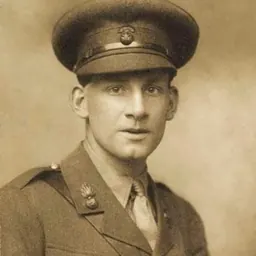





Related people
Same field, nearest in time

Contemporaries
People whose lives overlapped Terence Davies's


Frequently asked questions
Who was Terence Davies?
British film director and screenwriter (1945–2023)
When was Terence Davies born?
Terence Davies was born on 10 November 1945 in Liverpool.
When did Terence Davies die?
Terence Davies died on 7 October 2023 in Mistley.
What was Terence Davies's occupation?
Terence Davies was a film director, screenwriter, director, film screenwriter and writer.
What nationality was Terence Davies?
Terence Davies was British.
Sources & further reading
Cite this page
APA: Biography.guide. (2026). Terence Davies. https://biography.guide/terence-davies/
MLA: "Terence Davies." Biography.guide, https://biography.guide/terence-davies/.
Chicago: "Terence Davies." Biography.guide. https://biography.guide/terence-davies/.
Data last updated: 2026-09-22 · Spot an error? Report a correction.
Page generated 2026-09-27 05:17 UTC