
Ted Taylor
American theoretical nuclear physicist
About Ted Taylor
Lived 1925 – 2004 (aged 79). Ted Taylor was an American physicist, nuclear physicist and university teacher.
Theodore Brewster Taylor (July 11, 1925 – October 28, 2004) was an American theoretical physicist, specifically concerning nuclear energy. His higher education included a PhD from Cornell University in theoretical physics. His most noteworthy contributions to the field of nuclear weaponry were his small bomb developments at the Los Alamos Laboratory in New Mexico. Although not widely known to the general public, Taylor is credited with numerous landmarks in fission nuclear weaponry development, including having designed and developed the smallest, most powerful, and most efficient fission weapons ever tested by the U.S. program. The later part of Taylor's career was focused on nuclear energy instead of weaponry, and included his work on Project Orion, nuclear reactor developments, and anti-nuclear proliferation. and his father, Walter Clyde Taylor, was the director of a YMCA in Mexico City. While at Los Alamos, Taylor's strictly anti-nuclear development beliefs changed. Then, in 1966 he created a consulting firm called the International Research and Technology Corporation, located in Vienna, Austria, which sought to prevent the development of more nuclear weapons programs. Arnim was majoring in Greek at Scripps College, a liberal arts university in Claremont, California, and Taylor would visit her whenever he could.
Legacy Taylor was involved in many important projects and made numerous contributions to nuclear development for the United States. During his time at Los Alamos, he was responsible for designing the smallest fission bomb of the era, the 'Davy Crockett', which weighed only , measured approximately across, and could produce between 10 and 20 tons of TNT equivalent. The Davy Crockett itself was the M388 Atomic Round fired from the weapons system, featuring a recoilless rifle either erected and fixed on as freestanding tripod or mounted on the frame of a light utility vehicle, such as the Jeep, the former functioned similarly to other modern rocket propelled rounds (see RPG-7). According to reviews, the book predicted a future where nuclear energy was the primary energy source in the United States, and therefore needed enhanced protective measures to protect the public. In the book, Taylor and Willrich provide multiple recommendations on ways to prevent nuclear material from ending up in the wrong hands, as they anticipated that there would be multiple more sources of nuclear byproducts and therefore more opportunity for nuclear theft. This book was also a culmination of his focus on nuclear security and the ramifications of the use of nuclear weaponry. The book explains the two most dangerous mechanisms by which nuclear proliferation could be devastating for the world, as well as how to disincentivize nuclear proliferation within destabilizing political systems. The patent concerning the production of isotopes from thermonuclear explosions was groundbreaking because of its efficiency and cost effectiveness. the only known extant source on Taylor's concept of the "Santa Claus machine" is found in Nigel Calder's Spaceships of the Mind. The concept would use a large mass spectrometer to separate an ion beam into atomic elements for later use in making products.
Taylor was a member of the Pugwash Conferences on Science and World Affairs and attended several of its meetings during the 1980s. After his retirement, he lived in Wellsville, New York.
Freeman Dyson on Taylor Freeman Dyson said of Taylor, "Very few people have Ted's imagination. ... I think he is perhaps the greatest man that I ever knew well. And he is completely unknown."
Media appearances The Voyage of the Mimi: Water, Water, Everywhere (PBS, 1984) History Undercover: Code Name Project Orion (1999) To Mars by A-Bomb: The Secret History of Project Orion (BBC, 2003)
Don’t just read it —
keep it.
Full-length biographies made to live with: read them, listen on the way to work, watch them tonight.
- E-book
- Audio
- Video
Instant download · yours to keep · every purchase keeps this site free
Important facts
People in Ted Taylor's life
Named in this biography and alive at the same time
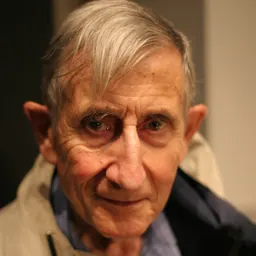


Related people
Same field, nearest in time

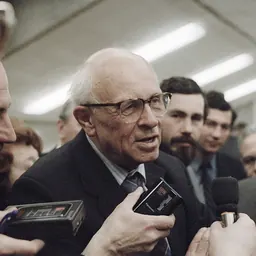
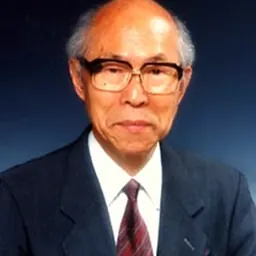
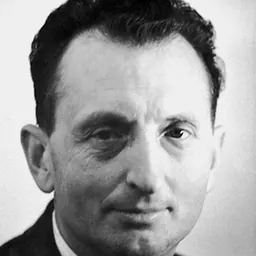
Contemporaries
People whose lives overlapped Ted Taylor's




Frequently asked questions
Who was Ted Taylor?
American theoretical nuclear physicist (1925–2004)
When was Ted Taylor born?
Ted Taylor was born on 11 July 1925 in Mexico City.
When did Ted Taylor die?
Ted Taylor died on 28 October 2004 in Silver Spring.
What was Ted Taylor's occupation?
Ted Taylor was a physicist, nuclear physicist and university teacher.
What nationality was Ted Taylor?
Ted Taylor was American.
Sources & further reading
· DBpedia: Ted Taylor (physicist)
Cite this page
APA: Biography.guide. (2026). Ted Taylor. https://biography.guide/ted-taylor-physicist/
MLA: "Ted Taylor." Biography.guide, https://biography.guide/ted-taylor-physicist/.
Chicago: "Ted Taylor." Biography.guide. https://biography.guide/ted-taylor-physicist/.
Data last updated: 2026-09-20 · Spot an error? Report a correction.
Page generated 2026-09-27 05:26 UTC