
About Ted Sampley
Lived 1946 – 2009 (aged 62). Ted Sampley was a military personnel and pottery.
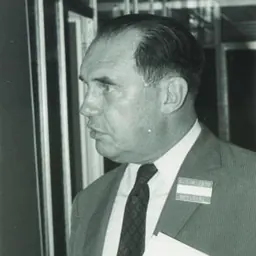
Theodore Lane Sampley (July 17, 1946 – May 12, 2009 ) was an American Vietnam War veteran and activist. He primarily advocated for those servicemen still considered missing in action or prisoners of war (POW-MIA) as of the end of hostilities in 1975. A staunch political conservative, he also ran for local political office several times. He is credited with the research that identified Air Force Lt. Michael Blassie as the Vietnam fatality buried at the Tomb of the Unknown Soldier, and for his role in organizing the annual Rolling Thunder motorcycle event in Washington. In Kinston, North Carolina, where he lived for much of his adult life, he was known for his local civic activism, most notably his effort to build a replica of the Confederate ironclad CSS Neuse, the only full-size replica of a Confederate ironclad, in the city's downtown.
A native of Wilmington, North Carolina, he enlisted in the Army in 1963. Two years later, he was deployed to Vietnam with the 173rd Airborne Brigade, where he did a year's tour of duty as a combat infantryman. Afterwards he became a Green Beret and served another tour leading and training a Civilian Irregular Defense Group along the Cambodian border, earning four Bronze Stars, an Army Commendation Medal and the Vietnamese Cross of Gallantry. After returning to Fort Bragg to train other Special Forces soldiers for duty in Vietnam, he left the Army in 1973 with the rank of staff sergeant.
Following his honorable discharge, Sampley worked in journalism and then settled in Kinston, North Carolina, where he opened a craft store selling ceramics, an art he had learned from local artisans in his off-duty time while stationed on Okinawa at the beginning of his military career. In the early 1980s he began his activism, after learning that not all the POWs and MIAs in Vietnam at the end of the war had been accounted for, joining groups demanding that the U.S. put pressure on the Vietnamese government. He started and published U.S. Veterans Dispatch, a newspaper primarily devoted to the issue.
Sampley soon became known as an outspoken activist for his cause, using confrontational tactics similar to those used by antiwar protestors. He was particularly hostile to Senators John Kerry and John McCain, both of whom had served in Vietnam and were members of the 1993 Senate select committee which found that no POWs or MIAs remained alive in Southeast Asia. McCain himself, whom Sampley frequently accused of having been brainwashed by the Vietnamese during his years as a POW in the Hanoi Hilton, said Sampley was "one of the most despicable people I have ever had the misfortune to encounter"; Sampley was convicted of assault after a fight with McCain's chief of staff. He was criticized further for using the POW-MIA cause for his aggrandizement and personal enrichment; sculptor Frederick Hart successfully sued Sampley for unpaid royalties over his unauthorized use of Hart's The Three Soldiers on T-shirts he sold near the Vietnam Veterans Memorial on the National Mall.
1946–1973: Early life and military career Theodore Lane Sampley was born on July 17, 1946, in Wilmington, North Carolina. there, he enlisted in the Army in 1963, aged 17. Following basic training, Sampley went through advanced infantry training and then Airborne School. The next year he was assigned to the 173rd Airborne Brigade, then stationed on the Japanese island of Okinawa. While there, when off-duty, he visited local potters and began to study ceramics. He was then promoted to sergeant and spent a second tour commanding a B-36 MIKE Force unit of indigenous minority population along the Cambodian border, part of the Civilian Irregular Defense Group program. In that capacity he earned four Bronze Stars, the Army Commendation Medal and the Vietnamese Cross of Gallantry.
Returning to the U.S., Sampley became a Green Beret assigned to first the 3d, then the 6th Special Forces Group. He trained in, and trained others, in military subjects from guerilla warfare to High Altitude Low Opening parachute jumping. He also learned to speak Arabic and Japanese fluently.
Sampley's political efforts were not without controversy. During his 1976 campaign, the county's sheriff sued him for slander. Three years later, he tried to have the sheriff arrested. The county's Republican chairman would later refer to him as "a millstone around our necks".
In 1982, during a relative's court case, Sampley got into an altercation in the courthouse. He was arrested, and ultimately convicted of assaulting a law enforcement officer. But according to Lin's biographer Donald Langmead, both her parents' families had converted to Christianity several generations before they emigrated to the U.S.; they were in fact practicing Methodists, both of whom were educated entirely within that faith, without any exposure to Chinese traditions. At the ceremonies he heard many other veterans express doubt that all the POWs and other servicemembers officially considered missing in action from Vietnam-era combat operations in Southeast Asia had been accounted for as the government had claimed since 1975, particularly those they had known personally. Sampley concluded from those discussions that the government knew more than it was publicly disclosing, and decided to get the answers. Many of his protests had elements of civil disobedience—he often had the daughters of MIA servicemen chain themselves to the gates of the White House or other government buildings, and sometimes threw fake blood on security officers, especially the uniformed Secret Service officers at the White House.
Other protests Sampley organized were more confrontational. He had protestors in bamboo cages, similar to those in which some POWs were exhibited publicly during their time in Vietnam, placed on the front lawn of Donald Regan, then chief of staff to President Ronald Reagan. He also led another group to the house of Defense Secretary Frank Carlucci during a heavy snowstorm, where they blocked his driveway with 1,800 care packages intended for POWs they believed were still alive and being held in Laos.
Even allies in the POW/MIA effort found themselves targeted by Sampley's protests for what he considered to be a willingness to compromise. He organized a "bounty hunt" in which participants were encouraged to target NLF head Ann Mills Griffiths and other organization officials with water balloons, cream pies and rotten tomatoes if they saw them.
The following year the group established a booth on the Mall near the Lincoln Memorial where they initially kept a vigil to raise awareness of the POW/MIA issue and sold merchandise to support it. They also supported demonstrations in the area by veterans, including one who locked himself in a bamboo cage and began a hunger strike. It was named The Last Firebase, after the fire support bases established by U.S. artillery units in Vietnam to support infantry operations against the Vietcong.
The organization established to support the annual runs has also lobbied for passage of laws supportive of the POW/MIA issue. In 1993 Congress passed the Missing Service Personnel Act, which requires that the Defense Department have substantial evidence that a missing servicemember was killed in action before listing them as such. Two years later the Postal Service issued a stamp with the POW/MIA flag on it, following Rolling Thunder's lobbying.
Sampley contacted Blassie's family after publishing his article. Their inquiries found that the South Vietnamese Army patrol which found the bones had also found his ID card and a wallet with a picture of his family and relayed that information to U.S. forces in the area. However the Army lab charged with identifying remains found it unlikely that the remains were Blassie's based on identification techniques later found to be questionable; the ID and wallet had been lost or stolen during their transfer there. In 1980 they were classified as unknown; the remains were later buried as the Vietnam Unknown Soldier, despite not meeting selection criteria calling for 80% of the body, in the wake of political pressure from the president and Congress.
In 1997 Vince Gonzales, a junior CBS News correspondent, read Sampley's article and began replicating the research with requests for documents under the Freedom of Information Act. He came to the same conclusion as Sampley, and the following year CBS reported that the remains were likely those of Blassie.
In 1992 one of Sampley's protests resulted in the NLF publicly distancing itself from his actions. He had organized a group to disrupt a speech by President George H. W. Bush to the organization's annual assembly. NLF officials were able to prevent Sampley himself from attending the event, and Secret Service officers arrested him for trespassing before Bush appeared. But his group began heckling the president with chants of "No more lies!". After they refused Bush's requests to let him finish, he finally yelled "Would you please shut up and sit down!" at them; the incident made national news. The NLF's leadership was fearful that this would damage their relationship with the administration, and Griffiths not only personally apologized to Bush in a letter but took out newspaper ads with the same message. which allow merchandise sales. In 1991 Scruggs and sculptor Frederick Hart, whose The Three Soldiers was added to the memorial shortly after its completion to make those it memorializes less abstract, discovered TLF was selling T-shirts with the sculpture on it, without having licensed the image from the sculptor and the VVMF, who jointly owned the copyright, and filed suit against Sampley and TLF for infringement.
Sampley noted that money that had been raised from the public to pay for those repairs was instead being spent on high-priced Washington lawyers in the lawsuit. He argued in court that since the statue had been placed on public land and was maintained at public expense, it was a "national symbol" that could not be copyrighted. Nevertheless, he offered to settle the case by having Homecoming II pay for the panel repairs.
Sampley did comply with the aspect of the court's ruling enjoining him from further sales of T-shirts with the statue on them. In 1995, as a result of the court's ruling, the NPS banned all organizations with permits to operate booths on the Mall from selling T-shirts, save the company that operates the guest services kiosks; Sampley later attributed the whole affair to his own stubbornness. "It was the biggest mistake of my life", he told the City Paper in 2001.
The committee did indeed reach a conclusion that if there were any remaining living POWs, there were not many and all the other cases that could be accounted for had been, prompting criticism from one of its members, Bob Smith of New Hampshire, who had introduced the resolution that created the committee. Kerry and John McCain, ranking Republican on the committee and himself a former POW, both rejected claims that the committee had covered up evidence contradictory to that conclusion, or allowed federal officials to lie under oath to the committee. Early in the process, Sampley had called for Kerry to resign after what he alleged was witness tampering by committee staff who reported to him; in response, he claimed, the committee began investigating him and his business activities related to POW/MIA activism; when Keating published her book the next years, with an entire chapter devoted to him, Sampley accused her of doing so at the behest of the Defense Intelligence Agency, which he believed had been trying to discredit him and other activists who believed there were still living POWs.
Four years later, Kerry, a Navy veteran of the war who had called Sampley a "stupid ass" in response to his attacks on McCain, won the Democratic nomination for president. Sampley helped organize Vietnam Veterans Against John Kerry and disseminated material disparaging the Massachusetts senator's antiwar activism as unpatriotic and a betrayal of his fellow veterans. McCain came to Kerry's defense, saying that Sampley was "the most despicable person I have ever had the misfortune to encounter." Sampley called the remark "unbecoming" a senator He was joined by other veterans who had supported the effort before and former Republican congressmen Bill Hendon and John LeBoutillier, who had strongly supported the cause of POW/MIA activists during brief House terms in the early 1980s. "He took away the only leverage we had for getting those soldiers back", Sampley told the New York Daily News, referring to McCain's role in normalizing relations with Vietnam in the 1990s. "Why? He was paying back the Vietnamese for keeping quiet about him."
In his 2002 memoir Worth the Fighting For, McCain's opinion of Sampley was mutual:
McCain wrote that he later decided to take Sampley's accusations in stride, referring to himself as the "Manchurian Candidate" in speeches "probably more often than Sampley has repeated the accusation." It was repeated and disseminated among McCain's critics after Sampley's death, especially during the administration of Donald Trump, whom McCain had criticized frequently until his own death in 2018.
CSS Neuse replica and local activism
Sampley was also involved in efforts to revitalize downtown Kinston, where he owned several other businesses besides his pottery shop. In 1991 the Lenoir County Chamber of Commerce recognized his efforts. The following year the Raleigh News & Observer honored Sampley as a "Tar Heel of the Week".
Listeners were doubtful, but two weeks later, at their next gathering, Sampley was accompanied by Alton Stapleford, a retired master boat builder. He explained how it could be done, and in 2002 the Neuse II Foundation was established and construction began. Local volunteers spent the next several months putting timbers into place; the replica is the only full-size replica of a Confederate ironclad. It opened to tourists in 2009.
In 2004 Sampley and a fellow activist pressured both the Lenoir County commissioners and the Kinston city council to pass a resolution stating that God was the foundation of American government and that the Founding Fathers had never intended for the modern degree of separation of church and state. It was modeled on a resolution that had recently been passed in Greene County, Tennessee. While it passed the city council unanimously, many members said they felt they had been "coerced" into doing so by Sampley's tactics. "I feel like I have a very strong belief in God.", said one. "But I don't like getting stuff like this crammed down my throat."
Personal life and death Sampley was married twice. He had two children by his first wife, Kiku Uehara, who was from Okinawa; the couple later divorced. Both Kiku and her daughter with Sampley predeceased him.
Later he married Robin Owen, daughter of Army officer Robert Owen, who went missing in Laos in 1968. They had a son together before divorcing in the 1990s. Sampley continued to wear the POW/MIA bracelet with his former father-in-law's name on it afterwards.
Sampley died on May 12, 2009, at the Veterans Affairs Medical Center in Durham, North Carolina, of complications from heart surgery. He was interred at Dyson Cemetery in Ivanhoe, with full military honors.
Don’t just read it —
keep it.
Full-length biographies made to live with: read them, listen on the way to work, watch them tonight.
- E-book
- Audio
- Video
Instant download · yours to keep · every purchase keeps this site free
Important facts
People in Ted Sampley's life
Named in this biography and alive at the same time




Related people
Same field, nearest in time


Contemporaries
People whose lives overlapped Ted Sampley's


Frequently asked questions
Who was Ted Sampley?
American Vietnam War veteran and activist
When was Ted Sampley born?
Ted Sampley was born on 17 July 1946 in Wilmington.
When did Ted Sampley die?
Ted Sampley died on 12 May 2009 in Durham.
What was Ted Sampley's occupation?
Ted Sampley was a military personnel and pottery.
Sources & further reading
Cite this page
APA: Biography.guide. (2026). Ted Sampley. https://biography.guide/ted-sampley/
MLA: "Ted Sampley." Biography.guide, https://biography.guide/ted-sampley/.
Chicago: "Ted Sampley." Biography.guide. https://biography.guide/ted-sampley/.
Data last updated: 2026-09-20 · Spot an error? Report a correction.
Page generated 2026-09-27 04:58 UTC