
Rolling Thunder
American author and religious leader
About Rolling Thunder
Lived 1916 – 1997 (aged 80). Rolling Thunder was an American shaman, known for New Age.
Early life and family Rolling Thunder was born John Pope on September 10, 1916, in Stamps, Arkansas, and was raised in Oklahoma. His daughter Mala Spotted Eagle Pope wrote that John's father was from the Cherokee Nation and that her mother, Helen "Spotted Fawn" Pope, was Western Shoshone. Spotted Fawn became an important figure in Rolling Thunder's spiritual and community work and was regarded as the "heart" of the Meta Tantay community.
Rolling Thunder and Spotted Fawn married and established their family in Nevada. Through his marriage to Spotted Fawn and his life among Western Shoshone people, Rolling Thunder studied Shoshone traditions and communities in the region. Spotted Fawn was described by Ervin Laszlo as a Western Shoshone woman who became the clan mother and principal organizer of Meta Tantay.
Journalist Dina Gilio-Whitaker (Colville descent) wrote: "According to Steven Crum, [a Western Shoshone professor at the University of California, Davis,] Pope claimed to be a legal advisor to Western Shoshone traditionalists, although there is no record of his having a law or even a college degree." She continues, "He claimed to be Cherokee but had no ties to any of the three federally recognized Cherokee tribes."
Meta Tantay In the 1970s, Rolling Thunder and Spotted Fawn established Meta Tantay, a commune near Carlin, Nevada. The community occupied approximately and operated for roughly a decade, from the mid-1970s until about 1985. Its purpose was to provide a place where Native and non-Native people could learn about Rolling Thunder's and Spotted Fawn's perspectives on Native American traditions, environmental stewardship, and ways of living in greater harmony with the natural world.
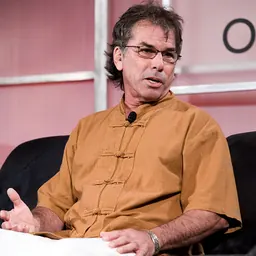
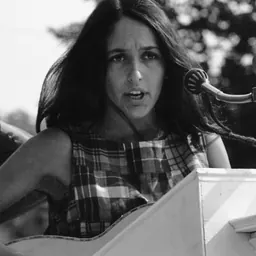
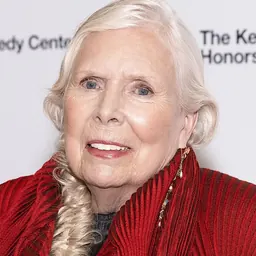
The land for Meta Tantay was purchased with financial assistance from Mickey Hart and other members and supporters of the Grateful Dead. According to psychologist Stanley Krippner, who visited Meta Tantay on several occasions, the community occupied 262 acres and attracted visitors including Joan Baez, Joni Mitchell, Buckminster Fuller, Candice Bergen, and Muhammad Ali. Other accounts describe visits by Tibetan monks, peace activists, musicians, and people from Europe and North America.
Meta Tantay was intended to be both a functioning community and a place of education. Residents worked to make the land productive through agriculture and animal husbandry. A contemporary 1981 interview with Rolling Thunder published in Mother Earth News described an orchard, crops, livestock, honeybees, reforestation efforts, irrigation, and efforts to restore the land's ecological health. Rolling Thunder described the community's purpose as developing skills that combined traditional knowledge with modern abilities needed for sustainable living.
The community also operated a schoolhouse for children living at Meta Tantay. The educational program incorporated conventional academic instruction with lessons about Native American history, plants, animals, and the natural environment. Children were taught to understand human beings as part of the natural world and to live in greater harmony with the Earth.
Meta Tantay became a gathering place for people interested in Native American spirituality, environmentalism, alternative education, and communal living. Rolling Thunder served as its principal spiritual teacher, while Spotted Fawn played a central organizational and community role.
Teachings and activism Rolling Thunder was a frequent speaker at colleges and universities, where he discussed his views about Native American traditions, spirituality, environmental stewardship, and contemporary issues affecting Indigenous peoples. In the 1970s and 1980s, he gave talks and healing demonstrations at the University of California, Berkeley, the University of Texas at Austin, and the Association for Humanistic Psychology in San Francisco. He also spoke at the World Symposium on Humanity in Vancouver, British Columbia, and undertook a speaking tour of Europe that included Austria, Sweden, and Denmark.
A 1970s listing in the Cornell Chronicle advertised a recording of Rolling Thunder speaking at the World Symposium as a campus program at Cornell University. He also participated in international gatherings to speak about peace, Indigenous rights, and humanity's relationship with the Earth. In 1978, he was invited to speak at the World Symposium on Humanities in London; when he was unable to travel, his presentation was recorded for transmission to the international gathering.
His public work brought his interpretations of Native American perspectives on land, ecology, spirituality, and cultural survival to audiences outside Native communities, including students, activists, and international audiences. He was also involved in activism concerning Native American rights and environmental issues. His environmental activism included opposition to the destruction of pinyon pine forests on Native lands in Nevada and efforts to protect Native American land and cultural resources.
Relationship with Mickey Hart and the Grateful Dead
Rolling Thunder developed a close friendship with Mickey Hart during the early 1970s. Hart recorded Rolling Thunder's morning prayer and used the recording at the beginning of his 1972 solo album Rolling Thunder. Their friendship continued for many years, and Hart and other members of the Grateful Dead helped provide financial support for the establishment of Meta Tantay.
Death
Spotted Fawn died in 1984. Rolling Thunder subsequently experienced declining health and died on January 23, 1997, in Elko, Nevada. He suffered from diabetes and emphysema during his later years.
Reception and controversy
Rolling Thunder's identity and status as a Native American medicine man have been the subject of debate. Some writers and scholars have questioned the extent to which his teachings corresponded to specific tribal traditions and have characterized him as a "plastic shaman," a term used critically to describe non-Native or insufficiently authorized practitioners who present themselves as Native American spiritual authorities.
Doug Boyd emphasized his Cherokee ancestry, his relationship with the Western Shoshone community, his years of teaching, and the community he established at Meta Tantay.
Don’t just read it —
keep it.
Full-length biographies made to live with: read them, listen on the way to work, watch them tonight.
- E-book
- Audio
- Video
Instant download · yours to keep · every purchase keeps this site free
Important facts
People in Rolling Thunder's life
Named in this biography and alive at the same time



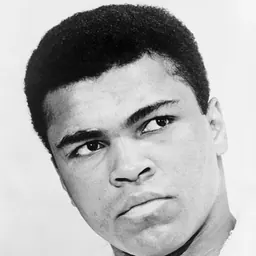
Related people
Same field, nearest in time
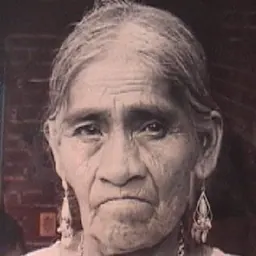




Contemporaries
People whose lives overlapped Rolling Thunder's






Frequently asked questions
Who was Rolling Thunder?
American author and religious leader (1916–1997)
When was Rolling Thunder born?
Rolling Thunder was born on 10 September 1916 in Stamps.
When did Rolling Thunder die?
Rolling Thunder died on 23 January 1997 in Elko.
What was Rolling Thunder's occupation?
Rolling Thunder was a shaman.
What was Rolling Thunder known for?
Rolling Thunder was known for New Age.
What nationality was Rolling Thunder?
Rolling Thunder was American.
Sources & further reading
· DBpedia: Rolling Thunder (person)
Cite this page
APA: Biography.guide. (2026). Rolling Thunder. https://biography.guide/rolling-thunder/
MLA: "Rolling Thunder." Biography.guide, https://biography.guide/rolling-thunder/.
Chicago: "Rolling Thunder." Biography.guide. https://biography.guide/rolling-thunder/.
Data last updated: 2026-09-20 · Spot an error? Report a correction.
Page generated 2026-09-27 05:11 UTC