
About Frederick Hart
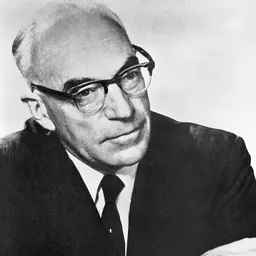
Lived 1943 – 1999 (aged 56). Frederick Hart was an American sculptor.
Frederick Elliott Hart (November 3, 1943 – August 13, 1999) was an American sculptor. The creator of hundreds of public monuments, private commissions, portraits, and other works of art, Hart is most famous for Ex Nihilo, a part of his Creation Sculptures at Washington National Cathedral, and The Three Servicemen (also known as The Three Soldiers), at the Vietnam Veterans Memorial in Washington, D.C.
Working within the figurative tradition of American Beaux-Arts sculpture, Hart's approach was that of a craftsman. With little formal schooling, he developed his skills on the job, learning ancient techniques from master carvers. Hart's style was also shaped by that of Auguste Rodin, especially in the way he conveyed movement, experimented with abstract forms, and pushed the boundaries of traditional figurative art.
According to J. Carter Brown, Director Emeritus of the National Gallery of Art, “It is breathtaking to see an artist with the technical abilities and devotion to craft of Frederick Hart combine these gifts with an ability to go to the brink with them, but somehow keep the inner, emotional, intellectual and spiritual force of the work dominant." In the words of Tom Wolfe: “Rick is—and I do not say this lightly—America’s greatest sculptor.”
Early life Frederick "Rick" Hart was born in Atlanta, Georgia, to Joanna Elliott, and Frederick William Hart, a heavy drinker who had served in the United States Navy during World War II. Hart's older brother, also named Frederick William, died as an infant. Hart's mother contracted scarlet fever and died in 1945, when Hart was two.
As he grew up, and his relationship with his father suffered, Hart became known as a troublemaker, and he was sent to live with his maternal grandmother and aunt in Horry County, South Carolina. Hart's father began working as a newspaper reporter in Atlanta, and married Myrtis Mildred Hailey in 1947. Half-sister Chesley Hart was born in 1949. In 1956, they moved to Virginia, near Washington, D.C., and Hart rejoined his family. Although his relationship with his father continued to deteriorate, Hart and his half-sister Chesley became good friends.
Hart was an avid reader, but a troubled student. After failing ninth grade, he was sent back to South Carolina to live with his Aunt Essie, and to repeat the school year. Teachers were worried he would fail out of high school. The principal was almost certain that he would. He challenged Hart to take the A.C.T. to show how little he knew. When Hart achieved a near-perfect score, the principal was stunned. In 1959, he helped sixteen-year-old Hart gain early admission to the University of South Carolina in Columbia, South Carolina.
At the same time, the Civil Rights Movement was gathering strength, and the campaign to desegregate South Carolina's school system began. In Columbia, in 1961, African-American students led 250 in a protest march against racial segregation.
Hart was expelled from the University of South Carolina, thrown in jail, and then chased out of town by the Ku Klux Klan. As he said: Art must ”give hope to the darkness.” It ”must be a part of life. It must be an enriching, ennobling and vital partner... It should be a majestic presence in everyday life." While working at Giorgio Gianetti Studio of Architectural Sculpture, he assisted sculptors Felix de Weldon, Carl Mose, Don Turano, and Heinz Warnecke. Morigi was the Cathedral's legendary master carver, an Italian immigrant who had carved the iconic frieze of the United States Supreme Court Building. "Highly respected, [Morigi] was a temperamental perfectionist who didn't tolerate incompetence and wasn't shy about sharing his opinions." Hart wanted Morigi to take him on as an apprentice. In time, it worked: Morigi became his mentor. Not only that, he became a father figure to Hart, who had long been estranged from his own parents. He was on his way to becoming a master carver himself when the Cathedral Building Committee announced a major competition.
Creation Sculptures
In 1971, the Washington National Cathedral Building Committee held a competition to determine the appearance of the west façade, the main entrance of the Cathedral. This was not just an important commission, it was a radical break with tradition. In the past, the west façade of a Christian cathedral typically featured a depiction of the Last Judgment; however, the Cathedral Building Committee wanted Washington National Cathedral to be the exception. Instead of the traditional image of judgment and destruction, they wanted to emphasize a message of love and affirmation, and so they specifically asked artists to focus on the theme of Creation. His original tympanum design (from early 1974) was a wide, bare space, from which a woman's face emerges. The Cathedral Building Committee rejected this submission, as well as those of all the other artists. Only three sculptors were invited to submit new proposals. Hart was not one of them.
In developing Ex Nihilo—the central sculpture, by far the largest of the group—Hart studied the combination of figurative and abstract forms in Rodin’s massive sculpture, The Gates of Hell. The final, full-size version of Ex Nihilo spans 21 feet, and stands two stories high. "The spiraling forms that recur throughout Hart's Ex Nihilo suggest the spirals that are found in nature—in sunflower heads, nautiluses, hurricanes, and galaxies." Hart intended the title as a double reference to Aristotle ("out of nothing nothing can be made") and the Bible ("everything is made out of nothing").
For the central trumeau, Hart sculpted an image of Adam, and for the tympana on either side, day and night. As a complete sculptural ensemble, the Creation Sculptures constitute "the most monumental commission for religious sculpture in the United States in the twentieth century." Just as in the competition for the Cathedral Building Committee, Hart's initial plan was not accepted. His team placed third. Hart conceived a sculpture of three soldiers "not at the apex [of the wall], as originally planned[,] but 400 feet away from the wall as if looking for their own names."
Hart had become a master carver in 1974, and instead of continuing to work exclusively as a carver, he hoped to build on the success he had already won with more commissions sculpting national monuments.
James Earl Carter Presidential Statue
In the 1981 competition to design the Carter Presidential Library, Hart was a principal of the winning team with Jova, Daniels, and Busby Architects (Atlanta, Georgia), and EDAW Landscape Design Firm (Alexandria, Virginia).
Carter said he liked the portrayal: "It was that image that put me in the White House and the governor's office, and I hope I can remain . . . (like that) in the future," he said.
Works in acrylic In 1972, Hart opened his own sculpture studio, to create original artwork, and execute commissioned pieces.
As seen in Elegy (1990), Hart developed an original process for embedding one acrylic sculpture in another.
In honor of the Pope's fifty years of priesthood, Hart presented an acrylic work titled The Cross of the Millennium to Pope John Paul II in a ceremony at the Vatican in 1997. When it was unveiled, Pope John Paul II called the sculpture “a profound theological statement for our day.” Today, much of what he sculpted in acrylic remains in private collections. Among these pieces, Hart's later works tend to be "distinguished by an allusive rather than representational nature." He donated sculpture to benefit the Design Industries Foundation Fighting AIDS and Operation Smile. In 1995 he created and donated a memorial portrait of African-American educator Ruby Middleton Forsythe, to honor the local hero who devoted her life to teaching in a one-room schoolhouse in a small town in South Carolina, where Hart had grown up.
While researching the Creation Sculptures, Hart studied the Book of Genesis, and became a Roman Catholic.
However, Hart was cautious because in the 1990s plaintiffs in suits against major corporations were sometimes ridiculed in the media as part of public relations campaigns funded by the corporations themselves. "During sessions at US Federal Court over the case that winter, the strain on Hart was wincingly visible." As stress and mounting legal fees took a toll on Hart's health, in 1998, he suffered a stroke.
A federal judge ruled that unless a settlement could be reached the film's video release would be delayed until the case went to trial; the motion picture company then agreed to edit the scene for future releases, and to attach stickers to unedited videotapes to indicate they intended no relation between the sculpture in the film and Hart's work.
After his stroke, “Hart had pursued a rigorous regimen of physical therapy to regain the use of his left arm. He worked as arduously on his rehabilitation as he had on any work he ever created. Expecting to recover fully, he continued to sculpt almost every day... He was unaware that cancer was invading his body. Three weeks before he died, he became debilitated by pneumonia. It wasn't until a couple of days before the end that the rapidly spreading cancer was discovered.” (1986) appointed to the Board of Trustees, Brookgreen Gardens Sculpture Collection. (1987) received the Henry Hering Award from the National Sculpture Society for sculpture in an architectural setting, shared with architect Philip Frohman (for Washington National Cathedral work). While working with new materials made possible by modern technology, Hart championed craftsmanship and naturalism, and explored new themes. He is admired for his "animated compositions" and "attention to detail."
Throughout his career, Hart collaborated with sculptor Jay Hall Carpenter. Once Hart's assistant, now an award-winning artist in his own right, Carpenter has produced sculpture for the State Department, the Smithsonian Institution, and Canterbury Cathedral. His recent work includes a portrait of Jim Henson. From 1996 to 1999, Hart’s assistant was the Russian-born sculptor Mikael F. Sogoian.
In his later years, Hart became the center of a group of like-minded artists, poets, and philosophers striving to move beyond the Modernist and Post-Modernist categories which dominated the 20th century.
Also in 2005, Songs of Grace was acquired by the State Hermitage Museum in St. Petersburg, Russia. In 2008, the University of Louisville and the Louisville Ballet, Louisville, Kentucky, premiered the ballet, Between Stillness, inspired by the sculpture, Ex Nihilo. In September of the same year, Ex Nihilo, Fragment No.8 was installed at the Lightner Museum in Saint Augustine, Florida.
In May 2019 The Frederick Hart Studio Museum opened in Nashville, Tennessee.
Notable works Creation Sculptures (including Ex Nihilo) – West façade of Washington National Cathedral. Commissioned in 1974, and dedicated between 1978 and 1984. James E. Webb – Bronze bust of National Aeronautics and Space Administration Administrator James E. Webb for the National Air and Space Museum of the Smithsonian Institution, 1982. The Three Soldiers – Vietnam Veterans Memorial in Washington, D.C. Dedicated in 1984. Fauquier County Veterans' Memorial – 40' bronze collaboration with sculptor Jay Hall Carpenter, in Warrenton, Virginia, 1991. James Earl Carter Presidential Statue – Georgia State Capitol in Atlanta, Georgia. Dedicated in 1994. Senator Richard B. Russell sculpture – Rotunda of the Russell Senate Office Building in Washington, D.C. Dedicated in 1996. The Cross of the Millennium – Acrylic sculpture presented to Pope John Paul II in 1997 in honor of 50 years of priesthood. Songs of Grace – Acrylic sculpture acquired in 2005 for the permanent collection of the State Hermitage Museum in St. Petersburg, Russia. Three Soldiers, Detail – Bronze sculpture installed in 2008 and dedicated by Jan C. Scruggs, Founder, Vietnam Veterans Memorial Fund, at the Veterans Memorial Plaza, Apalachicola, Florida.
Gallery
Don’t just read it —
keep it.
Full-length biographies made to live with: read them, listen on the way to work, watch them tonight.
- E-book
- Audio
- Video
Instant download · yours to keep · every purchase keeps this site free
Important facts
People in Frederick Hart's life
Named in this biography and alive at the same time





Related people
Same field, nearest in time


Contemporaries
People whose lives overlapped Frederick Hart's

Frequently asked questions
Who was Frederick Hart?
American artist (1943-1999)
When was Frederick Hart born?
Frederick Hart was born on 7 June 1943 in Atlanta.
When did Frederick Hart die?
Frederick Hart died on 13 August 1999 in Baltimore.
What was Frederick Hart's occupation?
Frederick Hart was a sculptor.
What nationality was Frederick Hart?
Frederick Hart was American.
Sources & further reading
· DBpedia: Frederick Hart (sculptor)
Cite this page
APA: Biography.guide. (2026). Frederick Hart. https://biography.guide/frederick-hart-sculptor/
MLA: "Frederick Hart." Biography.guide, https://biography.guide/frederick-hart-sculptor/.
Chicago: "Frederick Hart." Biography.guide. https://biography.guide/frederick-hart-sculptor/.
Data last updated: 2026-09-20 · Spot an error? Report a correction.
Page generated 2026-09-27 05:20 UTC