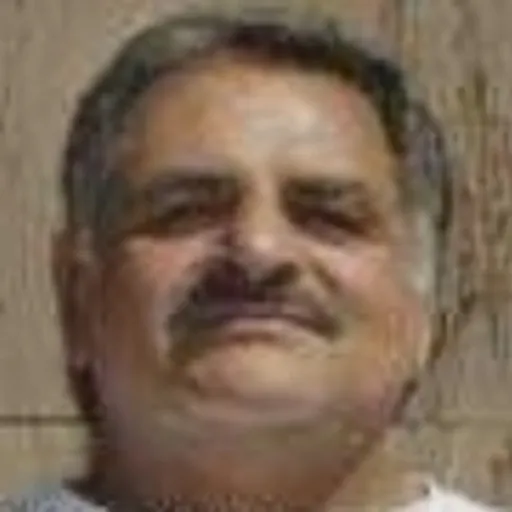
Tariq al-Sawah
Egyptian Guantanamo detainee
About Tariq al-Sawah
Lived 1957 – 2026 (aged 68). Tariq al-Sawah was an Egyptian and Bosnian.
Tariq Mahmud Ahmad Muhammad al-Sawah (; 2 November 1957 – 31 March 2026), also spelled Tarek El Sawah,
Al-Sawah was charged with war crimes, but those charges were dismissed on 1 March 2012. According to the Egypt Independent, formerly secret documents, drafted by Joint Task Force Guantanamo, and published by the whistleblower organization WikiLeaks in 2011, contradicted the charges al-Sawah had faced.
Background Tariq al-Sawah was born in Alexandria on 2 November 1957. According to CIA sources, Al-Sawah joined the Egyptian Muslim Brotherhood in 1975 while still attending secondary school. In 1981, shortly after graduating from Alexandria University with a degree in geology, he was imprisoned at Tora Prison, as part of a crackdown following the presidential assassination of Anwar Sadat. He was released in 1982 and by 1984, Al-Sawah was a certified teacher in Islamic studies through Al-Azhar University and employed as a construction supervisor. Between 1985 and 1986, he worked as a textile merchant before becoming an accountant until 1990, at which point he moved to Athens, Greece as a general contractor.
According to Al-Sawah, he travelled to Croatia in the early 1990s during the breakup of Yugoslavia, working in Zagreb for the International Islamic Relief Organisation. He subsequently went to Bosnia to deliver humanitarian aid as a truck driver before enlisting in the Bosnian Army, serving between September 1993 to December 1995 In June 1999, Al-Sawah was hired as an accountant to handle supply credit and food deliveries for the village. Al-Sawah was one of the few captives who acknowledged having fought in conflicts, in his case the Bosnian war.
Tom Dale, writing for the Egyptian Independent found that there was a "disregard for both fact and coherence on the part of U.S. interrogators."
The Washington Post reported that al-Sawah and Mohamedou Ould Slahi were held in a separate compound, where they were extended extra privileges, as they had both chosen to cooperate with intelligence officials.
In August 2012, al-Sawah was the last Egyptian captive in Guantanamo.
Official status reviews Originally the Bush Presidency asserted that captives apprehended in the "war on terror" were not covered by the Geneva Conventions, and could be held indefinitely, without charge, and without an open and transparent review of the justifications for their detention. In 2004 the United States Supreme Court ruled, in Rasul v. Bush, that Guantanamo captives were entitled to being informed of the allegations justifying their detention, and were entitled to try to refute them.
Office for the Administrative Review of Detained Enemy Combatants Following the Supreme Court's ruling the Department of Defense set up the Office for the Administrative Review of Detained Enemy Combatants.
Tariq Mahmud Ahmad Muhammad al-Sawah was listed as one of the captives who "The military alleges ... are members of Al Qaeda."
Habeas corpus petition Al-Sawah had a writ of habeas corpus filed on his behalf in June 2005.
Formerly secret Joint Task Force Guantanamo assessment On 25 April 2011, whistleblower organization WikiLeaks published formerly secret assessments drafted by Joint Task Force Guantanamo analysts. Joint Task Force Guantanamo drafted a fourteen-page assessment of al-Sawah, dated 30 September 2008. The memo was signed by camp commandant David M. Thomas Jr. and recommended his "Transfer Out of DOD Control."
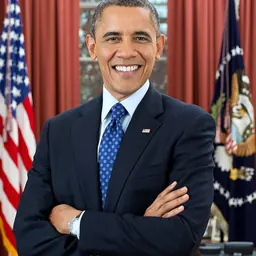
Joint Review Task Force When he assumed office in January 2009 President Barack Obama made a number of promises about the future of Guantanamo. He promised the use of torture would cease at the camp. He promised to institute a new review system. That new review system was composed of officials from six departments, where the OARDEC reviews were conducted entirely by the U.S. Department of Defense. When it reported back, a year later, the Joint Review Task Force classified some individuals as too dangerous to be transferred from Guantanamo, even though there was no evidence to justify laying charges against them. On 9 April 2013, that document was made public after a Freedom of Information Act request. Tariq Mahmud Ahmad Muhammad al-Sawah was one of the 71 individuals deemed too innocent to charge, but too dangerous to release. Although Obama promised that those deemed too innocent to charge, but too dangerous to release would start to receive reviews from a Periodic Review Board less than a quarter of men have received a review. Al-Sawah was approved for transfer on 12 February 2015.
Faces charges before a Guantanamo military commission On 16 December 2008 Carol Rosenberg, writing in the Miami Herald, reported that the Guantanamo military commission prosecutors announced charges had been laid against Tariq al-Sawah. These charges were later dismissed on 1 March 2012.
Health issues Rosenberg noted that the documents the DoD had published showed wild fluctuations in Al-Sawah's body weight During his detention, Al-Sawah developed an eating disorder, resulting in morbid obesity. By the time of his release, he had diabetes, coronary artery disease, high cholesterol, non-alcoholic fatty liver, and sciatica.
Death Al-Sawah died in Zenica on 31 March 2026, aged 68, reportedly whilst in a coma. No cause of death was given, although his brother stated that Al-Sawah had been hospitalized since January 2026.
Don’t just read it —
keep it.
Full-length biographies made to live with: read them, listen on the way to work, watch them tonight.
- E-book
- Audio
- Video
Instant download · yours to keep · every purchase keeps this site free
Important facts
People in Tariq al-Sawah's life
Named in this biography and alive at the same time


Contemporaries
People whose lives overlapped Tariq al-Sawah's


Frequently asked questions
Who was Tariq al-Sawah?
Egyptian Guantanamo detainee
When was Tariq al-Sawah born?
Tariq al-Sawah was born on 2 November 1957 in Alexandria.
When did Tariq al-Sawah die?
Tariq al-Sawah died on 2 April 2026 in Bosnia and Herzegovina.
What nationality was Tariq al-Sawah?
Tariq al-Sawah was Egyptian and Bosnian.
Sources & further reading
Cite this page
APA: Biography.guide. (2026). Tariq al-Sawah. https://biography.guide/tariq-al-sawah/
MLA: "Tariq al-Sawah." Biography.guide, https://biography.guide/tariq-al-sawah/.
Chicago: "Tariq al-Sawah." Biography.guide. https://biography.guide/tariq-al-sawah/.
Data last updated: 2026-09-23 · Spot an error? Report a correction.
Portrait: Wikimedia Commons · author & licence
Page generated 2026-09-27 05:05 UTC