
About Taqi Yazdi
Lived 1935 – 2021 (aged 85–86). Taqi Yazdi was an Iranian ulema, politician and philosopher.
Political activity 1963–1989 Mesbah Yazdi became politically active in 1963, following the 15th of Khordad movement (demonstrations against the arrest of Ayatollah Khomeini). He was involved in community organizing circulating petitions against the Shah's White Revolution reforms. After Khomeini was released from arrest, Mesbah Yazdi was among clerics who celebrated in the Feyziyeh School.
After the decline of the reform movement in 2003, his supporters made gains in local and parliamentary elections. In 2005, Mesbah Yazdi supported Mahmoud Ahmadinejad's presidential bid and subsequently gained "direct influence" in the Iranian government through the appointment of loyal supporters "to high posts" after Ahmadinejad's victory.
2009 presidential election Mesbah-Yazdi supported Ahmadinejad in 2009 and declared his election a miracle and a gift from the Hidden Imam.
On 22 June, a few days after security forces broke up one of the biggest election protests, Mesbah-Yazdi "addressed a gathering" of Revolutionary Guards and told them: "Do not be worried about the events and earthquakes that have occurred. Know that God created this world as a test... The supreme leader holds a great many of the blessings God has given us and at a time of such uncertainties our eyes must turn to him."
By 2011, however, he was sharply critical of Ahmadinejad saying that he was behaving "unnaturally" and needed to be "saved." After Ahmadinejad fired intelligence minister Heydar Moslehi without consulting Supreme Leader Ali Khamenei, Mesbah Yazdi stated, "That a human being would behave in a way that angers his closest friends and allies and turns them into opponents is not logical for any politician."
Assembly of Experts According to some sources, Mesbah-Yazdi is rumored to had ambitions to succeed Khamenei as Supreme Leader. Some clerics and some newspapers feared Mesbah-Yazdi was trying to expand his power by "packing" the Assembly of Experts with "loyalists." In October 2006, an acolyte of Mesbah-Yazdi, Mojtaba Samareh Hashemi, was appointed head of the election commission, supervisor of the poll for the Assembly of Experts, and many of the candidates in the 2006 Assembly of Experts elections were Mesbah-Yazdi loyalists (though they ran as independent candidates to avoid revealing their affiliation to him). Mesbah-Yazdi himself won a seat but finished only in sixth-place in Tehran municipality where he ran, and had the minority faction in the assembly. so he and Mohammad Beheshti establish the Haghani School (also Haqqani) in Qom to train the future cadres of Iran. Mesbah-Yazdi had been described as close to Ayatollah Mohammad Beheshti, Khomeini's first designated heir who was assassinated in Hafte Tir bombing in 1981 (despite being considered a moderate), and is (or was) a member of the school's board of directors. The Haghani School is very influential and had been described as "a kind of Ecole Nationale d'Administration for the Islamic Republic" whose alumni "form the backbone of the clerical management class that runs Iran's key political and security institutions."
Mesbah-Yazdi is the author of many books on fiqh, Quran exegesis, divinity and general issues of Islam. His "Amuzesh-e Falsafeh" is used widely in the philosophy classes of Qom's hawza. It broadly covers the same ground as Allameh Tabatabaei's Arabic-language works in philosophy "Bidayat al-Hikmah" and "Nihayat al-Hikma". Mesbah-Yazdi's "Amuzesh-e Falsafeh" has been published in English translation by Gary Legenhausen and Azim Sarvdalir as "Philosophical Instructions".
He published the weekly Parto Sokhan, was the director of the Imam Khomeini Education and Research Institute in Qom, (founded in 1995), and was a member of the Iranian Assembly of Experts from 1991 to 2016. though he later criticized him.
Views
Mesbah Yazdi had been described as "a theoretician of the radicals" in Iran, lamenting that "nowadays ... if someone says something critical" of freedom and democracy, "he or she will face serious peril." He considered "the Zionists" to be the fundamental source of evil on earth.
In an article by the Associated Press, quoting from a 2005 book written by Yazdi, the AP asserted that Yazdi made a "rare public call for the producing the 'special weapons' that are monopoly of a few nations -- a veiled reference to nuclear arms."
In a lecture posted on his website, Ayatollah Mesbah Yazdi warns of Muslim "thugs of falsehood and the followers of the damned Satan" who have formed a coalition of the forces of infidelity and hypocrisy, the servants of dollars and euros/gold and silver, and influential oppressors and traitors to uproot Islam, to fight Muslims, to dominate their countries, wealth, and resources, to deny their glories and excellence, to destroy their relics and teachings, to wipe out their culture, to alter their identity, to put them in miserable conditions, and to force them into wretchedness in this world and God’s punishment in the hereafter.
Mesbah-Yazdi supported a return to what he saw as the values of the 1979 Iranian revolution. He had been quoted as saying, "It doesn't matter what the people think. The people are ignorant sheep."
Mesbah-Yazdi was also a firm opponent of the Reformist movement in Iran which he believed an Islamic government must "combat ... because injecting misleading ideas [of reform in Islam] is like injecting the Aids virus!". He also claimed that young Iranians who questioned the regime after studying abroad did so only because they had been trained in 'psychological warfare' by foreign universities. Ayatollah Mesbah Yazdi opposed bida'a or innovations in religion which he believed includes new interpretations of the Sunna and Qur'an. He had been quoted as saying: "If someone tells you he has a new interpretation of Islam, sock him in the mouth." Yazdi accused Jews and Zionists of controlling "the majority of centers of corruption in the world." He called Jews "the most corrupt in the world" and "the most seditious group among all human beings," claiming they seek to corrupt others to dominate the world and will not rest "until they destroy Islam." Mesbah denied this and denounced the rumor, saying that if anyone finds a connection between him and Hojjatieh, he will renounce everything he stands for. Ayatollah Khomeini actually frowned on the Hojjatieh and the group was nominally dissolved in 1983.
Public image According to a poll conducted in March 2016 by Information and Public Opinion Solutions LLC (iPOS) among Iranian citizens, Mesbah had 18% approval and 20% disapproval ratings and thus a –2% net popularity; while 52% of responders didn't recognize the name.
Personal life He married his wife, who is from Ayatollah Hossein Noori Hamedani's family, in the 1950s. The couple had three children, two sons and a daughter.
Self-Recognition for Self-Improvement A Cursory Glance at the Theory of Wilayat al-Faqih Provisions for the Journey (Mishkat), Volume 1 Provisions for the Journey (Mishkat), Volume 2 The Status of Women in Islam Investigations and Challenges The Qur'an As Reflected in Nahj al-Balaghah In the Presence of the Beloved Philosophical Instructions Theological Instructions (Amuzish-e 'Aqa'id) The Philosophy of Ethics Freedom, The Unstated Facts and Points Islamic Political Theory (Legislation): Volume 1
Islamic Political Theory (Legislation): Volume 2
Don’t just read it —
keep it.
Full-length biographies made to live with: read them, listen on the way to work, watch them tonight.
- E-book
- Audio
- Video
Instant download · yours to keep · every purchase keeps this site free
Important facts
People in Taqi Yazdi's life
Named in this biography and alive at the same time
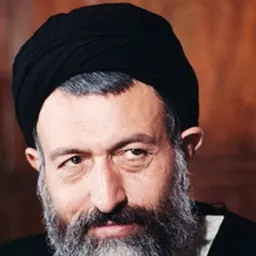


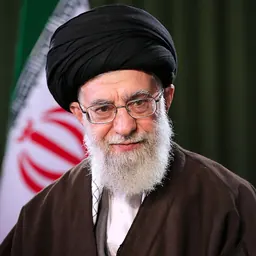

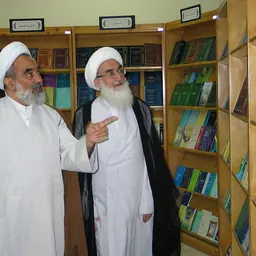
Related people
Same field, nearest in time


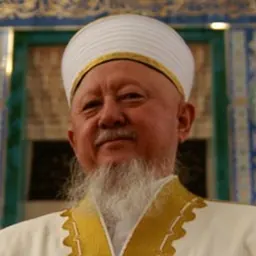
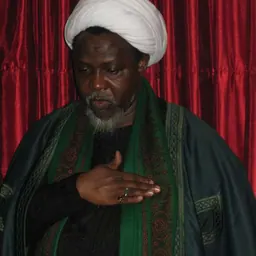
Contemporaries
People whose lives overlapped Taqi Yazdi's

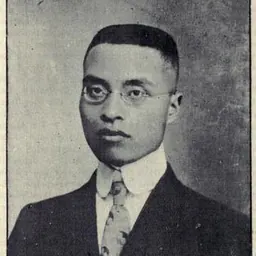


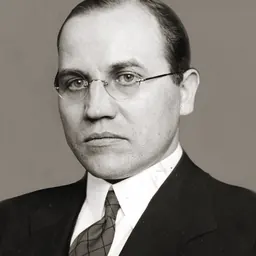

Frequently asked questions
Who was Taqi Yazdi?
Iranian cleric and philosopher
When was Taqi Yazdi born?
Taqi Yazdi was born on 31 January 1935 in Yazd.
When did Taqi Yazdi die?
Taqi Yazdi died in 2021 in Tehran.
What was Taqi Yazdi's occupation?
Taqi Yazdi was an ulema, politician and philosopher.
What nationality was Taqi Yazdi?
Taqi Yazdi was Iranian.
Sources & further reading
Cite this page
APA: Biography.guide. (2026). Taqi Yazdi. https://biography.guide/taqi-yazdi/
MLA: "Taqi Yazdi." Biography.guide, https://biography.guide/taqi-yazdi/.
Chicago: "Taqi Yazdi." Biography.guide. https://biography.guide/taqi-yazdi/.
Data last updated: 2026-09-25 · Spot an error? Report a correction.
Page generated 2026-09-27 05:10 UTC