
About Tao Zhu
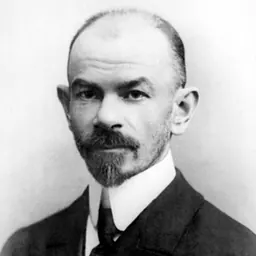
Lived 1908 – 1969 (aged 61). Tao Zhu was a Chinese politician.
Tao Zhu (; 16 January 1908 – 30 November 1969) was a Chinese Communist revolutionary and senior political leader who served as a member of the Politburo Standing Committee of the Chinese Communist Party. A veteran of the early Chinese Communist movement, he participated in the Nanchang and Guangzhou uprisings and held key leadership positions in various Chinese regions. After the founding of the People's Republic of China, Tao held prominent roles including Vice Premier of the State Council, becoming a major figure in both party and military affairs. He was purged during the Cultural Revolution and placed under strict house arrest, dying in 1969 before being posthumously rehabilitated in 1978.
Early life Tao Zhu was born on 16 January 1908 into a poor intellectual family in Langshu Village, Shidongyuan in Qiyang County, Hunan. In 1914, at the age of six, he followed his father Tao Tiezheng to study at a private school in Wuchang. In 1915, as Yuan Shikai intensified repression against revolutionary forces, Tao Tiezheng moved the entire family away from Wuhan and returned to their home county of Qiyang, where he and a close friend founded a modern-style school named Wenchang Pavilion Academy. Tao Zhu then continued his primary education at Wenchang, where his father served as headmaster. In 1918, Tao's father and his third paternal uncle were killed by Xiao Miaonan, a subordinate of the Beiyang warlord Wu Peifu. As a result of the family's sudden poverty, he was forced to leave school. He was later introduced by relatives to study vocational skills for several years. In 1926, Tao entered the Fifth Class of the Whampoa Military Academy in Guangzhou. In the same year, his classmates encouraged him to join the Chinese Communist Party. Following his escape, Tao went travelled to Zhangzhou in 1930 to preside over the reconstruction of the CCP Southern Fujian Special Committee. In December of the same year, he presided over the formation of the first detachment of the Southern Fujian Red Army Guerrilla Force.
In 1933, Tao went to work at the Central Committee of the Chinese Communist Party in Shanghai, but was discovered by the Nationalist government and arrested. He was imprisoned in Nanjing by the Kuomintang government from 1933 to 1937. In 1937, following negotiations between Zhou Enlai, Ye Jianying and the Kuomintang, Huang Wenjie carried out a prison rescue on 26 September, freeing seven prisoners, including Tao.
In 1945, Tao Zhu attended the Seventh National Congress of the Chinese Communist Party. The congress decided to launch guerrilla warfare in the Hunan–Guangxi–Vietnam Border Region. Tao served as deputy secretary of the party organization of the border region and as deputy political commissar of the Third Detachment of the southern Eighth Route Army.
He later became First Secretary of the Central-South region, and in 1965 was moved to Beijing to replace Lu Dingyi as Director of the Central Propaganda Department when Lu was purged for not adhering strongly to the Maoist line. Tao was appointed as a Vice Premier of the State Council and Secretary of the Central Secretariat of the CPC, as well as an advisor to the Cultural Revolution Group in 1965. In May 1966, he was promoted to No. 4 in the party, behind Mao Zedong, Lin Biao and Zhou Enlai. Tao became a member of the Politburo Standing Committee at the Eleventh Plenum in August 1966 at the outset of the Cultural Revolution.
Tao and Zhao were among the most enthusiastic of the early pro-Red Guard CPC leaders, but quickly fell from favour because they tried to control the excesses of the radical leftists led by Zhang Chunqiao and Jiang Qing.
Cultural Revolution and death
Poster depicting the denunciation and political downfall of Tao during the Cultural Revolution. The slogan reads: "Down with Tao Zhu!" From June to July 1966, Liu Shaoqi and Deng Xiaoping submitted to Mao Zedong a draft notice on how to conduct the Cultural Revolution in industry, transport, and construction, emphasizing phased implementation, leadership oversight, and the principle of "grasp revolution, promote production." Mao approved the document and ordered its rapid distribution. Tao Zhu strongly supported this approach and later authored two People's Daily editorials reiterating the same line. However, the Central Cultural Revolution Group (CCRG) accused him of "using production to suppress revolution." During an enlarged Politburo meeting in 1966, he was attacked by Wang Li, a junior member of the CRG, for curtailing the revolution with the excuse of protecting production. In mid-December he was again attacked by the CRG for allegedly protecting Wang Renzhong. At first, he was protected by Mao Zedong, with Mao criticising Jiang Qing's actions, but the CRG continued their attacks. He defended treating the cases of Liu Shaoqi and Deng Xiaoping as contradictions among the people; this caused Mao's displeasure and, despite the encouragement of Zhou Enlai and Lin Biao to adopt a more passive attitude, the attacks by the CRG persisted.
During a period of strict house arrest, Tao was diagnosed by doctors with gallbladder cancer, but was initially denied medical treatment. Zhou Enlai eventually intervened to arrange an operation, but by that time Tao's cancer had progressed to an incurable stage. On 15 October 1969, he was ordered to leave Beijing and relocate to Hefei, Anhui, where he had to fend for himself while suffering from severe illness and extreme mental distress, which left him bedridden. Tao died in hospital on 30 November 1969 at the age of 61. He was posthumously exonerated in 1978, after Deng Xiaoping rose to power. He was remembered as a man of great integrity.
Personal life In 1932, while in Fujian, Tao married Zeng Zhi. The couple had a daughter, Tao Siliang, who was born in 1941 in Yan'an. Tao Siliang became a Chinese politician in the late 1980s, leading several government initiatives in public health and the import of Western medical technology.
Memorial Tao's former residence at his birthplace in Qiyang, Hunan, is currently a memorial hall honoring him. It is classified as a key national priority protected and a red tourism site in Hunan.
Don’t just read it —
keep it.
Full-length biographies made to live with: read them, listen on the way to work, watch them tonight.
- E-book
- Audio
- Video
Instant download · yours to keep · every purchase keeps this site free
Important facts
People in Tao Zhu's life
Named in this biography and alive at the same time





Related people
Same field, nearest in time




Contemporaries
People whose lives overlapped Tao Zhu's


Frequently asked questions
Who was Tao Zhu?
Chinese politician (1908-1969)
When was Tao Zhu born?
Tao Zhu was born on 16 January 1908 in Qiyang.
When did Tao Zhu die?
Tao Zhu died on 30 November 1969 in Hefei.
What was Tao Zhu's occupation?
Tao Zhu was a politician.
What nationality was Tao Zhu?
Tao Zhu was Chinese.
Sources & further reading
Cite this page
APA: Biography.guide. (2026). Tao Zhu. https://biography.guide/tao-zhu-politician/
MLA: "Tao Zhu." Biography.guide, https://biography.guide/tao-zhu-politician/.
Chicago: "Tao Zhu." Biography.guide. https://biography.guide/tao-zhu-politician/.
Data last updated: 2026-09-20 · Spot an error? Report a correction.
Page generated 2026-09-27 05:17 UTC