
About Takahito, Prince Mikasa
Lived 1915 – 2016 (aged 100). Takahito, Prince Mikasa was a Japanese historian, military personnel, archaeologist, linguist, politician and orientalist.
was a Japanese prince, the youngest of the four sons of Emperor Taishō (Yoshihito) and Empress Teimei (Sadako). He was their last surviving child. His eldest brother was Emperor Shōwa (Hirohito). After serving as a junior cavalry officer in the Japanese Imperial Army during World War II, Takahito embarked upon a post-war career as a scholar and part-time lecturer in Middle Eastern studies and Semitic languages.
Prince Mikasa married Yuriko Takagi in 1941, and they had five children. Prince and Princess Mikasa outlived all three of their sons. With the death of his sister-in-law Kikuko, Princess Takamatsu, on 17 December 2004, Prince Mikasa became the oldest living member of the Imperial House of Japan. He remained active until a few months before his death at the age of 100. At the time of his death, Prince Mikasa was the oldest living royal.
Early life
Prince Takahito was born at the Tokyo Imperial Palace on 2 December 1915 to Emperor Taishō and Empress Teimei. He was fourteen years younger than his eldest brother, Crown Prince Hirohito (the future Emperor Shōwa). His childhood appellation was Sumi-no-miya. Prince Takahito attended the boys' elementary and secondary departments of the Gakushūin (Peers' School) from 1922 to 1932. By the time he began his secondary schooling, his eldest brother had already ascended the Chrysanthemum Throne and his next two brothers, Prince Chichibu and Prince Takamatsu, had already embarked upon careers in the Japanese Imperial Army and the Japanese Imperial Navy respectively. Takahito enrolled in the Imperial Japanese Army Academy in 1932 and was commissioned as a sub-lieutenant and assigned to the Fifth Cavalry Regiment in June 1936. He subsequently graduated from the Army Staff College.
Upon attaining the age of majority in December 1935, Emperor Shōwa granted him the title Mikasa-no-miya (Prince Mikasa) and the authorization to form a new branch of the imperial family.
Military service
Prince Mikasa was promoted to lieutenant in 1937 and to captain in 1939, serving in China under the name of "Wakasugi". During his army career, he was harshly critical of the Japanese military's conduct in China. In a 1994 interview, he criticized the Imperial Army's invasion of and atrocities in China, and recalled having been "strongly shocked" when an officer informed him that the best way to train new recruits was to use living Chinese POWs for bayonet practice. He also was given a film of Japanese atrocities, possibly linked to the footage used in the American propaganda film, The Battle of China, and was so moved that he made his brother Emperor Hirohito watch the film.
In one of Prince Mikasa's memoirs, he wrote that he toured Unit 731's headquarters in China and was shown films showing Chinese prisoners "made to march on the plains of Manchuria for poison gas experiments on humans."
In 1994, a newspaper revealed that after Prince Mikasa's return to Tokyo, he had written a stinging indictment of the conduct of the Imperial Japanese Army in China, where the Prince had witnessed Japanese atrocities against Chinese civilians. The Imperial Army General Staff suppressed the document, but one copy survived and surfaced in 1994. After the war, it was reported that while an officer, Prince Mikasa had taken a strict stance against lax discipline and the cruel actions of Japanese soldiers serving in China. "It was truly a horrible scene that can only be termed a massacre," he said. Out of a desperate desire to end the war, he wrote and delivered a speech that condemned Japanese troop aggression against the Chinese, elaborating that repeated rape, plunder and killing of civilians created strong anti-Japanese feelings in China, and that the Wang Jingwei regime in Nanjing was an attempt to cover up Japan's policy of aggression in China. He also disclosed that the Japanese served fruit contaminated with cholera germs to a team from the League of Nations that came to investigate Japan's invasion of China. They did not develop the disease. He stated that he did not talk about his written speech with his brother, Emperor Hirohito, but he said he once showed the emperor a Chinese-made film of Japanese atrocities.
Promoted to major in 1941, Prince Mikasa served as a staff officer in the Headquarters of the China Expeditionary Army at Nanjing, China from January 1943 to January 1944. His role was intended to bolster the legitimacy of the Wang Jingwei regime and to coordinate with Japanese Army staff towards a peace initiative, but his efforts were totally undermined by the Operation Ichi-Go campaign launched by the Imperial General Headquarters.
Prince Mikasa then served as a staff officer in the Army Section of the Imperial General Headquarters in Tokyo until Japan's surrender in August 1945.
Marriage
On 22 October 1941, Prince Mikasa married Yuriko Takagi (1923–2024), the second daughter of Viscount Masanari Takagi. Their wedding notably occurred less than two months before the Japanese attack on Pearl Harbor which led to the United States entering World War II. Prince and Princess Mikasa had five children. The couple's two daughters surrendered their imperial titles and left the imperial family upon marriage. All of their sons predeceased them. In addition to their five children, they had nine grandchildren and seven great-grandchildren as of 2022. Of their grandchildren, only three granddaughters remain in the imperial family as of 2024, with two other granddaughters surrendering their imperial status upon marriage.
Children , formerly , born 26 April 1944; married on 16 December 1966 to Tadateru Konoe, younger brother of former Prime Minister Morihiro Hosokawa and adopted grandson (and heir) of former Prime Minister Fumimaro Konoe. Her husband fulfilled Presidency of the Japanese Red Cross Society for over a decade; has a son, , who has three children. heir apparent; married on 7 November 1980 to Nobuko Asō (born 9 April 1955), third daughter of Takakichi Asō, chairman of , and his wife, Kazuko, the daughter of former Prime Minister Shigeru Yoshida; had two daughters, Princess Akiko and Princess Yōko. On 27 February 1946, Prince Mikasa even stood up in the Privy Council and indirectly urged the Emperor to step down and accept responsibility for Japan's defeat. General of the Army Douglas MacArthur, the most senior-ranking United States military commander in Japan at the time, insisted that Emperor Hirohito retain the throne. According to Minister of Welfare Ashida's diary, "Everyone seemed to ponder Mikasa's words. Never have I seen His Majesty's face so pale."
After the war, Prince Mikasa enrolled in the Literature Faculty of the University of Tokyo and pursued advanced studies in archaeology, Middle Eastern studies, and Semitic languages. From 1954 until his death in 2016, he directed the Japanese Society for Middle East Studies. He was honorary president of the Japan Society of Orientology. The Prince held visiting and guest faculty appointments in Middle Eastern studies and archaeology at various universities in Japan and abroad, including: Tokyo National University of Fine Arts and Music, Aoyama Gakuin, Tokyo Woman's Christian University, the University of London, Hokkaido University and Shizuoka University. He made numerous radio and television appearances, speaking on cultural subjects, and was known as "the Imperial scholar".
Final years and death
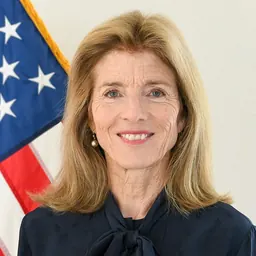
Towards the end of his life, due to his advanced age, Prince Mikasa rarely made public appearances, and regularly used a wheelchair. He and Princess Mikasa lived together at a residence in the grounds of the Akasaka Estate in Motoakasaka, Minato, Tokyo. He underwent heart surgery in 2012, and made a full recovery. His routine included exercising for about 30 minutes each day with his wife at their Tokyo residence, and he often went outdoors for a roll in his wheelchair. About once a week, he would leave his home for a haircut, or to attend various events for other family members. In October 2014, he attended the Tokyo wedding of his granddaughter Princess Noriko, the second daughter of his youngest son Prince Takamado. Palace staff noted that he appeared vigorous until his last days, and that he would always be seen helping his wife to get about. He continued to read newspapers, and enjoyed watching sumo and music programs on television. Another cousin, Prince Naruhiko Higashikuni, lived to 102 but lost his imperial titles after World War II.|name="centenarian" On his 100th birthday, he said, "Nothing will change just because I turn 100 years old. I'd like to spend my days pleasantly and peacefully while praying for the happiness of people around the world and thanking my wife, Yuriko, who has been supporting me for more than 70 years." At his residence in April 2016, he met the Japanese ambassador to Turkey and took a stroll at the Akasaka Detached Palace. Princess Yuriko frequently visited him along with other imperial family members, including the Emperor and Empress in June. During his last days, Prince Mikasa remained responsive to visitors. About 580 people including members of the imperial family, Prime Minister Shinzo Abe, U.S. Ambassador Caroline Kennedy, and former imperial family members, Sayako Kuroda (grandniece) and Noriko Senge (granddaughter) and their husbands, attended the funeral. Empire of Iran: Member 2nd Class of the Imperial Order of Pahlavi Empire of Iran: Recipient of the Commemorative Medal of the 2,500 year Celebration of the Persian Empire Knight Grand Cross of the Order of Merit of the Italian Republic Knight Grand Cross of the Order of the Crown Inauguration Medal 1980 (30 April 1980) Grand Cross of the Order of St. Olav Grand Cross of the Order of the Sun Knight of the Royal Order of the Seraphim Recipient of the Atatürk International Peace Prize
Honorary degree Ankara University
Honorary positions Honorary President of the Middle Eastern Culture Center in Japan Honorary President of the Japan – Turkey Society Honorary Vice-President of the Japanese Red Cross Society
Issue
Ancestry
Patrilineal descent
Imperial House of Japan
Descent prior to Keitai is unclear to modern historians, but traditionally traced back patrilineally to Emperor Jimmu Emperor Keitai, ca. 450–534 Emperor Kinmei, 509–571 Emperor Bidatsu, 538–585 Prince Oshisaka, ca. 556–??? Emperor Jomei, 593–641 Emperor Tenji, 626–671 Prince Shiki???–716 Emperor Kōnin, 709–786 Emperor Kanmu, 737–806 Emperor Saga, 786–842 Emperor Ninmyō, 810–850 Emperor Kōkō, 830–867 Emperor Uda, 867–931 Emperor Daigo, 885–930 Emperor Murakami, 926–967 Emperor En'yū, 959–991 Emperor Ichijō, 980–1011 Emperor Go-Suzaku, 1009–1045 Emperor Go-Sanjō, 1034–1073 Emperor Shirakawa, 1053–1129 Emperor Horikawa, 1079–1107 Emperor Toba, 1103–1156 Emperor Go-Shirakawa, 1127–1192 Emperor Takakura, 1161–1181 Emperor Go-Toba, 1180–1239 Emperor Tsuchimikado, 1196–1231 Emperor Go-Saga, 1220–1272 Emperor Go-Fukakusa, 1243–1304 Emperor Fushimi, 1265–1317 Emperor Go-Fushimi, 1288–1336 Emperor Kōgon, 1313–1364 Emperor Sukō, 1334–1398 Prince Yoshihito Fushimi, 1351–1416 Prince Sadafusa Fushimi, 1372–1456 Emperor Go-Hanazono, 1419–1471 Emperor Go-Tsuchimikado, 1442–1500 Emperor Go-Kashiwabara, 1464–1526 Emperor Go-Nara, 1495–1557 Emperor Ōgimachi, 1517–1593 Prince Masahito, 1552–1586 Emperor Go-Yōzei, 1572–1617 Emperor Go-Mizunoo, 1596–1680 Emperor Reigen, 1654–1732 Emperor Higashiyama, 1675–1710 Prince Naohito Kanin, 1704–1753 Prince Sukehito Kanin, 1733–1794 Emperor Kōkaku, 1771–1840 Emperor Ninkō, 1800–1846 Emperor Kōmei, 1831–1867 Emperor Meiji, 1852–1912 Emperor Taishō, 1879–1926 Takahito, Prince Mikasa
Don’t just read it —
keep it.
Full-length biographies made to live with: read them, listen on the way to work, watch them tonight.
- E-book
- Audio
- Video
Instant download · yours to keep · every purchase keeps this site free
Important facts
Family & relationships
People in Takahito, Prince Mikasa's life
Named in this biography and alive at the same time




Related people
Same field, nearest in time


Contemporaries
People whose lives overlapped Takahito, Prince Mikasa's


Frequently asked questions
Who was Takahito, Prince Mikasa?
Japanese prince (1915–2016)
When was Takahito, Prince Mikasa born?
Takahito, Prince Mikasa was born on 2 December 1915 in Tokyo.
When did Takahito, Prince Mikasa die?
Takahito, Prince Mikasa died on 27 October 2016 in Tokyo.
What was Takahito, Prince Mikasa's occupation?
Takahito, Prince Mikasa was a historian, military personnel, archaeologist, linguist, politician and orientalist.
What nationality was Takahito, Prince Mikasa?
Takahito, Prince Mikasa was Japanese.
Sources & further reading
· Wikipedia: Takahito, Prince Mikasa
· DBpedia: Takahito, Prince Mikasa
Cite this page
APA: Biography.guide. (2026). Takahito, Prince Mikasa. https://biography.guide/takahito-prince-mikasa/
MLA: "Takahito, Prince Mikasa." Biography.guide, https://biography.guide/takahito-prince-mikasa/.
Chicago: "Takahito, Prince Mikasa." Biography.guide. https://biography.guide/takahito-prince-mikasa/.
Data last updated: 2026-09-20 · Spot an error? Report a correction.
Page generated 2026-09-27 05:18 UTC