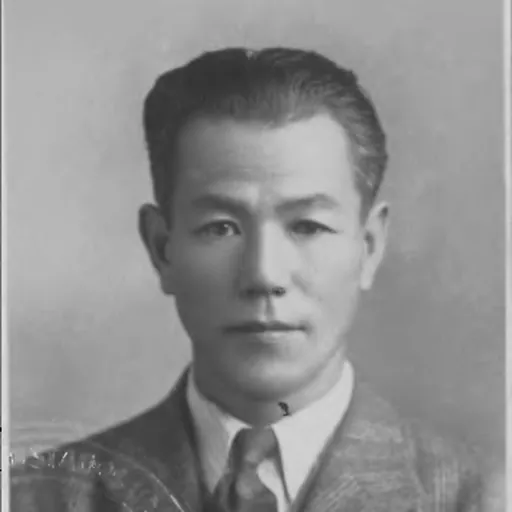
About Tadashi Kaminagai
Lived 1899 – 1982 (aged 82). Tadashi Kaminagai was a Japanese painter.
Tadashi Kaminagai (Hiroshima, Japan, 1899 - Paris, France, 1982) was a Japanese painter, draftsman and mold maker who traveled through many countries and produced his works mainly in Japan, Brazil, and France, where he also had exhibitions. Before becoming a painter, Kaminagai followed the monastic life, first in Japan and then in the Dutch East Indies, now Indonesia, until he abandoned his life as a Buddhist monk to become an artist. He was successful as a modurer, with a series of works for famous artists, but later became known also for his work as a painter. He influenced artists and was the teacher of some of them. His works were presented in national and international exhibitions. Furthermore, he participated in the Seibi-kai, having contact with numerous painters, including many of Japanese origin.
Career He was born in Hiroshima, in 1899. Encouraged by his family, he entered a Buddhist monastery in Kobe at the age of 14. Two years later, he traveled to the Dutch East Indies, now Indonesia, where he worked as a missionary and farmer until 1927, when he decided to follow an artistic career, moving to Paris, where he met the artist Tsuguharu Foujita, who guided him in painting. Alongside his artistic activity, he worked as a framer and became recognized when he framed masterpieces by Édouard Manet, Paul Cézanne, and Vincent van Gogh. Among the artists who commissioned Kaminagai's frames were Henri Matisse, Kees van Dongen, Chaïm Soutine and Marc Chagall. Another fact that made the frames famous was their use by the writer and art dealer Ambroise Vollard. This encouraged Kaminagai to inscribe some of his paintings in Parisian salons. He returned to Japan in 1938, after the outbreak of World War II, arriving in the country on the same day Japan attacked Pearl Harbor, settling in Rio de Janeiro. In 1941, he set up a studio and framing workshop in the Santa Teresa neighborhood, on the first floor of a building where the painter Djanira da Motta e Silva had a boarding house. There, he worked and taught several Brazilian and Japanese-Brazilian artists, such as Inimá de Paula, Flávio Shiró, Tikashi Fukushima, and others. Kaminagai was important to Fukushima's artistic formation; he was seen as his master. Fukushima would spend hours listening to Kaminagai's stories about how he survived in Paris and exhibited in salons in the 1930s. They would also go fishing together and take hours to reach a place considered by them to be special. This place enchanted Fukushima and inspired him to make his first painting made in Brazil, in Rio de Janeiro in 1946 and titled "Landscape". In 1996, Tikashi gave a statement to journalist Kuniko Kobayashi of the São Paulo-Shimbun newspaper, in which he said: "That moment was sublimation. And it consolidated my trajectory as a plastic artist."
Around 1945, Portinari organized Kaminagai's first solo exhibition, which took place at the Hotel Serrador in Rio de Janeiro. At the II São Paulo Art Biennial, in 1953, only two Japanese-Brazilian artists were accepted, Kaminagai and Manabu Mabe. In the same year, Tadashi went to Belem, as an official guest of the government of Pará, to paint the landscapes of the Amazon.
He returned to Japan in 1954, and three years later he settled back in Paris.
Kaminagai was also important to the painter Jorge Mori, who, since childhood, already had an ability to paint and was introduced to Kaminagai through Portinari. In Mori's words "Foujita talked about everything but painting, but Kaminagai was different, he really taught me how to live".
In 1958, Tadashi Kaminagai is described as an "artist of greater production and greater gifts", who at that time had returned to Japan, and created paintings inspired by Brazil, with both urban and rural themes. 1958 is also the year of the birth of his son, Yo Kaminagai and according to Tadashi's wife, Mineko, "his colors became more vibrant after his stay in Brazil, but especially after the birth of our son", which means that his son influenced him in painting.
After his death Soon after his death, an exhibition was organized, and the critic José Roberto Teixeira Leite said that "his influence on Brazilian art cannot be disregarded. He exerted a profound influence not only on a group of young (now famous) Japanese artists, but also on some painters who assimilated his style at one point in their evolution". One of them, held at MASP, received the comment of art critic Mário Pedrosa, who said that Kaminagai's work "is made of milestones of spontaneous realizations that appear and evaporate soon after. He is not, however, an eclectic who looks for elements or strange and opposing inspirations to organize his bric-à-brac".
In 1996, set designer Márcio Augusto Neiva confessed to the police that he used to forge paintings at the request of painter Giuseppe Irlandini, who delivered photographs to Márcio and paid US$200 for each reproduction. Among the works were the Kaminagai paintings.
In 2008, there was the exhibition called "Círculo de Ligações: Foujita no Brasil, Kaminagai e o Jovem Mori" (English: Circle of Connections: Foujita in Brazil, Kaminagai and the Young Mori), curated by Aracy Amaral. In the same exposition there was also a section of documents, with photographs of the artists in Brazil, newspapers of the time, caricatures and manuscripts, with highlight to the letter that Foujita wrote to Portinari presenting Kaminagai.
In the 2010 book "Arte brasileira: cortes e recortes: leilão de maio de 2010" (English: Brazilian Art: Cuts and Clippings: May 2010 Auction) by Frederico Morais, the author describes the style and intensity of Kaminagai's work as follows: "The Fauve painter was a typical representative of the School of Paris, expressing his themes, above all, through color, which was always vibrant in him. He carried his painting with a lyricism that is, at the same time, a lesson of deep love for life. From then on, the presence of the landscape, along with another recurring theme, the flower, symbol of his attachment to life, friends, family, and, above all, to painting itself, a source of pleasure and joy. He knew how to capture and transmit in his paintings the diversity of our landscape: the green and quietness of the Amazon, the bustle and brightness of Rio de Janeiro's beaches, the colorful architecture of Salvador and São Luís. He never held back from this diverse landscape that moved him".
Don’t just read it —
keep it.
Full-length biographies made to live with: read them, listen on the way to work, watch them tonight.
- E-book
- Audio
- Video
Instant download · yours to keep · every purchase keeps this site free
Important facts
People in Tadashi Kaminagai's life
Named in this biography and alive at the same time



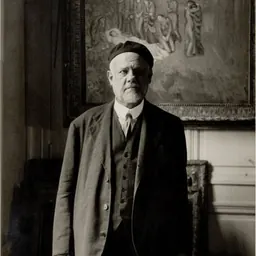

Related people
Same field, nearest in time


Contemporaries
People whose lives overlapped Tadashi Kaminagai's




Frequently asked questions
Who was Tadashi Kaminagai?
Japanese painter (1899-1982)
When was Tadashi Kaminagai born?
Tadashi Kaminagai was born on 27 September 1899 in Hiroshima.
When did Tadashi Kaminagai die?
Tadashi Kaminagai died on 14 June 1982 in 15th arrondissement of Paris.
What was Tadashi Kaminagai's occupation?
Tadashi Kaminagai was a painter.
What nationality was Tadashi Kaminagai?
Tadashi Kaminagai was Japanese.
Sources & further reading
· Wikipedia: Tadashi Kaminagai
Cite this page
APA: Biography.guide. (2026). Tadashi Kaminagai. https://biography.guide/tadashi-kaminagai/
MLA: "Tadashi Kaminagai." Biography.guide, https://biography.guide/tadashi-kaminagai/.
Chicago: "Tadashi Kaminagai." Biography.guide. https://biography.guide/tadashi-kaminagai/.
Data last updated: 2026-09-22 · Spot an error? Report a correction.
Portrait: Wikimedia Commons · author & licence
Page generated 2026-09-27 05:02 UTC