
About Tadamitsu Kishimoto
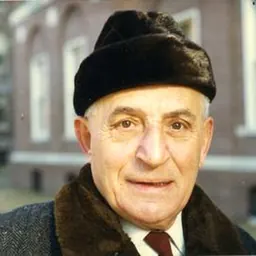
Born 1939. Tadamitsu Kishimoto is a Japanese immunologist, university teacher, physician and researcher.
is a Japanese immunologist known for research on IgM and cytokines, most famously, interleukin 6.
Kishimoto did postdoctoral work under Kimishige Ishizaka, the discoverer of IgE at Johns Hopkins University. He is listed by the Institute for Scientific Information (ISI) as a highly cited biologist and he is also in the top ten of h-index of living biologists.
Life Tadamitsu Kishimoto, who was born in Osaka in 1939, was President of Osaka University from 1997 to 2003 and a Member, Council for Science and Technology Policy, Cabinet office from 2004 to 2006. He is now Professor, Graduate School of Frontier Biosciences, Osaka University. He was Dean, Professor and Chairman of Department of Medicine at Osaka University Medical School from which he graduated in 1964. He is currently Japan's leading scientist in the field of life science, specifically in immunology and has made fundamental contributions to the understanding of cytokine functions through series of his studies on IL-6, its receptor system, and transcription factors. He has developed anti-IL6 receptor therapy for several immune disorders including Castleman's disease, rheumatoid arthritis and juvenile idiopathic arthritis.
On the basis of these early studies, Kishimoto discovered and cloned interleukin-6 and its receptor and delineated the signaling pathway used by IL-6 and the set of related cytokines that utilize gp-130, which he also discovered. He identified the transcription factors NF-IL-6 and STAT3, both central to the action of IL-6. He further discovered a family of suppressors of cytokine signaling, the SOCS molecules, that are key regulators of cytokine function. He demonstrated the involvement of IL-6 in the pathogenesis of cardiac myxomas, multiple myeloma, Castleman’s disease, rheumatoid arthritis, Crohn's disease and juvenile idiopathic arthritis (JIA). He identified IL-6 as a hepatocyte stimulating factor which induces acute phase reactions. He prepared a monoclonal anti-IL-6 receptor antibody that was subsequently humanized and has been shown to be of great therapeutic value in a series of autoinflammatory diseases including Castleman's Disease, rheumatoid arthritis and juvenile idiopathic arthritis. His work has dominated the field of proinflammatory cytokines and has established paradigms for the study of all of cytokine biology, ranging from discovery of the cytokine and its receptor, through signaling and transcriptional mechanisms, to the utilization of such knowledge to develop highly effective therapeutics. A series of his IL-6 studies for 35 years since 1973 have been highly appreciated; He was ranked as the world’s 8th-most-cited researchers between 1983 and 2002 and he is in the top ten of h-index of living biologists.
Recognition
Awards
Behring-Kitasato Prize from Hoechst Japan, 1982 Osaka Science Prize, 1983 Erwin von Bälz Prize, 1986 Takeda Prize, 1988 Asahi Prize, 1988 Prize of The Japanese Medical Association, 1990 Scientific Achievement Award from the International Association of Allergology and Clinical Immunology, 1991 Imperial Prize of the Japan Academy, 1992 Sandoz Prize for Immunology from International Union of Immunology Society, 1992 The Avery-Landsteiner Prize from the German Immunology Society, 1996 The Donald Seldin Award from the International Society of Nephrology, 1999 ISI Citation Laureate Award, 2000 Robert Koch Prize - Robert Koch Gold Medal, 2003 Honorary Lifetime Achievement Awards, International Cytokine Society, 2006 7th International Award of the Japan Rheumatism Foundation, 2008 The Crafoord Prize from the Royal Swedish Academy of Sciences, 2009 Japan Prize, 2011 King Faisal International Prize, 2017 Asian Scientist 100, Asian Scientist, 2018, 2020, 2021 Tang Prize in Biopharmaceutical Science, 2020 Clarivate Citation Laureates, 2021
Honors
Person of Cultural Merit, Japan 1990 Foreign Associate, The US National Academy of Sciences, 1991 Honorary Member, the American Association of Immunologists, 1992 Honorary Citizen, Tondabayashi City, 1992 Member, the Japan Academy, 1995 Foreign Associate member, the Institute of Medicine of the National Academy of Science, USA, 1997 Honorary member, the American Society of Hematology, 1997 The Order of Culture of Japan, 1998 Doctor Honoris Causa, Universidad Technologica de Santiago, UTESA, 2001 Honorary Member, International Association of Dental Research, 2001 Honorary Professor, the Fourth Military Medical University, Xi’an, China, 2002 Honorary Member, World Innovation Foundation, 2002 Doctor of Science, Honoris Causa, Mahidol University, 2003 Clemens von Pirquet Distinguished Professor, Medicine and Immunology, University California, Davis, 2004 Member, German Academy of Sciences Leopoldina, 2005
Don’t just read it —
keep it.
Full-length biographies made to live with: read them, listen on the way to work, watch them tonight.
- E-book
- Audio
- Video
Instant download · yours to keep · every purchase keeps this site free
Important facts
People in Tadamitsu Kishimoto's life
Named in this biography and alive at the same time



Related people
Same field, nearest in time



Contemporaries
People whose lives overlapped Tadamitsu Kishimoto's



Frequently asked questions
Who is Tadamitsu Kishimoto?
Japanese immunologist
When was Tadamitsu Kishimoto born?
Tadamitsu Kishimoto was born on 7 May 1939 in Osaka.
What is Tadamitsu Kishimoto's occupation?
Tadamitsu Kishimoto is an immunologist, university teacher, physician and researcher.
What nationality is Tadamitsu Kishimoto?
Tadamitsu Kishimoto is Japanese.
Sources & further reading
· Wikipedia: Tadamitsu Kishimoto
· DBpedia: Tadamitsu Kishimoto
Cite this page
APA: Biography.guide. (2026). Tadamitsu Kishimoto. https://biography.guide/tadamitsu-kishimoto/
MLA: "Tadamitsu Kishimoto." Biography.guide, https://biography.guide/tadamitsu-kishimoto/.
Chicago: "Tadamitsu Kishimoto." Biography.guide. https://biography.guide/tadamitsu-kishimoto/.
Data last updated: 2026-09-26 · Spot an error? Report a correction.
Page generated 2026-09-27 05:15 UTC