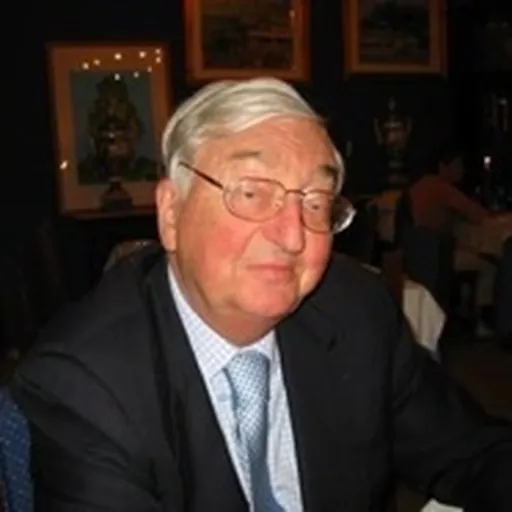
Alain de Weck
Swiss immunologist and allergologist
About Alain de Weck
Lived 1928 – 2013 (aged 84). Alain de Weck was a Swiss immunologist, university teacher and physician, known for Drug allergy.
Alain L. de Weck (July 26, 1928 – April 8, 2013) was a Swiss immunologist and allergist. His main scientific contributions were in the area of characterization and prevention of drug allergy. He was the founding director of the Institute of Clinical Immunology at the University of Bern from 1971 to 1993 and authored or co-authored over 600 peer-reviewed publications. He is the recipient of a number of patents that led to commercial allergy products and services. He served as president of international scientific organizations such as the International Union of Immunological Societies (IUIS) and the International Association for Allergy and Clinical Immunology (IAACI) (now the World Allergy Organization) and was founder and later CEO of the Centre Médical des Grand-Places (CMG) company, acquired by Heska of Fort Collins (Nasdaq: HSKA) in 1997. In later years he continued his research at the University of Navarra in Spain and wrote on a wide range of topics such as the distinction between science and pseudo-science, the emergence of genetically modified organisms (GMOs) and comparative health care policy.
Education
Alain de Weck grew up in Crans-Montana, attended the Collège Calvin in Geneva and later completed his Baccalauréat in classical studies at the Collège Saint-Michel in Fribourg in 1947. He obtained his M.D. degree from the University of Geneva in November 1953 after medical studies in Fribourg, Lausanne and Geneva. He did his residency in Paris at various hospitals including the Hôpital Bichat, and the Pitié-Salpêtrière Hospital. During this time he was an early resident at the Pavillon Suisse designed by the architect Le Corbusier at the Cité Internationale Universitaire de Paris. Starting in 1954, he came under the tutelage of Professor Werner Jadassohn, then the head of the Department of Dermatology in Geneva, the son of dermatologist, Joseph Jadassohn. There he started investigating the occurrence and root causes of inflammation as well as contact dermatitis due to lymphocytes using the guinea pig nipple as a model for the human skin. This led to the first histopathological demonstration that contact dermatitis is due to sensitized lymphocytes. He then stayed - as the first U.S. Public Health Service funded foreign research fellow from Switzerland - at Barnes Hospital at Washington University in St. Louis from 1958 to 1960 under the guidance of Prof. Herman Eisen. During this time, Alain de Weck made initial contributions to what later became one of his signature research areas: penicillin allergy. In particular he developed penicilloyl-polylysine (PPL) as a test reagent for detecting penicillin allergy.
Scientific contributions
Starting in 1961, after his return to Switzerland, he established himself as an independent researcher and eventually full professor (Ordinarius) at the University of Bern with initial support from the Swiss National Science Foundation. From 1961 to 1971 he ran a successful clinical immunology and allergy program under Prof. Hans Kuske in the Department of Dermatology at the Inselspital Bern, the university hospital. During this time he investigated a growing variety of topics such as hapten-antibody interactions, contact dermatitis, immunological tolerance to simple chemicals, delayed (type IV) hypersensitivity and lymphocyte proliferation, among others. On October 1, 1971, he became the founding chairman of the Institute of Clinical Immunology and Allergy at the University of Bern, a position he held until his retirement in 1993. One of the noteworthy contributions was the first description of the now well-known Cheese Washer's Disease (in German: "Kaesewascherkrankheit"), a special form of farmer's lung syndrome.
Prof. Alain de Weck was a specialist at translating immunological theory into new medical applications for both diagnosis and treatment. His main contributions range from the characterization of the molecular causes of penicillin allergy, the suppression of allergic reactions using hapten inhibition, the international standardization of allergens to the study of Immunoglobulin E (IgE) synthesis and associated receptors, and the development of new diagnostics techniques such as in-vitro cellular assays as well as flow cytometric tests. He elucidated the mechanism of action of lactobacillus vaccines used in recurrent nonspecific gynaecological infections.
Clinical activities included services such as allergy diagnostics using allergen-specific IgE antibodies (RAST test) and mediator analyses, leukocyte histocompatibility antigen (HLA group) typing for organ transplant (mainly kidney and liver), as well as cellular immunology testing particularly for the diagnosis of drug allergy and some autoimmune disorders such as HIV. The institute offered a full curriculum in immunology and allergy at the university and also collaborated on textbooks of this rapidly evolving field. The institute hosted a large number of foreign researchers and visitors starting in the 1970s.
Entrepreneurship
In his entrepreneurial activities Alain de Weck focused initially on the immunological aspects of aging and was co-founder of an unsuccessful clinic called CLIMARLY (1978–1982). His second more successful venture resulted from research on cellular assays for low cost in-vitro allergy testing using the Immunodot technology for IgE-based detection of allergies and other diseases such as HIV using low-cost cellulose strips
Alain de Weck received several awards and recognitions for his scientific work including, among others: 1972 Robert Koch Prize in Life Sciences from the University of Bern in 1993 Alain de Weck remained active as an Extraordinary Professor at the pontifical University of Navarra in Pamplona, Spain where he collaborated on further development and validation of flow cytometry for immunological testing, as well as a frequent columnist in newspapers voicing his opinion on a wide variety of topics such as the distinction between true science and pseudo-science, the immunological aspects of genetically modified organisms (GMOs) and the future of health care policy in different countries.
Don’t just read it —
keep it.
Full-length biographies made to live with: read them, listen on the way to work, watch them tonight.
- E-book
- Audio
- Video
Instant download · yours to keep · every purchase keeps this site free
Important facts
People in Alain de Weck's life
Named in this biography and alive at the same time




Related people
Same field, nearest in time



Contemporaries
People whose lives overlapped Alain de Weck's
Frequently asked questions
Who was Alain de Weck?
Swiss immunologist and allergologist (1928-2013)
When was Alain de Weck born?
Alain de Weck was born on 26 July 1928 in Montreux.
When did Alain de Weck die?
Alain de Weck died on 8 April 2013 in Fribourg.
What was Alain de Weck's occupation?
Alain de Weck was an immunologist, university teacher and physician.
What was Alain de Weck known for?
Alain de Weck was known for Drug allergy.
What nationality was Alain de Weck?
Alain de Weck was Swiss.
Sources & further reading
Cite this page
APA: Biography.guide. (2026). Alain de Weck. https://biography.guide/alain-de-weck/
MLA: "Alain de Weck." Biography.guide, https://biography.guide/alain-de-weck/.
Chicago: "Alain de Weck." Biography.guide. https://biography.guide/alain-de-weck/.
Data last updated: 2026-09-22 · Spot an error? Report a correction.
Portrait: Wikimedia Commons · author & licence
Page generated 2026-09-27 05:02 UTC