
About T. Lawrence Dale
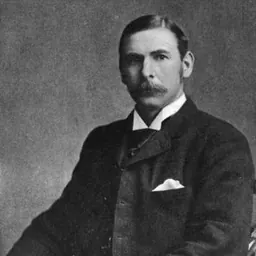
Lived 1884 – 1959 (aged 75). T. Lawrence Dale was a British architect.
Training and career Dale was born in London, He began his architectural training at the Architectural Association School of Architecture in 1900,
In the 1920s Dale spent "a delightful year" working on "an exceedingly complicated planning problem" as a competitor in a worldwide architectural competition to design the new Freemasons' Grand Temple in Great Queen Street in London. He later moved again to 4 Bradmore Road They left two sons and two daughters. Harry Carpenter, Bishop of Oxford, assisted at his funeral. They practised together as Dale and Son. Horn Park, a country house about north-west of Beaminster, Dorset, is Dale's largest and perhaps most significant house design. It is a symmetrical neo-Georgian building of five bays and two storeys, completed in 1911. Its central corridor is barrel vaulted and leads to a drawing room whose groin vault is reminiscent of the work of Sir John Soane (1753–1837). The roof and almost all of the walls are hung with wooden shingles, to whom he had been articled, Dale's ecclesiastical architecture was strongly Anglo-Catholic. However, whereas Ponting continued to work in the Gothic Revival idiom long after it had passed out of fashion, It was made a permanent church and dedicated in 1962. was built as a chapel of ease for St. Andrew's parish church, Headington. St. Michael's is described as being in a "vaguely Italian renaissance style" is in a spacious churchyard that allowed Dale the space to use a more spacious cruciform plan.
Most of Dale's churches share common features: a tympanum with bas-reliefs over the main door, pantiled roofs, an Italianate pent-roofed chimney for the boiler and in some cases a baldachin over the main altar and a pantiled bell-cot on the west gable. With the exception of St. Francis of Assisi (which is stuccoed) they are built of a modern buff brick that contrasts with traditional building materials in this part of England. The tympanum at St. Alban the Martyr was carved by John Brookes, then Principal of Oxford City Technical College. St. Francis' has also a set of Stations of the Cross carved by Eric Gill.
Watercolours Dale was a watercolourist "of more than average ability"
"Christ Church Mall" Central Oxford had become acutely congested with motor traffic in the 1920s and 1930s. When Dale first moved from Banbury to Oxford he practised from an office in Carfax "but the traffic there was shocking" so he gave up his office and practised from home.
In 1944 Dale expanded on his proposals into a 60-page book, Towards a Plan for Oxford City, illustrated with some of his own watercolours.
However, Sharp also thought that Dale's "Christ Church Mall" would be too indirect, particularly for traffic from Headington Hill and Marston Road. Sharp instead proposed a road across the northern side of Christ Church Meadow, which he called "Merton Mall" as it would have passed very close to Merton College.
The Times also commended Dale for "presenting his case with architectural vision, wit and eloquence" in Towards a Plan for Oxford City, and quoted Dale's vision that "a finely designed parkway" would be "A beautiful road between the Towers and the Thames severally dreaming and streaming".
Dale cited in his support Professor Sir Albert Richardson, then president of the Royal Academy, who "had said, in 1944, that Christ Church Meadow would suffer no detriment if skirted by a tree-lined road". Horn Park, Beaminster, Dorset, 1911 Hook Manor, Semley, Wiltshire: remodelled 17th century Jacobean manor house, 1935 Blessed Virgin Mary parish church, Thame, Oxfordshire: repairs to stonework, 1937–38 Village Hall, Ickford, Buckinghamshire, 1946 (with Simon Dale) St Michael and All Angels parish church, New Marston, Oxford, 1954–56 358 Woodstock Road, Oxford: house for Dale and his family SS. Mary and Edburga's parish church, Stratton Audley, Oxfordshire: tower screen
Writings
Don’t just read it —
keep it.
Full-length biographies made to live with: read them, listen on the way to work, watch them tonight.
- E-book
- Audio
- Video
Instant download · yours to keep · every purchase keeps this site free
Important facts
People in T. Lawrence Dale's life
Named in this biography and alive at the same time




Related people
Same field, nearest in time


Contemporaries
People whose lives overlapped T. Lawrence Dale's

Frequently asked questions
Who was T. Lawrence Dale?
architect (1884–1959)
When was T. Lawrence Dale born?
T. Lawrence Dale was born on 4 March 1884 in London.
When did T. Lawrence Dale die?
T. Lawrence Dale died on 29 March 1959 in Bradmore Road.
What was T. Lawrence Dale's occupation?
T. Lawrence Dale was an architect.
What nationality was T. Lawrence Dale?
T. Lawrence Dale was British.
Sources & further reading
Cite this page
APA: Biography.guide. (2026). T. Lawrence Dale. https://biography.guide/t-lawrence-dale/
MLA: "T. Lawrence Dale." Biography.guide, https://biography.guide/t-lawrence-dale/.
Chicago: "T. Lawrence Dale." Biography.guide. https://biography.guide/t-lawrence-dale/.
Data last updated: 2026-09-20 · Spot an error? Report a correction.
Page generated 2026-09-27 05:10 UTC