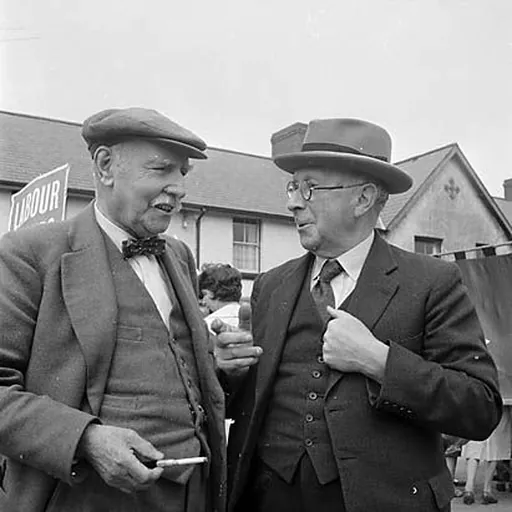
About T. E. Nicholas
Lived 1879 – 1971 (aged 91). T. E. Nicholas was a British poet.
Thomas Evan Nicholas (6 October 1879 – 19 April 1971), who used the bardic name , was a Welsh language poet, preacher, radical, and champion of the disadvantaged of society. Before he was one year old, the family moved to 'Y Llety', Pentre Galar, a 57-acre smallholding on the slopes of Foel Dyrch in the Preseli Hills, Pembrokeshire, where Nicholas was brought up. "Times were hard. There were 6 children in the family, and Y Llety was a rented smallholding."
Nicholas's early upbringing was a deep and long-lasting influence on him: "It is often argued that the community of the Preseli Hills represented the socialist ideal for Niclas – a community where people co-operated for each other’s good. It was a civilized society where ideas, stories, debates, sermons and politics were shared. There was a great deal of sharing of books and journals, too. Niclas was introduced to what was happening in Parliament by the newspaper Baner ac Amserau Cymru published by Thomas Gee."
Training for the ministry and ordination
Nicholas left Pembrokeshire in 1897 and worked briefly in Treherbert in the Rhondda, before studying for the ministry at the Gwynfryn Academy (Ysgol y Gwynfryn), Ammanford, under Watcyn Wyn (Watkin Hezekiah Williams) and John Gwili Jenkins.
His religious convictions, influenced by Watcyn Wyn and Gwili, were focused on the radical message of the Gospels. He supported the socialism of R. J. Derfel with its emphasis on brotherhood, peace and justice, equality, land nationalisation, and a Parliament for Wales, and opposition to the royal family, the brewers and militarism. Nicholas became a favorite preacher at 'Cyrddau Mawr' ('Big Meetings') and a popular public speaker.
In his own chapel at Glais he supported Welsh culture, establishing a choir and an eisteddfod. He was a prolific poet: his early poetry had religious themes but by 1908 his poems carried a socialist and radical message. He was known as 'The People's Poet'. He won over 17 eisteddfod chairs during his time at Glais. The main themes of his poetry were injustice, the battle between the working class and the power of capital, and pacifism. His poetry books and pamphlets – almost all written in Welsh – sold well: Weithwyr Cymru, Cenwch eich hunain i ryddid ('Workers of Wales, sing yourselves to freedom') sold over 6000 copies. He also translated The Internationale and The Red Flag into Welsh.
Political, trade union and anti-war activities Nicholas joined the Independent Labour Party in 1905. He was a close friend and supporter of James Keir Hardie, the founder of the Independent Labour Party – Hardie had been elected as M.P. for the Welsh mining constituency of Merthyr Tydfil from 1900. Like Hardie, Nicholas was both a Christian socialist and a committed pacifist. Nicholas acted as Hardie's election agent in 1910 and, at Hardie's request, Nicholas served as the first Welsh-language editor of the ILP's Merthyr Pioneer from its first appearance in 1911.
In January 1914 Nicholas left Glais to become Minister to two chapels in rural Ceredigion: Ebenezer, Llangybi, and Bethlehem, Llanddewi Brefi.
When the First World War broke out, Hardie and Nicholas both opposed it. Within a few days of Britain going into the war Hardie was speaking against it in his own constituency but was shouted down by the crowd, who supported the war. Hardie died on 26 September 1915, aged only 59. Nicholas delivered the sermon at Hardie's memorial service at Aberdare. He continued to oppose the War throughout its duration. The authorities took an interest in his activities and sought evidence of treason.
In the General Election of 1918, Nicholas was invited by the Labour Party to stand in the Aberdare division of Hardie's old Merthyr Tydfil seat, against Charles Butt Stanton (1873–1946). Stanton had won one of the two Merthyr Tydfil seats in the by-election caused by Hardie's death: he had supported the Coalition Government and the war; and fought the General Election as a member of the National Democratic Party (NDP) with the assistance of the Coalition 'coupon'. Nicholas campaigned on Hardie's socialist and pacifist positions. He was badly mistreated. He won 6,229 votes to Stanton's 22,824. However, he was heartened by the fact that the Labour Party greatly increased its vote share nationally (from 7% to 21%) and for the first time it won the most seats in Wales, breaking the long Liberal dominance. Nicholas took heart also from the Russian Revolution.
In Ceredigion Nicholas organised farmworkers into a Union and in 1918 he established the Labour Party in the county. He resigned from the ministry in the same year. He and his wife and son, Islwyn ap Nicholas, set up a dental practice – first in Pontardawe and then, in 1921, in Aberystwyth. (They were trained as dentists by a good friend, David Ernest Evans (1870–1956) of Mountain Ash).
In 1920, Nicholas joined the Communist Party of Great Britain when it was first formed. He was expelled from the Labour Party in 1926 after criticising Ramsay MacDonald's leadership. He continued as an active and popular lecturer, preacher, writer, columnist and poet. In the 1930s he wrote a weekly column, 'O fyd y werin' ('The world of the people') in Y Cymro newspaper.
The Prison Sonnets
In July 1940, during the Second World War, he and his son Islwyn were arrested on a trumped up charge of fascism. They were imprisoned first in Swansea prison and then in Brixton, where Nicholas wrote 150 sonnets expressing his Christian and communist convictions. Protests against their imprisonment came from Ministers of religion, trade union leaders, especially the miners, and Members of Parliament. After four months in prison, they were released.
Nicholas's prison sonnets (many written on toilet paper
Death and legacy
T. E. Nicholas died at home in Aberystwyth on 19 April 1971, aged 91. The funeral services were held at the Independent Chapel, Aberystwyth and Narberth Crematorium. His ashes were scattered on the Preseli Hills, Pembrokeshire. His papers are held in the T. E. Nicholas Archive at Bangor University.
Published works
Poetry Salmau'r Werin ('The Psalms of the People') First edition (Ystalyfera, 1909), Second edition (Wrecsam, 1913) Cerddi Gwerin ('Songs for the People') (Caernarfon, 1912) Cyflog Byw ('A Living Wage') (Pontardawe, 1913) Cerddi Rhyddid ('Songs of Freedom') (Abertawe, 1914) Nadolig Arall ('Another Christmas') (Llangybi, 1915) Dros Eich Gwlad: Cerddi Heddwch ('For Your Country: Songs of Peace') (edited by D. Ernest Williams) First edition, 128 pp (Pontardawe, 1920), Further edition (1930) Y Gân Ni Chanwyd ('The Song not Sung') First edition (Aberystwyth, 1929), Further edition (Aberystwyth, 1954) Weithwyr Cymru, Cenwch eich hunain i ryddid ('Workers of Wales – Sing Yourselves to Freedom') (Aberystwyth, 1938) Terfysgoedd Daear ('The World's Tempests') (1939) Sonedau'r Carchar ('Prison Sonnets') (Aberystwyth, 1940) – also known as: Llygad y Drws: Sonedau'r Carchar ('Eye of the Door: Prison Sonnets') (introduction by D. Gwenallt Jones) 128 pp, First edition (Aberystwyth, 1940), Further editions (Aberystwyth, 1940 and 1941) Canu'r Carchar. Ysgrifennwyd yng ngharcharau Abertawe a Brixton. (Ail gyfres). ('Prison Poems. Written in Swansea and Brixton Prisons. Second Series') 53 pp. First edition (Llandysul, 1942), Further edition (Llandysul, 1943) Y Dyn a'r Gaib ('The man with the hoe') (Dinbych, 1944) The Prison Sonnets of T. E. Nicholas (translated from the Welsh by Daniel Hughes, Dewi Emrys (David James), Wil Ifan (William Evans), and Eric Davies) (London, 1948) Dryllio'r Delwau ('Destroying the Idols'): Rhagair gan Idwal Jones (Preface by Idwal Jones) ix, 72 pp (Towyn, 1948 / 1949) Meirionnydd ('Merionethshire') First edition (Llandysul, 1949), Second edition (Llandysul, 1950) Rwy'n Gweld o Bell ('I see from afar') (Abertawe, Undeb yr Annibynwyr Cymraeg, 1963) Tros ryddid daear: casgliad o gerddi gwleidyddol ('For World Freedom': a posthumous collection of the Welsh political poems of T. E. Nicholas, with English prose translations) (Aberpennar / Mountain Ash: Llyfrau Niclas Books, 1981)
Other writings Dros Eich Gwlad: Llythr Agored at Mr D. J. Davies, Llundain, ar y Rhyfel Anghyfiawn ('For Your Country: An Open Letter to Mr D.J. Davies, London, on the Unjust War') First edition (Llangybi, 1915) (10 pp), Second edition (Abertawe, 1915) (18 pp), Third edition (1915) (14 pp). T. E. Nicholas's pamphlet opposing WW1, originally published in the Labour Pioneer of 8 Jan 1915.
Articles by T. E. Nicholas republished in the Hyddgen Series, by the Gwenffrwd Press: Gornest cyfalaf a llafur ('The Conflict of capital and labour') Gwasg Gwenffrwd, 1970 (Article on the 1912 South Wales Miner's Strike): from Y Geninen Vol 30(2) (1912) pp 123–7 R. J. Derfel Gwasg Gwenffrwd, 1970 (Article on the life and poetry of the early Welsh Socialist, Robert Jones Derfel (1824–1905): from Ceninen Gwyl Dewi (1912) pp 23–4)
Don’t just read it —
keep it.
Full-length biographies made to live with: read them, listen on the way to work, watch them tonight.
- E-book
- Audio
- Video
Instant download · yours to keep · every purchase keeps this site free
Important facts
People in T. E. Nicholas's life
Named in this biography and alive at the same time

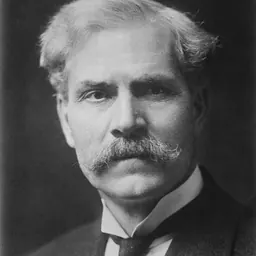






Related people
Same field, nearest in time

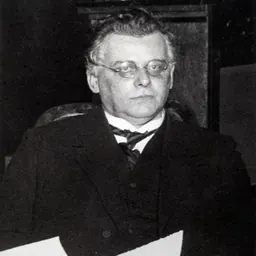
Contemporaries
People whose lives overlapped T. E. Nicholas's


Frequently asked questions
Who was T. E. Nicholas?
Welsh poet, preacher and political activist (1879–1971)
When was T. E. Nicholas born?
T. E. Nicholas was born on 6 October 1879 in Llanfyrnach.
When did T. E. Nicholas die?
T. E. Nicholas died on 19 April 1971 in Aberystwyth.
What was T. E. Nicholas's occupation?
T. E. Nicholas was a poet.
What nationality was T. E. Nicholas?
T. E. Nicholas was British.
Sources & further reading
Cite this page
APA: Biography.guide. (2026). T. E. Nicholas. https://biography.guide/t-e-nicholas/
MLA: "T. E. Nicholas." Biography.guide, https://biography.guide/t-e-nicholas/.
Chicago: "T. E. Nicholas." Biography.guide. https://biography.guide/t-e-nicholas/.
Data last updated: 2026-09-20 · Spot an error? Report a correction.
Page generated 2026-09-27 05:10 UTC