
Sylwester
Orthodox bishop in the Polish–Lithuanian Commonwealth
About Sylwester
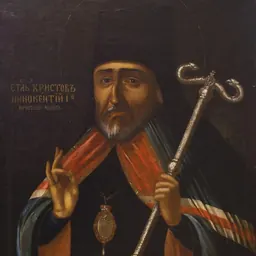
Lived 1650 – 1728 (aged 77–78). Sylwester was a Polish eastern Orthodox priest, theologian and bishop.
Sylvester, born Stefan Chetvertinsky (died 14 February 1728), was an Orthodox bishop in the Polish–Lithuanian Commonwealth.
He came from the princely Chetvertinsky family. In 1702, he became the superior of the Transfiguration Monastery in Stara Czetwertnia. In 1707, thanks to the intervention of Tsar Peter the Great, he assumed the management of the (in Belarus). He received the royal privilege for the bishopric six years later, also under the pressure of Russian diplomacy. A year after assuming office, in 1708, he found himself in sharp conflict with the Metropolitan of Kyiv, , as he sought to bring the stauropegial monasteries in the Grand Duchy of Lithuania under his control and enforce proper discipline. In particular, he focused on the Holy Trinity Monastery in Slutsk and the Kuteinski Monastery in Orsha. The prolonged dispute over control of the monasteries ended with a status quo being maintained.
During his time as bishop of Belarus, Sylvester Chetvertinsky defended the property rights of the Orthodox Church, demanded the Polish king respect the rights of Orthodox people, prevent forced conversions to Catholicism, and stop the confiscation of Orthodox religious buildings. Due to the unfriendly policies of Augustus II the Strong, he maintained regular correspondence with Tsar Peter the Great, particularly after 1721. In 1725, he stated in a letter that without Russian support, he would be unable to continue leading the eparchy. However, Russian interventions were unsuccessful; Sylvester died in 1728, shortly after sending another letter to Russia asking for assistance. After his death, Augustus II the Strong prevented the installation of a new bishop of Belarus, and the bishopric remained vacant until 1737.
Biography
Youth and early activity Sylvester (born Stefan Chetvertinsky) came from the princely Chetvertinsky family.
Bishop of Mogilev, Mstsislaw and Orsha
1707–1713
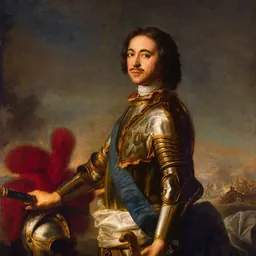
Sylvester Chetvertinsky was appointed bishop of Mogilev, Mstsislaw and Orsha in 1705, a year after the death of the previous bishop. His selection was influenced not only by his abilities but also by his connections with the Metropolitan of Kyiv, Gedeon, and his prestigious lineage. His episcopal consecration as archimandrite took place in Kyiv in 1707, with Metropolitan Warlaam of Kyiv as the main consecrator. Bishop Sylvester arrived at his residence in Mogilev in August of the same year, at a time when the city was occupied by Russian troops. The illegal introduction of an Orthodox bishop into Mogilev by the tsar was part of Peter the Great's anti-Uniate actions following his entry into the Commonwealth, which also included hindering religious practices of the Uniate population, expelling Uniate Metropolitan Lev Zalenskyj, and the murder of Basilian monks in Polotsk.
Sylvester's enthronement was not officially sanctioned with the appropriate royal privilege, meaning the Commonwealth authorities did not recognize him as a legally operating bishop. As a member of a delegation of Mogilev citizens, he traveled to Tsar Peter the Great's temporary headquarters in Voronezh that same year. The delegation asked the tsar for permission to rebuild the city and protect it from further destruction.
On 11 February 1710, Tsar Peter the Great sent a commissioner to the Kuteinski Monastery, officially to investigate the merits of the complaint against the bishop. The true intention of the Russian ruler was to gather evidence of persecution by Catholics and Commonwealth authorities, but the monastery presented him with the already known complaint against Bishop Sylvester.
The jurisdictional conflict between the Belarusian bishop and the Metropolitan of Kyiv, as well as its violent nature, had a detrimental effect on the Orthodox faithful in the Commonwealth. It contributed to their decline in both numbers and influence.
After arriving in Mogilev in 1715, the bishop established close cooperation with the Orthodox Mogilev brotherhood. Together, they decided to rebuild the cathedral, which had been destroyed during the Great Northern War. which led to the rapid expansion of the Uniate Church at the expense of Orthodoxy. On the tsar's orders, the Russian ambassador in Warsaw personally intervened with the king on behalf of the Orthodox, while his interpreter traveled to Belarusian and Lithuanian lands to collect complaints about persecution by Catholics and supporting evidence. Bishop Sylvester was misled about the nature of this departure – even the Russian side assured him that Rudakovsky's departure (despite his active support of Sylvester's efforts) was only temporary. Uniate Metropolitan Athanasius Szeptycki openly called for the complete eradication of the Orthodox Church in the country.
Facing the lack of a Russian diplomatic response and the worsening situation of Orthodox believers in the Commonwealth, Sylvester Chetvertinsky made another desperate appeal. On 3 February 1728, he sent a letter to Tsar Peter II, detailing numerous violations of Orthodox rights and warning that the absence of Russian intervention would lead to the destruction of the Belarusian eparchy and the forced conversion of its faithful to Catholicism. 11 days after sending the letter, Bishop Sylvester passed away. King Augustus II refused to allow his successor, Bishop Arsenius, who had been appointed by the Most Holy Synod, to take up the Belarusian bishopric. He also blocked the appointment of Joseph Wołczański, who had been chosen by the local nobility and clergy. The bishopric remained vacant until 1737, when it was finally filled under the reign of Augustus III.
Don’t just read it —
keep it.
Full-length biographies made to live with: read them, listen on the way to work, watch them tonight.
- E-book
- Audio
- Video
Instant download · yours to keep · every purchase keeps this site free
Important facts
People in Sylwester's life
Named in this biography and alive at the same time

Related people
Same field, nearest in time


Contemporaries
People whose lives overlapped Sylwester's






Frequently asked questions
Who was Sylwester?
orthodox bishop in the Polish–Lithuanian Commonwealth
When was Sylwester born?
Sylwester was born in 1650.
When did Sylwester die?
Sylwester died on 14 February 1728 in Mahilyow.
What was Sylwester's occupation?
Sylwester was an eastern Orthodox priest, theologian and bishop.
What nationality was Sylwester?
Sylwester was Polish.
Sources & further reading
· DBpedia: Sylwester Czetwertyński
Cite this page
APA: Biography.guide. (2026). Sylwester. https://biography.guide/sylwester/
MLA: "Sylwester." Biography.guide, https://biography.guide/sylwester/.
Chicago: "Sylwester." Biography.guide. https://biography.guide/sylwester/.
Data last updated: 2026-09-20 · Spot an error? Report a correction.
Page generated 2026-09-27 05:18 UTC