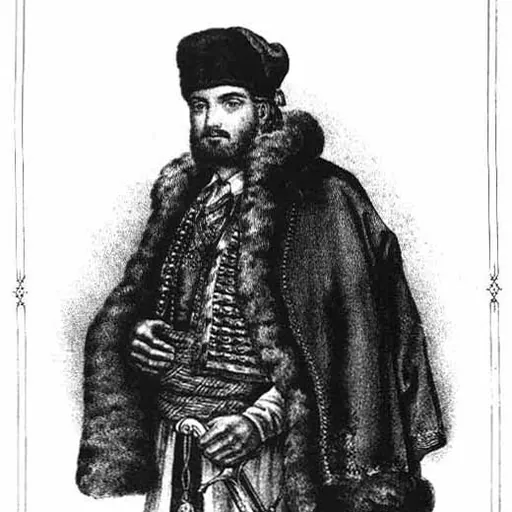
About Danilo I, Metropolitan of Cetinje
Lived 1670 – 1735 (aged 64–65). Danilo I, Metropolitan of Cetinje was an eastern Orthodox priest.
Danilo I Petrović-Njegoš (; 1670 – 11 January 1735) was the Metropolitan of Cetinje between 1697 and 1735, the first de facto vladika of Montenegro, and the founder of the House of Petrović-Njegoš—which ruled Montenegro from 1697 to 1918. He restored the Cetinje Monastery and initiated the struggle for the liberation of Montenegro from Ottoman rule.
He was also known by the patronymic Danilo Šćepčević.
Early life and background Danilo Šćepčević was born in Njeguši, the son of Stepan or Šćepan Kaluđerović, a merchant, and Ana, who later became a nun. He had a brother, Radul, known as Rade Šćepčev. His paternal family belonged to the Heraković brotherhood.
Danilo Šćepčević was only 13 years old when the Great Turkish War began in 1683. As a fifteen-year-old, he was a witness to the battle of Vrtijeljka (1685) during the Morean War. It is possible that he heard the details of the battle from some survivor. He mentioned "noble and famous hajduks who fell at Vrtijeljka" in a letter to the Montenegrin chiefs dated to 1714.
After the death of Sava Očinić, the Metropolitan of Cetinje, in 1697, there was turmoil surrounding the election of a new metropolitan when riots arose because of it.
Chirotony In 1697, the Montenegrin tribal assembly chose the monk of Cetinje, Danilo Šćepčević as the head of the Serbian Orthodox Metropolitanate of Cetinje, following the Great Migrations of the Serbs which left the seat of the Serbian Church to Phanariote Greeks who were closely associated with the Porte. Kalinik I of Skoplje was appointed by the Ottomans to become the new Serbian Patriarch of Peć. The Bishop of Kotor, Marin Drago, made a similar effort and attempted to use this opportunity to weaken the influence of the metropolitan and to share the influence of Catholicism in the Primorje. Danilo was, as other Serbian bishops, unwilling to subordinate himself to Kalinik.
Danilo's deep patriotism and loyalty to the heritage of the Serbian Church can best be seen in the fact that he did not want to be consecrated as a metropolitan by Kalinik, who sat in Peć, geographically closer to him.
Danilo was chirotonized by Arsenije III Crnojević as the bishop of Cetinje and Metropolitan of Skenderija and Primorje. The chirotony, which took place during the national church assembly, was participated in by Serbian metropolitans from all over the Serbian lands, as well as other notable Serbs. The following individuals took part in the consecration: Savatije III Ljubibratić of Zahumlje, Stefan of Srem, Jeftimije Drobnjak of Bačka, Isaija of Ineu, Spiridon Štibica of Vršac, and Gerasim of Zvornik. From Danilo's arrival at the metropolitan position, constant battles with the Turks would begin, which would not subside for the next two centuries. Compared to previous metropolitans, Danilo would have a much greater reputation among the people, which would be connected not only with his personality but also with many circumstances. During his time, the cooperation of Montenegrins with the Venetian Republic, which had been in constant decline in the 18th century, would end. Danilo's period would also represent the beginning of a new era of Montenegrin history. Ties with Russia would be established, in which Montenegro, as a Slavic and Orthodox state, would find a secure foothold, unlike the Venetian Republic, which, as a Roman Catholic and non-Slavic state, only used Montenegrins to fight against the Ottomans.
In 1715, Danilo visited Tsar Peter I at St. Petersburg and secured his alliance against the Ottomans—a journey that became traditional among his successors in Montenegro and in all the Serbian lands elsewhere in the Balkans. He subsequently recovered Zeta from the Ottomans, restored the monastery at Cetinje, and erected defenses around Podmaine Monastery in Budva, which was rebuilt in 1630 and served as a summer residence of the ruling family of Montenegro.
Upon his return from Russia in April 1716, Danilo settled in Maine near Budva on Venetian territory. He found Montenegro in a difficult state, and writing to the Russian Chancellor Golofkin, he stated:Everything was destroyed, dispersed and handed over to the sword, taken into slavery: and a small remnant remained in the mountains and saved themselves. From then on, until the fall of Venice, the Metropolitans of Cetinje had the right to build new and reconstruct destroyed churches in those territories, and to freely preach there.
He was said to have issued the "extermination of the Turkicized" (Istraga poturica), as included in The Mountain Wreath (1847), however, there are views that this never happened.
Styles "Danil, Metropolitan of Skenderija and Primorje" (Данил, митрополит Скендерије u Приморја), 1715. "Danil, Bishop of Cetinje, Njegoš, Duke of the Serb land" (Данил, владика цетињски, Његош, војеводич српској земљи), 1732.
Annotations
Don’t just read it —
keep it.
Full-length biographies made to live with: read them, listen on the way to work, watch them tonight.
- E-book
- Audio
- Video
Instant download · yours to keep · every purchase keeps this site free
Important facts
Related people
Same field, nearest in time
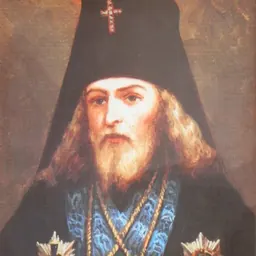
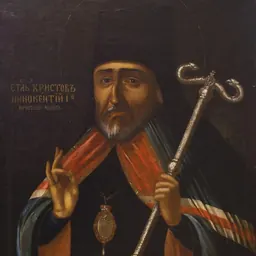
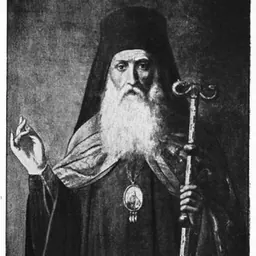
Contemporaries
People whose lives overlapped Danilo I, Metropolitan of Cetinje's



Frequently asked questions
Who was Danilo I, Metropolitan of Cetinje?
Montenegrin metropolitan (1697-1735)
When was Danilo I, Metropolitan of Cetinje born?
Danilo I, Metropolitan of Cetinje was born in 1670 in Njeguši.
When did Danilo I, Metropolitan of Cetinje die?
Danilo I, Metropolitan of Cetinje died on 11 January 1735 in Budva.
What was Danilo I, Metropolitan of Cetinje's occupation?
Danilo I, Metropolitan of Cetinje was an eastern Orthodox priest.
What nationality was Danilo I, Metropolitan of Cetinje?
Danilo I, Metropolitan of Cetinje's recorded nationality: Serb.
Sources & further reading
· Wikipedia: Danilo I, Metropolitan of Cetinje
· DBpedia: Danilo I, Metropolitan of Cetinje
Cite this page
APA: Biography.guide. (2026). Danilo I, Metropolitan of Cetinje. https://biography.guide/danilo-i-metropolitan-of-cetinje/
MLA: "Danilo I, Metropolitan of Cetinje." Biography.guide, https://biography.guide/danilo-i-metropolitan-of-cetinje/.
Chicago: "Danilo I, Metropolitan of Cetinje." Biography.guide. https://biography.guide/danilo-i-metropolitan-of-cetinje/.
Data last updated: 2026-09-25 · Spot an error? Report a correction.
Portrait: Wikimedia Commons · author & licence
Page generated 2026-10-04 09:18 UTC