
Sylvie Le Bon-de Beauvoir
French philosophy professor and adoptive daughter of Simone de Beauvoir
About Sylvie Le Bon-de Beauvoir
Born 1941. Sylvie Le Bon-de Beauvoir is a French publisher, philosopher and university teacher.
Sylvie Le Bon-de Beauvoir (born 17 January 1941) is the adopted daughter of Simone de Beauvoir. She is a philosophy professor. The meeting between the two women was recounted in the book All Said and Done, which Simone de Beauvoir dedicated to Le Bon.
Le Bon was one of the women that de Beauvoir and Jean-Paul Sartre cared and provided for. Sylvie Le Bon and Simone de Beauvoir met in 1960, when Le Bon was 19 and de Beauvoir was 52.
De Beauvoir legally adopted Le Bon in 1980, making her the sole executor of her will. Beauvoir later invited her over when she was a philosophy student in college. In All Said and Done, the book where Beauvoir details the chronology of her relationship with Le Bon, Beauvoir remarks on the “réciprocité” in their relationship and that she viewed Le Bon as someone similar to her–“an intellectual with a passion for life." The relationship that followed was intimate in nature, yet Beauvoir always refused the label of “lesbian.” After being together for 22 years, Beauvoir legally adopted Le Bon as her daughter, but both Le Bon and Beauvoir adamantly state this was not to cement a mother-daughter dynamic. It was rather to assign a legal heir for her unpublished writing.
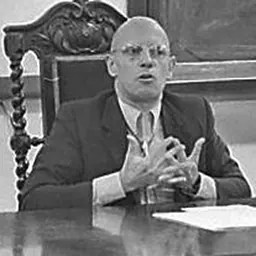
After Beauvoir’s death in 1986, Le Bon took over the publication of her work materials and became a spokesperson for Beauvoir. Le Bon participated in a 1994 interview to elucidate Beauvoir’s stances, such as her opinions on Sigmund Freud, Jacques Lacan, and Michel Foucault. Le Bon herself does not have favorable views on Foucault, calling his ideas overrated, old-fashioned, and pseudo-scientific.
In a 2021 interview, Le Bon described their relationship as friends of equal footing and one of love. Beauvoir described the atypical relationship: “What made it complicated is that neither one of us was prepared, especially me, to love someone who was a woman. But that’s what it was, love, that’s all." Republished Beauvoir’s first novel When Things of the Spirit Come First Published volumes of Beauvoir’s letters: Unlike Sartre’s adopted daughter Arlette Elkaïm, Le Bon chose to publish Beauvoir’s letters unedited. Letter writing forms an especially valuable part of Beauvoir’s legacy as one of Beauvoir’s distinct characteristics as an author was that her readers felt that she was approachable enough to directly contact her, some even confessing secrets in their letters, and she would often write back. Beauvoir was known to value this correspondence, seeing her readers as the anchor to her work, her literature as a dialogue rather than a closed form expository exercise. Le Bon helped archive Beauvoir’s letters in the Bibliothèque Nationale. Though Beauvoir gave vague answers when questioned about these letters, Le Bon revealed that Beauvoir did catalogue her letters chronologically, suggesting Beauvoir had some interest in the storage and ease of access for these writings. Correspondance croisée (Simone de Beauvoir and Jacques-Laurent Bost)
Published Beauvoir’s diaries: Helped edit and publish Beauvoir’s diary entries in the 2006 book Diary of a Philosophy Student with Margaret A. Simons; wrote the foreword In the foreword, Le Bon makes the argument that, in publishing Beauvoir’s diary entries from when she was 18-20 years old, she hopes readers can see for themselves Beauvoir’s coherent philosophies before any influence of Sartre. As such, Le Bon is a defender of Beauvoir’s originality and distinguishes Beauvoir’s legacy from Sartre’s canon. She is interested in carving out the figure of “Beauvoir before Sartre.” She also clarifies Beauvoir and Sartre found kindred spirits within each other when it came to their intellectual property, instead of one’s stronger ideas influencing the other, a dynamic other scholars such as Kate Kirkpatrick would agree with. Le Bon’s statement in this 2006 book is a continuation of a history of Le Bon’s repeated attempts to prevent others from viewing Beauvoir as a student of Sartre and to legitimize Beauvoir in intellectual history. Le Bon describes Beauvoir as “a writer and philosopher, as a woman and feminist.” Beauvoir insisted on being identified as a writer, more so than a philosopher, and she repeatedly clarified this position throughout her lifetime, in hopes that the public’s and her view of herself would be reconciled. Le Bon’s close relationship with Beauvoir is exemplified by her understanding of Beauvoir’s desire to not be misinterpreted, as Le Bon praises the publication of these diaries for “energetically” affirming “her vocation as a writer.” This is a longstanding affirmation of Beauvoir as a writer before a philosopher from Le Bon, as she also stressed in a 1994 interview that “she did not agree…that Beauvoir had been responsible for the main philosophical ideas of L'Etre et le néant), nor would Beauvoir have accepted this.” Le Bon’s attitude of deep admiration towards Beauvoir is apparent in this foreword. Le Bon calls Beauvoir’s intellectual process in these diaries “the birth…of the fundamental choices of thought and existence that would have such an impact on so many future readers, women and men.” Decided to publish Wartime Diary (Journal de guerre) - Beauvoir’s 1939-1941 journal entries Beauvoir has said in an interview that she would dispose of all her diaries and that it would take a significant amount of editing for her to publish them, but Le Bon maintains that Beauvoir never spoke of this sentiment to her. Le Bon believes these contradicting musings were because Beauvoir may have had mixed feelings towards the publication of her diary, rather than any outright denouncement of it. Additionally, this specific diary Beauvoir had intended to publicize but never got around to, supporting the possibility that Beauvoir was more ambivalent than resistant about publishing her private thoughts.
Don’t just read it —
keep it.
Full-length biographies made to live with: read them, listen on the way to work, watch them tonight.
- E-book
- Audio
- Video
Instant download · yours to keep · every purchase keeps this site free
Important facts
People in Sylvie Le Bon-de Beauvoir's life
Named in this biography and alive at the same time

Related people
Same field, nearest in time




Contemporaries
People whose lives overlapped Sylvie Le Bon-de Beauvoir's

Frequently asked questions
Who is Sylvie Le Bon-de Beauvoir?
French philosophy professor and adoptive daughter of Simone de Beauvoir
When was Sylvie Le Bon-de Beauvoir born?
Sylvie Le Bon-de Beauvoir was born on 17 January 1941 in Rennes.
What is Sylvie Le Bon-de Beauvoir's occupation?
Sylvie Le Bon-de Beauvoir is a publisher, philosopher and university teacher.
What nationality is Sylvie Le Bon-de Beauvoir?
Sylvie Le Bon-de Beauvoir is French.
Sources & further reading
· Wikipedia: Sylvie Le Bon-de Beauvoir
· DBpedia: Sylvie Le Bon-de Beauvoir
Cite this page
APA: Biography.guide. (2026). Sylvie Le Bon-de Beauvoir. https://biography.guide/sylvie-le-bon-de-beauvoir/
MLA: "Sylvie Le Bon-de Beauvoir." Biography.guide, https://biography.guide/sylvie-le-bon-de-beauvoir/.
Chicago: "Sylvie Le Bon-de Beauvoir." Biography.guide. https://biography.guide/sylvie-le-bon-de-beauvoir/.
Data last updated: 2026-09-20 · Spot an error? Report a correction.
Page generated 2026-09-27 05:18 UTC