
About Swadeshabhimani Ramakrishna Pillai
Lived 1878 – 1916 (aged 37). Swadeshabhimani Ramakrishna Pillai was an Indian author, journalist, freedom fighter and newspaper editor.
K. Ramakrishna Pillai (1878–1916) was an Indian nationalist writer, journalist, editor, and political activist. He edited Swadeshabhimani (The Patriot), the newspaper which became a potent weapon against the rule of the British and the erstwhile princely state of Travancore (Kerala, India) and a tool for social transformation. His criticism of the Diwan of Travancore, P. Rajagopalachari and the Maharajah led to the eventual confiscation of the newspaper. Ramakrishna Pillai was arrested and exiled from Travancore in 1910. Vrithantha Pathra Pravarthanam and Karl Marx (1912) are among his most noted works in Malayalam, Vrithantha Pathra Pravarthanam being the first book on journalism in Malayalam
Early life Ramakrishna Pillai was born in Athiyanoor (Arangamugal in Neyyattinkara Taluk of Travancore) on 25 May 1878 (ME: 1053 Edavam 16). He was the youngest son of Chakkiamma and Narasimhan Potti, a temple-priest.
The patriarch of the family (Thekkekod veedu) had once saved the life of Prince Marthanda Varma from his enemies. When Marthanda Varma became king or Maharaja of Travancore, he gifted the family of land, a 12-room mansion and certain privileges in the Krishna temple in Neyyattinkara. Ramakrishna Pillai was born over a century later.
Following the matrilineal Nair tradition, Ramakrishna Pillai spent much of his boyhood with his maternal uncle, Advocate Keshava Pillai. He had his early education at Neyyattinkara English Medium School and Rajagiyamahapadashala, the Royal school, Thiruvananthapuram. He was a shy and silent student. Kattupana Naganathaiyer, K. Velupilla and R. Keshavapilla were his early teachers. Ramakrishna Pillai utilized his less restricted life in Thiruvananthapuram to acquaint himself with new books, newspapers, new places and new friends. He passed his matriculation exam at the age of 14. He passed the B. A. Malayalam degree with first rank and received the Keralvarmamudhra, an honorary award for academic excellence. He also attacked the kingship of the Maharaja of Travancore: "The monarchs believe and force others to believe that they are God's representatives or incarnations. This is absurd. Did God create a special kind of dog to be the king of dogs, or a special kind of elephant to rule over all elephants?" Swadeshabhimani's pen moved against corruption in the state and injustice in the society. He irritated the Maharajah Moolam Thirunal himself by criticizing the large expenses incurred by the Royal consort, the Panapillai Amma, by constructing private palaces and publicly celebrating the wedding of the daughter of the Maharajah.
On 26 September 1910, Swadeshabhimani newspaper and the printing press were sealed and confiscated by the Indian Imperial Police. Ramakrishna Pillai was arrested and banished from Travancore to Thirunelveli in Madras Province of British India. The superintendent of police, F S S George (a British officer), Inspector R Achuthen Pillai, Inspector B Govinda Pillai and Inspector Pichu Aiyangar, carried out the arrest, without an arrest warrant. The police escorted him till Thirunelveli. The Kingdom of Travancore itself was a princely state under the Madras Presidency, then. Ramakrishna Pillai's family joined him later once he moved to a rented house in Madras. Editorships of newspapers like Kochi and Malabar came to be offered to him during the time, but he chose to stay in Madras.
Many nationalists and Indian newspapers reacted to the arrest and banishment of Ramakrishna Pillai and the banning of the paper. However, countering the king and the British Government that overruled the king, was not easy. Yet, early in the first half of the twenties, the banned newspaper was revived by the mighty will of K. Kumar of Travancore, the veteran Gandhian and Freedom Fighter. He viewed the revival as a befitting tribute to Ramakrishna Pillai. Kumar himself was its manager and chief-editor. He was assisted in his efforts by K. Narayana Kurukkal, a close colleague of Ramakrishna Pillai and the author of the novels: "Parappuram" and "Udayabhanu" besides Barrister A K Pillai. Ramakrishna Pillai's wife, B. Kalyani Amma, Pillai's associates K. Narayana Kurukkal, R. Narayana Panikker and the famous political-journalist Raman Menon and K. Kumar himself were regular contributors to the magazine. The paper was revived under the same name 'Swadeshabhimani' and had its headquarters in the building currently housing the DPI Office at Thycaud, Thiruvananthapuram. In spite of all these, the government wisely chose to remain silent. The new 'Swadeshabhimani' was re-modeled after "Modern Review" of Ramand Chatterjee. It continued its legacy as a significant force transforming the socio-political life of Kerala. K. Kumar had great admiration for Ramakrishna Pillai and he took the lead role in organizing the deportation-day of Pillai as "Ramakrishna Pillai Day" (from M.E: 10-02-1098) and erecting his statue in Trivandrum. Ramakrishna Pillai Day continued to be commemorated in Trivandrum for a long time thereafter. It appears that the editorship of Swadeshabhimani passed on to A.K Pillai (by 1932) who also edited the "Swarat" with the help and support of K. Kumar.
NOTE: After Independence, the Government of Kerala returned the press of Swadeshabhimani to Vakkom Moulavi's family in 1957.
Last years While in exile, Ramakrishna Pillai returned to his studies. He joined the F.L. Degree and Kalyaniamma joined BA Degree program in Philosophy. It was during these days in Madras that he wrote the book Ende Naadukadathal on his banishment from Travancore. After a brief vacation in Palghat, the family returned to Madras. Pillai had to attend to studies as well as court proceedings in the Indian Patriot Case. In April, the couple left Madras. Their third child, a daughter, was born following this on 7 August 1912.
In the same year, Ramakrishna Pillai published Vrithantha Pathra Pravarthanam, a book on Journalism which became very popular later. His biographies of Karl Marx and Benjamin Franklin were also published. There are scores of articles and literary creations to his credit. In May 1913, the family went to Palghat after which Ramakrishna Pillai published his books Mannante Kannathum and Narakathil Ninnu. When Kaliyaniamma found a job as a teacher in Kannur, they moved Kannur. His physical health began to deteriorate during this period.
Ramakrishna Pillai succumbed to his ill-health on 28 March 1916.
Literary works Ramakrishna Pillai wrote over 20 books in his lifetime and many of them are very notable. Vruththaanthapathrapravarthanam (Malayalam) (1912) Ende Naadukadathal (My Banishment) Karl Marx (Malayalam): His biography of Karl Marx was the first in any Indian language. Her important works includes Vyazhavatta Smaranakal, Karmaphalam, Mahathikal and Atmakatha. Her biography Vyazhavatta Smaranakal ( Memories of 12 years) is about the 12 years of their married life. She also translated a novel written by Rabindranath Tagore. She died on 9 October 1959 (28 Kanni 1135).
Swadeshabhimani Smaraka Samithi Swadesha abhimani Smaraka Samidhi is the trust formed in the memory of Ramakrishna Pillai. The Samidhi observes anniversaries of the banishment of Swadeshabhimani Ramakrishna Pillai every year, which is attended by several eminent personalities.
Swadeshabhimani Ramakrishna Pillai Award The Swadeshabhimani Ramakrishna Pillai Award is awarded for press journalism every year by the Government of Kerala. The following are its recipients.
2002: V. K. Madhvankutty (Awarded by the President of India) 2006: G. Sekharan Nair (Mathrubhumi) and Reji Joseph (Deepika) 2013: B. R. P. Bhaskaran 2014: V. P. Ramachandran 2016: K. Mohanan 2017: TJS George The Pravasi Swadeshabhimani Ramakrishna Pillai Award has been instituted in memory of Ramakrishna Pillai, by the Pravasi Malayali Society.
Swadeshabhimani memorial Memorials of Swadeshabhimani Ramakrishna Pillai are constructed at Neyyattinkara and at Payyambalam Beach, Kannur.
Don’t just read it —
keep it.
Full-length biographies made to live with: read them, listen on the way to work, watch them tonight.
- E-book
- Audio
- Video
Instant download · yours to keep · every purchase keeps this site free
Important facts
People in Swadeshabhimani Ramakrishna Pillai's life
Named in this biography and alive at the same time
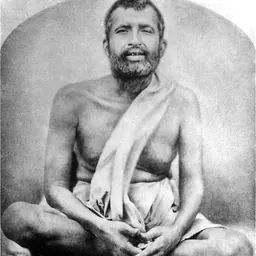

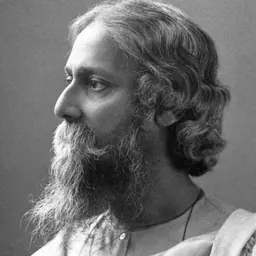
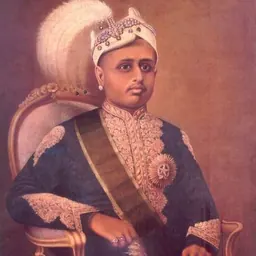


Related people
Same field, nearest in time
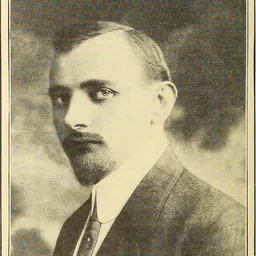



Contemporaries
People whose lives overlapped Swadeshabhimani Ramakrishna Pillai's



Frequently asked questions
Who was Swadeshabhimani Ramakrishna Pillai?
Indian journalist (1878–1916)
When was Swadeshabhimani Ramakrishna Pillai born?
Swadeshabhimani Ramakrishna Pillai was born on 25 May 1878 in Muvattupuzha Lok Sabha constituency.
When did Swadeshabhimani Ramakrishna Pillai die?
Swadeshabhimani Ramakrishna Pillai died on 28 March 1916 in Kannur.
What was Swadeshabhimani Ramakrishna Pillai's occupation?
Swadeshabhimani Ramakrishna Pillai was an author, journalist, freedom fighter and newspaper editor.
What nationality was Swadeshabhimani Ramakrishna Pillai?
Swadeshabhimani Ramakrishna Pillai was Indian.
Sources & further reading
· Wikipedia: Swadeshabhimani Ramakrishna Pillai
· DBpedia: Swadeshabhimani Ramakrishna Pillai
Cite this page
APA: Biography.guide. (2026). Swadeshabhimani Ramakrishna Pillai. https://biography.guide/swadeshabhimani-ramakrishna-pillai/
MLA: "Swadeshabhimani Ramakrishna Pillai." Biography.guide, https://biography.guide/swadeshabhimani-ramakrishna-pillai/.
Chicago: "Swadeshabhimani Ramakrishna Pillai." Biography.guide. https://biography.guide/swadeshabhimani-ramakrishna-pillai/.
Data last updated: 2026-09-22 · Spot an error? Report a correction.
Page generated 2026-09-27 05:23 UTC