
Suzan Shown Harjo
Cheyenne-Holdulgee Muscogee activist, poet, writer, lecturer, and curator (born 1945)
About Suzan Shown Harjo
Born 1945. Suzan Shown Harjo is an American writer, curator, journalist, social activist, manufacturer and author.
Early years Suzan Shown Harjo was born on June 2, 1945, in El Reno, Oklahoma, on the Cheyenne and Arapaho tribal jurisdictional area. One of her maternal great-grandfathers was Chief Bull Bear (Cheyenne).
Between the ages of 12 and 16 she lived with her family in Naples, Italy, where her father was stationed while in the US Army. Upon her return to the States, she moved to New York City, where she worked in radio and the theater. She worked on it with her husband, Frank Harjo, whom she met and married in New York. They also worked on issues of protecting religious freedom for American Indians.
Harjo was elected to the Common Cause National Governing Board in 1982.
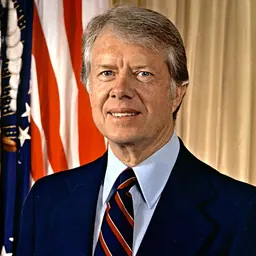
In 1978 President Jimmy Carter appointed Harjo as a Congressional liaison for Indian affairs. Harjo worked with multiple subcommittees within Congress to advocate Native American positions in the formation of federal policy. Harjo supported such issues as hunting and fishing rights on traditional lands, voting, and land contracts rights. Indian activists were filing longstanding claims for historic insufficient payment by the federal government for Indian lands under numerous treaties, and government representatives suggested there should be a statute of limitations for such claims. Her continued lobbying related to religious freedom helped lead to passage of the American Indian Religious Freedom Act (AIRFA) in 1978, which Carter supported. Harjo also fought for land rights. Congressional delays added to the time to settle such cases. As a Washington Post article reported on this issue, Harjo said, "They're adding 10 to 15 yrs. to a litigation process that is now going on... What I'm fearful is that tribes that are now negotiating in good faith... will back off and refuse to compromise."
National Congress of American Indians Suzan Shown Harjo served as the Executive Director of the National Congress of American Indians (NCAI) from 1984 to 1989. The NCAI, a non-profit organization to represent all Native American Indians as well as Alaska Natives, was founded in 1944.
Harjo persisted in working with Congress to support Native American rights to traditional hunting and fishing. She supported gaining more funds for Native American education. The NCAI goal was to ensure Native American children were educated, and with her leadership they gained increased appropriations for that purpose in 1984, 1986, and 1988. Harjo pressed the Congressional committee to gain access to government documents related to programs for Native Americans, and asked for continued support of Native American attempts at economic development. In the 1980s, she was concerned about declining federal support for health clinics on reservations and the adverse result of subsequent higher mortality rates among Native Americans.
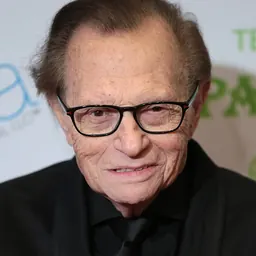
Harjo has appeared as a spokesman for Native American issues on many television programs, including Oprah!, C-SPAN, and Larry King Live.
Harjo is a long-time columnist for the online newspaper Indian Country Today. which allowed the protection of Native Americans for practice of traditional religion and rituals. In the first year of its enactment, it enabled the first repatriation of sacred items to American Indian tribes.
She also was involved in working for the 1989 National Museum of the American Indian Act, which authorized establishment of the museum at two sites, at the former Customs Building in New York City, and construction of a new building on the Mall; the 1990 Native American Graves Protection and Repatriation Act (NAGPRA), which allows tribes to reclaim their human remains and ceremonial items from publicly funded institutions; and the 1996 Executive Order on Indian Sacred Sites.
The MSI sponsors Just Good Sports, devoted to ending use of American Indian mascots and stereotypes by sports teams, a cause of Harjo's since the 1960s. The U.S. Supreme Court declined the plaintiff's petition for judicial review and refused to hear the Native American group's appeal. This case was followed by Blackhorse et al. v. Pro Football , in which six young Native American plaintiffs challenged the federal trademark licenses of the Washington football team name. On June 18, 2014, the US Patent and Trademark Office again revoked the registration for the Washington Redskins, saying the name was "disparaging." The team owner said he would appeal.
Activism by Harjo and others has resulted in dramatic changes in the sports world since the late 20th century: by 2013 two-thirds of teams with American Indian mascots had dropped them due to these public campaigns by Harjo and others.
Harjo worked on the 1992 Alliance, formed to develop alternative ways to mark the Quincentennial of Columbus' arrival in the Americas, which Native Americans considered the beginning of terrible times for them. She ensured that tribes that have survived were celebrated, as well as mourning tribes that became extinct. Harjo has also written poems related to this history.
The Morning Star Institute has organized the National Prayer Day for Sacred Places, an annual event to highlight efforts to protect and preserve places sacred to Native Americans.
Smithsonian's National Museum of the American Indian Harjo was a trustee of the Museum of the American Indian and its corresponding collection 1980 to 1990. When, in 1990, the Museum of the American Indian became the National Museum of the American Indian, Harjo served as a founding trusting from 1990 to 1996. During this time, Harjo oversaw the creation of the museum's exhibition and repatriation policies.
From 2004 to 2005, Harjo was the director of the Native Languages Archives Repository Project, which established methods of linguistic preservation including information on safe storage of artifacts and a guide for identifying lost artifacts in other archives. As acting director, Harjo coauthored the section of the "ANA Native Language Preservation: A Reference Guide for Establishing Archives and Repositories" concerning what constitutes a language repository, how to construct the necessary foundations for a language repository, and how to find sources within the language repository.
In 2014, Harjo curated an exhibit entitled "Nation to Nation: Treaties Between the United States and American Indian Nations" at the Smithsonian's National Museum of the American Indian. Accompanying the exhibit, she edited a book, which serves as an encyclopedia of treaties between Native nations and the United States. Additionally, the book contains several chapters of Harjo's own analysis of U.S. policies and their direct impact on her family.
Academic recognition Harjo has been selected or invited for stays at universities to lead special classes in poetry and policy. In 1992 she was the first Native American woman to receive the Montgomery Fellowship at Dartmouth College, which was originally established to educate American Indians. In 1996 she was the first Native person to be selected as a Stanford University Visiting Mentor. In 2008, Harjo was selected as the first Vine Deloria, Jr. Distinguished Indigenous Scholar at the University of Arizona.
Writing Harjo first published her poetry in an Italian magazine, when she was 12 years old. and a contributing writer to First American Art Magazine.
Personal life In New York, she married Frank Ray Harjo (died 1984). He was an artist and they co-produced Seeing Red, a biweekly news program on WBAI radio. They had two children together. (Harjo wrote the foreword) Deloria Jr., Vine. We Talk, You Listen: New Tribes, New Turf. Lincoln: Bison Books, 2007. . (Harjo wrote the introduction) Suzan Shown Harjo, editor. Nation to Nation: Treaties Between the United States and American Indian Nations. Washington, D.C.: Smithsonian Books, 2014. . Verzuh, Valerie K. Indian Country: The Art of David Bradley. Santa Fe: Museum of New Mexico Press, 2015. . (Harjo wrote the foreword)
Exhibitions "Visions from Native American Indian Art," 1992, U.S. Senate Rotunda Building; Washington D.C. "American Icons Through Indigenous Eyes, 2007, District of Columbia Arts Center; Washington D.C. "Nation to Nation: Treaties Between the United States and American Indian Nations," 2014, National Museum of the American Indian; Washington D.C.
Film/Video Documentary, Sacred Earth: Makoce Wakan (1993), about the Native Americans' sacred lands and their need of protection.
Articles "Chief Offenders" , Native Peoples Magazine, Summer 1999 (related to sports mascot issue). "American Indian Religious Freedom Act after Twenty-Five Years: An Introduction," Wíčazo Ša Review, Vol. 19, No. 2, Autumn 2004. "Carlisle Indian School's History Must Be Preserved So Those Who Suffered Aren't Forgotten." Indian Country Today Media Network, October 11, 2012. "Washington 'Redskins' is a racist name: US pro football must disavow it," The Guardian, January 17, 2013. "Cultural Heritage, Art, & Living Beings: Justice Lost in Translation," First American Art Magazine, No. 1, Fall 2013 (related to the Paris auction of Hopi Friends). "The R-Word Is Even Worse Than You Think," Politico, June 23, 2014.
Poetry Harjo's poems have appeared in numerous journals including Antaeus, New York Quarterly, Nimrod, and the Potomac Review. They have been published in several anthologies, including Reinventing the Enemy's Language: Contemporary Native Women's Writings of North America, The Remembered Earth: An Anthology of Contemporary Native American Literature, and Third World Women. Several of her poems were published in the Beltway Poetry Quarterly, Fall 2005.
Plays My Father's Bones, written in collaboration with Mary Kathryn Nagle, 2013.
Don’t just read it —
keep it.
Full-length biographies made to live with: read them, listen on the way to work, watch them tonight.
- E-book
- Audio
- Video
Instant download · yours to keep · every purchase keeps this site free
Important facts
People in Suzan Shown Harjo's life
Named in this biography and alive at the same time



Related people
Same field, nearest in time


Contemporaries
People whose lives overlapped Suzan Shown Harjo's

Frequently asked questions
Who is Suzan Shown Harjo?
Cheyenne-Holdulgee Muscogee activist, poet, writer, lecturer, and curator (born 1945)
When was Suzan Shown Harjo born?
Suzan Shown Harjo was born on 2 June 1945 in El Reno.
What is Suzan Shown Harjo's occupation?
Suzan Shown Harjo is a writer, curator, journalist, social activist, manufacturer and author.
What nationality is Suzan Shown Harjo?
Suzan Shown Harjo is American.
Sources & further reading
· Wikipedia: Suzan Shown Harjo
Cite this page
APA: Biography.guide. (2026). Suzan Shown Harjo. https://biography.guide/suzan-shown-harjo/
MLA: "Suzan Shown Harjo." Biography.guide, https://biography.guide/suzan-shown-harjo/.
Chicago: "Suzan Shown Harjo." Biography.guide. https://biography.guide/suzan-shown-harjo/.
Data last updated: 2026-09-25 · Spot an error? Report a correction.
Page generated 2026-09-27 05:11 UTC