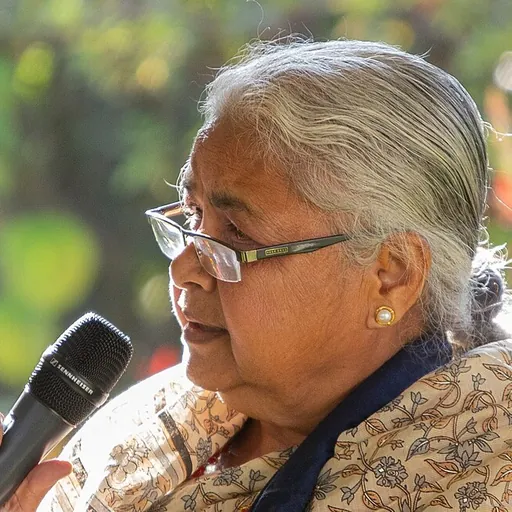
About Sushila Karki
Born 1952. Sushila Karki is a Nepali judge, politician and jurist.
Sushila Karki (born 7June 1952) is a Nepalese lawyer and stateswoman who served as Chief Justice of Nepal from 2016 to 2017 and as interim Prime Minister of Nepal from 2025 to 2026. She became prime minister following the youth protests of September 2025 that led to her predecessor’s resignation. Karki is the first woman in Nepal’s history to serve both as Prime Minister and as Chief Justice of Nepal.
Early life and education Karki was born on 7 June 1952 to a Chhetri family from Sankarpur (later part of Biratnagar ), Nepal. She is the eldest of her family's seven children.
Karki attended Tribhuvan University, earning a Bachelor of Arts from Mahendra Morang College in 1972. She then studied political science in India, and in 1975 received a master's in political science from Banaras Hindu University. She returned to Tribhuvan University to study law, graduating in 1978.
Early career From 1986 to 1989, Karki worked as assistant teacher at Mahendra Multiple Campus, Dharan; from 1988, she concurrently was the bar president of the Koshi Zonal Court until 1990. In 2002, she was made president of the Biratnagar Appellate Court, a role she held until 2004, when she became a senior Advocate at the Nepal Bar Association.
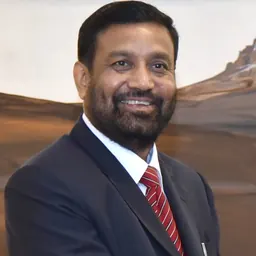
After the retirement of Chief Justice Shrestha in April 2016, Karki was recommended to take over the role by the Constitutional Council. She served on an ad hoc basis until a formal parliamentary hearing the following July confirmed her appointment. She faced opposition for those attributes during her tenure, and was accused by the government of working against them after the Supreme Court overturned the appointment of Jaya Bahadur Chand as Chief of Nepal Police. Dissatisfied with decision to impeach her, the then deputy prime minister and home minister, Bimalendra Nidhi resigned and the Rastriya Prajatantra Party left the coalition it had formed with Nepali Congress and CPN (MC). In May, Cholendra Shumsher JB Rana of the Supreme Court issued a stay against the proceedings.
After her retirement from the court, Karki wrote an autobiography about her early life and career as a judge. Published as Nyaya, Karki argued that democracy relied on the independence of the judiciary. The next year, she published her novel Kara. Conviction of Jay Prakash Gupta Overturning the appointment of Lokman Singh Karki to the Commission for the Investigation of Abuse of Authority
Interim prime minister of Nepal (2025–2026)
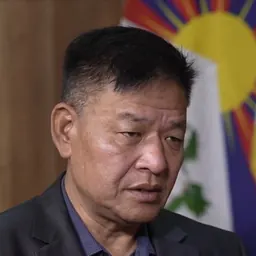
After the 2025 Generation Z-led anti-corruption protests forced Prime Minister K. P. Sharma Oli to resign, an interim government was needed and Karki's name was suggested by activists due to her political neutrality. Following a poll on the online communication platform Discord, protester server members selected Karki out of five options, making her the first government official to be selected online. and Karki was sworn in as interim Prime Minister based on article 61 of the Constitution of Nepal. She is the first woman in Nepal's history to hold the position of Prime Minister. After taking her oath on 12 September, Karki vowed to bring peace, good governance, end corruption and conduct the fair general election in Nepal in six months starting in March 2026. In the same statement, she added those who died in the protests will be considered "martyrs". After her swearing-in, Prime Minister of India Narendra Modi, China’s foreign ministry spokesperson, and US Ambassador to Nepal Dean R. Thompson congratulated Karki on assuming the office of Prime Minister and affirmed their support to the interim government for peace and stability. On 13 September, Karki visited the hospitals of Kathmandu and met the injured Gen Z protesters, expressing solidarity and assuring them of government support. On 14 September, Karki promised to investigate vandalism during the protests and announced compensation to the injured protesters of NPR 1 million ($7,000). Families, however, feel that further steps are required to appropriately honor the sacrifice made by those deceased. On 15 September, Khenpo Sonam Tenphel, Speaker of the Tibetan Parliament-in-Exile and Sikyong Penpa Tsering of the Central Tibetan Administration extended his heartfelt congratulations to Karki. Both highlighted the close relationship between the Nepalese and Tibetans and expressed gratitude to country's government and citizens for providing facilities for Tibetan exiles' rehabilitation since 1959.
On 25 September, Karki declared that government projects which were poorly planned and carried out on a modest budget or scale by the previous government will be abandoned. In order to raise money for repairing the infrastructure that was harmed during the Gen Z protests, she also announced the creation of a reconstruction fund. She further announced that the minimum voting age has been lowered from 18 to 16 years to increase youth voter participation for the upcoming election. On 29 September, Karki Government suspended and froze the passports of ex-prime minister K. P. Sharma Oli, ex-Home Minister Ramesh Lekhak, along with three other government officials who worked under him including then-home secretary Gokarna Mani Duwadi, then-National Investigation Department chief Hutaraj Thapa, and then-chief district officer of Kathmandu, Chhabi Rijal. By 15 October, 14 writ petitions had been filed in the Supreme Court against Karki and her government.
On October 18, Karki further briefed international diplomats about the March 2026 parliamentary elections and stressed her government’s focus on transparency, anti-corruption measures, and restoring stability. On 21 October, Karki met leaders from seven political parties to discuss the 2026 elections. Second retirement (2026-present) On 27 March 2026, Sushila Karki stepped down as Nepal's interim Prime Minister after successfully overseeing the country's transition through a political crisis and conducting general elections. Having always intended to serve only temporarily, she handed power to the newly elected government and returned to the retirement she had left in September 2025. Since leaving office, she has not held any further government or judicial position and has resumed retirement.
Personal life
Karki married Durga Prasad Subedi, who as a youth wing leader of Nepali Congress was one of the perpetrators behind the 1973 Royal Nepal Airlines DHC-6 hijacking. They met while studying in Banaras Hindu University, and he was her tutor.
Don’t just read it —
keep it.
Full-length biographies made to live with: read them, listen on the way to work, watch them tonight.
- E-book
- Audio
- Video
Instant download · yours to keep · every purchase keeps this site free
Important facts
People in Sushila Karki's life
Named in this biography and alive at the same time





Related people
Same field, nearest in time



Contemporaries
People whose lives overlapped Sushila Karki's
Frequently asked questions
Who is Sushila Karki?
interim prime minister of Nepal since 2025
When was Sushila Karki born?
Sushila Karki was born on 7 June 1952 in Biratnagar.
What is Sushila Karki's occupation?
Sushila Karki is a judge, politician and jurist.
What nationality is Sushila Karki?
Sushila Karki is Nepali.
Sources & further reading
Cite this page
APA: Biography.guide. (2026). Sushila Karki. https://biography.guide/sushila-karki/
MLA: "Sushila Karki." Biography.guide, https://biography.guide/sushila-karki/.
Chicago: "Sushila Karki." Biography.guide. https://biography.guide/sushila-karki/.
Data last updated: 2026-09-20 · Spot an error? Report a correction.
Page generated 2026-09-27 05:10 UTC