
About Susan Stebbing
Lived 1885 – 1943 (aged 57). Susan Stebbing was a British philosopher and university teacher.
Thinking to Some Purpose Stebbing's most popular work is Thinking to Some Purpose (1939), a book commissioned by Pelican Books and described on the cover as: "A manual of first-aid to clear thinking, showing how to detect illogicalities in other people's mental processes and how to avoid them in our own." One of the more quoted passages of the book did not in fact appear in the main body of the work but on the first inside of the dust jacket of the 1939 printing and in the front matter of subsequent printings prior to 1952. As it appeared in print (in both 1939 and 1941) it runs, in full, as follows: "There is an urgent need to-day," writes Professor Stebbing, "for the citizens of a democracy to think well. It is not enough to have freedom of the Press and parliamentary institutions. Our difficulties are due partly to our own stupidity, partly to the exploitation of that stupidity, and partly to our own prejudices and personal desires." The work arose out of a synopsis she wrote for a series of radio broadcasts intended for the BBC. Published on the eve of the Second World War, Stebbing wrote in the Preface: "I am convinced of the urgent need for a democratic people to think clearly without the distortions due to unconscious bias and unrecognized ignorance. Our failures in thinking are in part due to faults which we could to some extent overcome were we to see clearly how these faults arise." p.9 Chapter VI opens thus:"Some forms of ineffective thinking are due to our not unnatural desire to have confident beliefs about complicated matters with regard to which we must take some action or other. We are sometimes too lazy, usually too busy, and often too ignorant to think out what is involved in the statements we so readily accept. ...we easily fall into the habit of accepting compressed statements which save us from the trouble of thinking. Thus arises what I shall call 'Potted Thinking'. This metaphor seems to me to be appropriate, because potted thinking is easily accepted, is concentrated in form, and has lost the vitamins essential to mental nourishment. You will notice that I have continued the metaphor by using the word 'vitamins.' Do not accept the metaphor too hastily: it must be expanded. Potted meat is sometimes a convenient form of food; it may be tasty, it contains some nourishment. But its nutritive value is not equivalent to that of the fresh meat from which it was potted. Also, it must have originally been made from fresh meat, and must not be allowed to grow stale. Similarly a potted belief is convenient; it can be stated briefly, sometimes also in a snappy manner likely to attract attention. A potted belief should be the outcome of a belief that is not potted. It should not be held on to when circumstances have changed and new factors have come to light. We should not allow our habits of thought to close our minds, nor rely upon catch-words to save ourselves from the labour of thinking. Vitamins are essential for the natural growth of our bodies; the critical questioning at times of our potted beliefs is necessary for the development of our capacity to think to some purpose." p.67–68 Logic in Practice (1934) Imagination and Thinking (1936) with C. Day-Lewis Philosophy and the Physicists (1937) Thinking to Some Purpose (1939) Ideals and Illusions (1941) A Modern Elementary Logic (1943) Men and Moral Principles. L. T. Hobhouse Memorial Trust Lecture No. 13. (1944)
Papers "Dr. McTaggart and "Idealism"", Mind New Series, Vol. 35, No. 138 (Apr., 1926), pp. 267–268. "The Method of Analysis in Metaphysics", Proceedings of the Aristotelian Society, Volume 33, Issue 1, 1 June 1933, pp. 65–94. "Nebulous Philosophy—Jeans and Eddington", The American Scholar, Vol. 6, No. 1 (WINTER 1937), pp. 71-84. "Some Puzzles about Analysis", Proceedings of the Aristotelian Society New Series, Vol. 39 (1938-1939), pp. 69-84. "Language and Misleading Questions", The Journal of Unified Science (Erkenntnis), Vol. 8, No. 1/3 (Jun. 1, 1939), pp. 1–6. "Moore's Influence", in Paul Schilpp (ed.) The Philosophy of G.E. Moore, Volume 2 (1942)
Don’t just read it —
keep it.
Full-length biographies made to live with: read them, listen on the way to work, watch them tonight.
- E-book
- Audio
- Video
Instant download · yours to keep · every purchase keeps this site free
Important facts
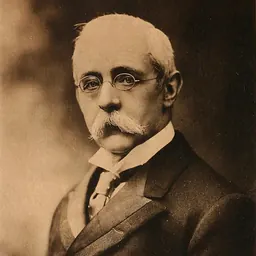
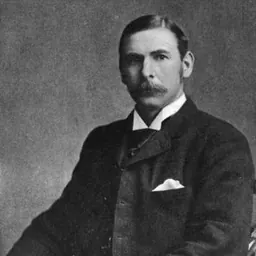
Related people
Same field, nearest in time

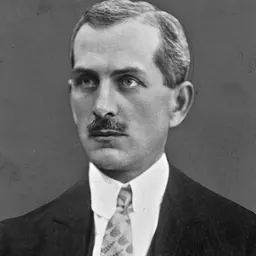



Contemporaries
People whose lives overlapped Susan Stebbing's




Frequently asked questions
Who was Susan Stebbing?
British philosopher (1885-1943)
When was Susan Stebbing born?
Susan Stebbing was born on 2 December 1885 in North Finchley.
When did Susan Stebbing die?
Susan Stebbing died on 11 September 1943 in London.
What was Susan Stebbing's occupation?
Susan Stebbing was a philosopher and university teacher.
What nationality was Susan Stebbing?
Susan Stebbing was British.
Sources & further reading
Cite this page
APA: Biography.guide. (2026). Susan Stebbing. https://biography.guide/susan-stebbing/
MLA: "Susan Stebbing." Biography.guide, https://biography.guide/susan-stebbing/.
Chicago: "Susan Stebbing." Biography.guide. https://biography.guide/susan-stebbing/.
Data last updated: 2026-09-20 · Spot an error? Report a correction.
Page generated 2026-09-27 05:23 UTC