
About Susan Ofori-Atta
Lived 1917 – 1985 (aged 67–68). Susan Ofori-Atta was a Ghanaian physician, midwife and pediatrician, known for Childhood malnutrition, Women in Ghana and Women's empowerment.
Susan Barbara Gyankorama Ofori-Atta, also de Graft-Johnson (1917 – July 1985) was a Ghanaian medical doctor who was the first female doctor on the Gold Coast. She was the first Ghanaian woman and fourth West African woman to earn a university degree. Ofori-Atta was also the fourth West African woman to become a physician after the Nigerians Agnes Yewande Savage, Elizabeth Abimbola Awoliyi (1938) and Sierra Leone Creole, Irene Ighodaro (1944). In 1933, Sierra Leonean political activist and higher education pioneer, Edna Elliot-Horton became the second West African woman university graduate and the first to earn a bachelor's degree in the liberal arts. She helped to establish the Women's Society for Public Affairs and was a Foundation Fellow of the Ghana Academy of Arts and Sciences.
Susan Ofori-Atta received her primary education at St. Mary's Convent in Elmina around 1921 and enrolled at Achimota School in 1929 for her secondary education. In 1960, she volunteered her time at a Congolese hospital that was understaffed. During her time as a medical officer at the Princess Marie Louise Hospital, she was dubbed "mmofra doctor" (children's doctor). During the 1960s, E. V. C. de Graft Johnson held a one-man protest on a matter of legal principle outside the Supreme Court buildings. After the ban on multiparty democracy was lifted in 1969, E. V. C. de Graft-Johnson became the Leader and General Secretary of the now-defunct All People's Party. In 1979, E.V.C. de Graft-Johnson was the vice-chairman of the centre-left party, Social Democratic Front (SDF).
Susan Ofori-Atta's older brother was William Ofori-Atta, the Gold Coast politician and lawyer, former foreign minister and one of the founding leaders of the United Gold Coast Convention (UGCC) as well as a member of "The Big Six", the group of political activists detained by the British colonial government after the 1948 Accra riots, kicking off the struggle for the attainment of Ghana's independence in 1957. Her other brother was Kofi Asante Ofori-Atta, a Minister for Local Government in the Convention People's Party (CPP) government of Kwame Nkrumah and later Speaker of the Parliament of Ghana. Her younger sister was Adeline Akufo-Addo, the First Lady of Ghana during the Second Republic.
Death and legacy Susan Ofori-Atta died of natural causes in July 1985 in the United Kingdom.
Don’t just read it —
keep it.
Full-length biographies made to live with: read them, listen on the way to work, watch them tonight.
- E-book
- Audio
- Video
Instant download · yours to keep · every purchase keeps this site free
Important facts
People in Susan Ofori-Atta's life
Named in this biography and alive at the same time
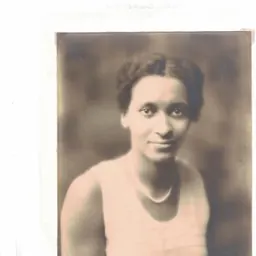
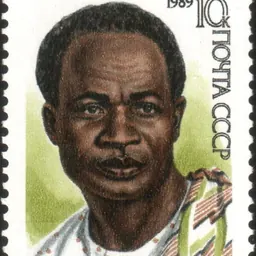




Related people
Same field, nearest in time
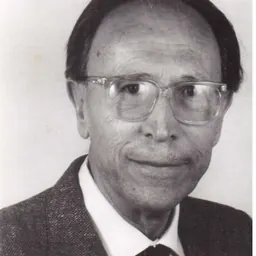
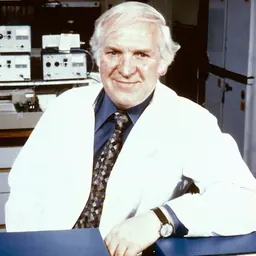

Contemporaries
People whose lives overlapped Susan Ofori-Atta's

Frequently asked questions
Who was Susan Ofori-Atta?
Ghanaian physician (1917–1985)
When was Susan Ofori-Atta born?
Susan Ofori-Atta was born in 1917 in Kibi.
When did Susan Ofori-Atta die?
Susan Ofori-Atta died in 1985 in United Kingdom.
What was Susan Ofori-Atta's occupation?
Susan Ofori-Atta was a physician, midwife and pediatrician.
What was Susan Ofori-Atta known for?
Susan Ofori-Atta was known for Childhood malnutrition, Women in Ghana and Women's empowerment.
What nationality was Susan Ofori-Atta?
Susan Ofori-Atta was Ghanaian.
Sources & further reading
Cite this page
APA: Biography.guide. (2026). Susan Ofori-Atta. https://biography.guide/susan-ofori-atta/
MLA: "Susan Ofori-Atta." Biography.guide, https://biography.guide/susan-ofori-atta/.
Chicago: "Susan Ofori-Atta." Biography.guide. https://biography.guide/susan-ofori-atta/.
Data last updated: 2026-09-22 · Spot an error? Report a correction.
Page generated 2026-09-27 05:34 UTC