
About Susan J. Crawford
Born 1947. Susan J. Crawford is an American judge.
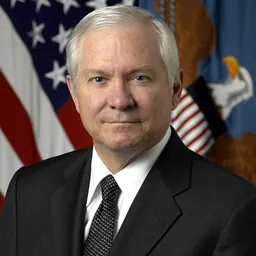
Susan Jean Crawford (born April 22, 1947) is an American lawyer, who was appointed the Convening Authority for the Guantanamo military commissions, on February 7, 2007. Secretary of Defense Robert Gates appointed Crawford to replace John D. Altenburg.
She had previously served as judge and chief judge of the United States Court of Appeals for the Armed Forces, Inspector General of the Department of Defense (appointed by George H. W. Bush), General Counsel for the Department of the Army (appointed by Ronald Reagan) and Assistant State's Attorney for Garrett County, Maryland.
Education Diploma, Mt. Lebanon High School, June 1965 J.D., New England School of Law, June 1977
Negotiated Hicks' plea bargain
Crawford is reported to have directly negotiated the plea bargain of David Hicks, an Australian linked with Al Qaeda and the Taliban, without any input from the Prosecution.
Guantanamo discussion When speaking at Bucknell University on April 27, 2007, Crawford said: "Much of the media coverage and commentary has been negative, questioning our legal authority to hold detainees without a trial in U.S. Federal Courts," Crawford said. "Under the law of war, the detainees at Guantanamo Bay are not held pending criminal charges. While detainees may be tried for violations of the law of war, there is no obligation to so charge them."
During the same presentation, Crawford said:
"One of the biggest problems at Guantanamo is that the detainees gain too much weight because we feed them so well." In response to a question as to whether she endorses the practice of extraordinary rendition and the CIA's kidnapping of foreign citizens in other countries, Crawford said: "Well, I don't think we always have the right to kidnap foreign citizens."
On October 10, 2007, Morris D. Davis, the Chief Prosecutor for Office of Military Commissions at Guantanamo Bay, Cuba, resigned in protest, concluding that:
Davis criticized Susan Crawford as a cause of the problems in the Military Commissions process, through her mixing of convening authority and prosecutor roles and her use of closed-door hearings, which he considered unnecessary.
There were unknowns. A Pentagon official, Susan J. Crawford, has broad power over the entire tribunal process, including naming the military officers eligible to hear the case. Her title, convening authority, has no civilian equivalent. Her decisions to grant or deny financing for items like the defense's expert witness fees or defense lawyers' transportation were not explained during the trial. She has never granted an interview to a reporter.
In an interview with Bob Woodward published in The Washington Post on January 14, 2009, Crawford responded to questions about why she had not referred the case of Mohammed al Qahtani, the so-called "20th hijacker" of the September 11th attacks, to trial:
We tortured Qahtani. His treatment met the legal definition of torture. And that's why I did not refer the case [for prosecution] .... The techniques they used were all authorized, but the manner in which they applied them was overly aggressive and too persistent. . . . You think of torture, you think of some horrendous physical act done to an individual. This was not any one particular act; this was just a combination of things that had a medical impact on him, that hurt his health. It was abusive and uncalled for. And coercive. Clearly coercive. It was that medical impact that pushed me over the edge [to call it torture].
Denied travel funds to Mohamed Jawad's military attorneys
Mohamed Jawad was a detainee whose case was referred to the civilian court system, which dropped the charges against him and recommended that he be repatriated. His military attorneys requested funds to travel to Afghanistan to help aid in his repatriation. Crawford declined to fund their travel, since charges against him had been dropped. Eric Montalvo chose to travel to Afghanistan at his own expense to aid Jawad.
Replacement Crawford retired in January 2010. In March 2010, retired Admiral Bruce MacDonald, a career Navy officer, was named as the convening authority for military commissions.
Don’t just read it —
keep it.
Full-length biographies made to live with: read them, listen on the way to work, watch them tonight.
- E-book
- Audio
- Video
Instant download · yours to keep · every purchase keeps this site free
Important facts
People in Susan J. Crawford's life
Named in this biography and alive at the same time





Related people
Same field, nearest in time




Contemporaries
People whose lives overlapped Susan J. Crawford's




Frequently asked questions
Who is Susan J. Crawford?
American judge
When was Susan J. Crawford born?
Susan J. Crawford was born on 22 April 1947 in Pittsburgh.
What is Susan J. Crawford's occupation?
Susan J. Crawford is a judge.
What nationality is Susan J. Crawford?
Susan J. Crawford is American.
Sources & further reading
· Wikipedia: Susan J. Crawford
Cite this page
APA: Biography.guide. (2026). Susan J. Crawford. https://biography.guide/susan-j-crawford/
MLA: "Susan J. Crawford." Biography.guide, https://biography.guide/susan-j-crawford/.
Chicago: "Susan J. Crawford." Biography.guide. https://biography.guide/susan-j-crawford/.
Data last updated: 2026-09-20 · Spot an error? Report a correction.
Page generated 2026-09-27 05:30 UTC