
About Surendra Kumar Sinha
Born 1951. Surendra Kumar Sinha is a Bangladeshi and Pakistani judge and lawyer.
Surendra Kumar Sinha (born 1 February 1951), commonly known as SK Sinha is a Bangladeshi lawyer and jurist who served as the 21st Chief Justice of Bangladesh. He resigned from the position in November 2017 amid the 16th amendment verdict controversy.
Early life and education He completed bachelor in economics from Chittagong University. Later he obtained his bachelor of laws (LL.B) degree in 1974 under the University of Chittagong. He obtained the permission to practice before the High Court Division and Appellate Division of the Supreme Court of Bangladesh in 1978 and 1990 respectively. He assumed the office of the chairman of the Bangladesh Judicial Service Commission in June 2011 and the office of the Chief Justice of Bangladesh on 17 January 2015. As a Hindu, he was the first non-Muslim chief justice of the Muslim-majority country.
Sinha attended several conferences regarding judicial affairs.
Sinha is known for a number of high-profile judgments including those on the killing of former President Sheikh Mujibur Rahman and the 5th and 13th amendments to the Constitution of Bangladesh. On 5 May 2016, a special High Court bench declared the amendment illegal and unconstitutional. On 4 January 2017, the government challenged the verdict by filing an appeal with the appellate division and on 3 July, a seven-member Supreme Court bench headed by Sinha unanimously rejected the appeal upholding the High Court verdict. Following the full verdict release on 1 August, the prime minister and senior ministers publicly criticized Sinha for the decision. and traveled to Australia on 13 October. Earlier, law minister Anisul Huq said Sinha went on the leave for treatment as he was suffering from cancer. Sinha later rejected this claim.
On 14 October, a day after Sinha left the country, the Supreme Court released a statement citing 11 charges against him including money laundering, financial irregularities, corruption and moral turpitude. It added, upon meeting with those justices, Sinha submitted his application to the president on 2 October for one month's leave. Sinha was scheduled to retire on 31 January 2018. According to a Canadian online news portal, The Star, Sinha crossed into Canada through Fort Erie from the United States on 4 July and filed a refugee claim.
On 6 January 2020, Judge KM Emrul Kayesh of the Senior Special Judge’s Court of Dhaka issued arrest warrants against Sinha and 10 others as they have been shown fugitives in the charge-sheets.
On 31 March 2022, ACC filed a case against Sinha and his brother, Ananta Kumar Sinha, over allegations of illegal earning and money laundering of $280,000.
Later Development
In a 14 August 2024 interview with The Daily Star, following the fall of the Hasina government, Sinha recounted the intense pressure he faced from then Prime Minister Sheikh Hasina. Sinha claimed that Hasina, using DGFI personnel, forced him to leave the country due to his efforts to uphold judicial independence despite her interference. He noted that tensions began when he initiated measures to prevent lower courts from granting bail to notorious criminals shortly after his appointment as the 21st Chief Justice of Bangladesh in January 2015.
The conflict escalated when he directed the law ministry to draft disciplinary rules for lower court judges, ensuring that the Supreme Court retained authority rather than the executive branch. The situation further intensified when he refused to rule in favor of the government in the 16th amendment case, which concerned the removal of Supreme Court judges, in July 2017.
Sinha stated that his colleagues in the Appellate Division of the Supreme Court, under government influence, refused to sit with him in court. They also informed him that the High Court judges would not cooperate with him, subjecting him to immense mental pressure.
He recounted that on the night of July 2, he was summoned to Bangabhaban for a meeting with then-President Abdul Hamid, Prime Minister Sheikh Hasina, Law Minister Anisul Huq, and Attorney General Mahbubey Alam. During the meeting, Hasina requested that he deliver the verdict in favor of the government the next day, July 3. However, he declined, prioritizing the independence of the judiciary.
Sinha stated that after all seven judges of the Appellate Division unanimously delivered the verdict on July 3, 2017, which scrapped the 16th amendment, members of the ruling party, including Prime Minister Hasina, harshly criticized him for over five hours.
Sinha added an incident where, after a day at the Supreme Court, the DGFI chief visited his office, claiming that the prime minister had sent him to demand his resignation and departure from the country. Justice Sinha recalled shouting at the DGFI chief, questioning his authority, and was told that they only follow the prime minister's orders, not those of the law minister or attorney general. He asked the DGFI chief to leave, but upon returning home, he was placed under house arrest.
The Supreme Court's registrar general informed him that they could do nothing and advised him to take leave. Distressed, Justice Sinha signed a seven-day leave application prepared by his secretary. When he arrived home that evening, he found his residence completely secured by military personnel in plainclothes, with all gates closed and internet connections disconnected.
The following morning, as he worked from his residential office, Justice Md Abdul Wahhab Miah called, requesting to meet him. Although Sinha asked Wahhab to come to his house, Wahhab insisted that he go to his residence, where other judges were present. Sensing a conspiracy, Justice Sinha invited them to his home instead. When they arrived, they informed him they would not sit with him in court, a decision Sinha recognized as being influenced by the government, further isolating him and undermining his position.
Amid this situation, Justice Sinha left Bangladesh on the night of October 13, 2017.
Personal life Sinha is married to Sushama Sinha. He sought asylum in USA, but was denied then he crossed the border to Canada and sought asylum there.
Biography
Sinha published his autobiography A Broken Dream: Rule of Law, Human Rights and Democracy on 19 September 2018. In the book, he gave first-hand accounts of government agencies intimidating the judges to serve verdicts in favour of the government, ruled by Awami League. In a sensational revelation, he alleged that the country's military intelligence agency Directorate General of Forces Intelligence (DGFI), forced him to leave the country and offer the resignation. DGFI spokesperson Brigadier general Tanveer Mazhar Siddique, later denied the allegation saying, "DGFI never threatens any person or does anything like this".
Don’t just read it —
keep it.
Full-length biographies made to live with: read them, listen on the way to work, watch them tonight.
- E-book
- Audio
- Video
Instant download · yours to keep · every purchase keeps this site free
Important facts
People in Surendra Kumar Sinha's life
Named in this biography and alive at the same time

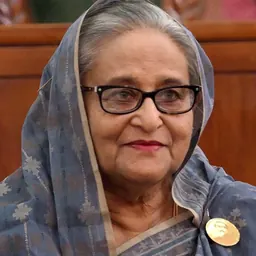

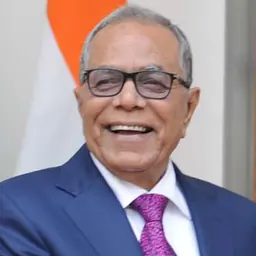
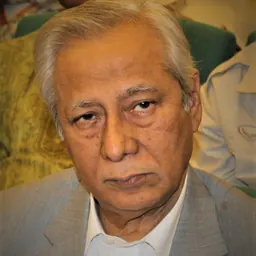


Related people
Same field, nearest in time
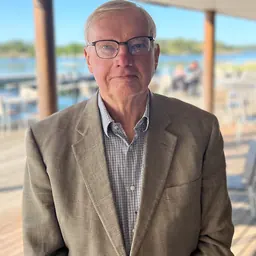
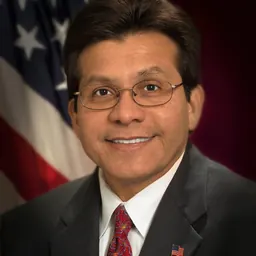
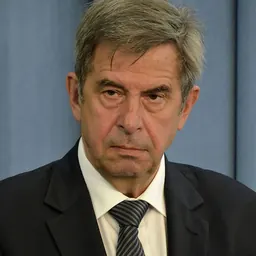
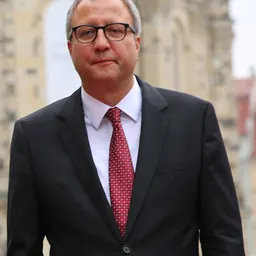
Contemporaries
People whose lives overlapped Surendra Kumar Sinha's

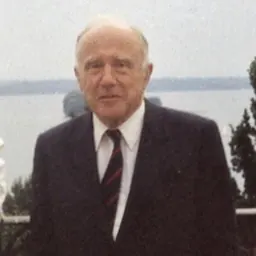

Frequently asked questions
Who is Surendra Kumar Sinha?
Bangladeshi lawyer and jurist who served as the 21st Chief Justice of Bangladesh
When was Surendra Kumar Sinha born?
Surendra Kumar Sinha was born on 2 February 1951 in Sylhet.
What is Surendra Kumar Sinha's occupation?
Surendra Kumar Sinha is a judge and lawyer.
What nationality is Surendra Kumar Sinha?
Surendra Kumar Sinha is Bangladeshi and Pakistani.
Sources & further reading
· Wikipedia: Surendra Kumar Sinha
· DBpedia: Surendra Kumar Sinha
Cite this page
APA: Biography.guide. (2026). Surendra Kumar Sinha. https://biography.guide/surendra-kumar-sinha/
MLA: "Surendra Kumar Sinha." Biography.guide, https://biography.guide/surendra-kumar-sinha/.
Chicago: "Surendra Kumar Sinha." Biography.guide. https://biography.guide/surendra-kumar-sinha/.
Data last updated: 2026-09-20 · Spot an error? Report a correction.
Page generated 2026-09-27 05:28 UTC