
About Sultan Ali Keshtmand
Lived 1935 – 2026 (aged 90). Sultan Ali Keshtmand was an Afghan politician.
Sultan Ali Keshtmand (; 22 May 1935 – 13 March 2026), sometimes transliterated as Kishtmand or Kashtmand, was an Afghan politician, belonging to the Parcham faction of the People's Democratic Party of Afghanistan (PDPA). He served twice as the Chairman of the Council of Ministers during the 1980s, from 1981 to 1988 and from 1989 to 1990 in the Democratic Republic of Afghanistan.
Early life Keshtmand was born in the spring of 1935 in Kabul, in the Kingdom of Afghanistan to a farming peasant family. He was a prominent member of the Hazara ethnic group. His father was from the Daifolad Poladha (Hazara tribe) tribe of the Hazara, with Keshtmand claiming that his ancestral home is Ajristan, which is a part of Malistan district of Ghazni.
He would go on to study economics at Kabul University,
In December 1979, the Soviet Union invaded Afghanistan, bringing Babrak Karmal and the Parcham faction to power. Keshtmand was subsequently released from jail, and re-joined the party's Politburo. and Prince Souphanouvong of Laos.
The rise in the government deficit was of great concern, and the tax collections were inadequate because of the level of increased state spending, as Keshtmand noted in April 1983. The war in the country, however, prevented the government from improving the tax collection system. and Vladimir Lenin's 116th birthday, being received by Soviet Premier Nikolai Ryzhkov. During the visit, Soviet leader Mikhail Gorbachev informed Keshtmand of his plan to withdraw Soviet forces from Afghanistan and the need for the PDPA to prepare for this eventuality. alongside reaffirming their alliance and aligning diplomatic views in a joint communique, condemning the American bombing of Libya as a "bandit attack" and advocating for the self-determination of the Palestinian people.
Keshtmand served as Chair of the Council of Ministers from 1981 to 1988 and from 1989 to 1990, and as one of the vice presidents, although in actuality he held no real power After being replaced by Najibullah in July 1991 for the second time, Keshtmand quit the party, accusing Najibullah of being "authoritharian" and not actually believing in political pluarlism. During this same time Najibullah and his ruling Homeland Party were also facing tensions with ethnic Uzbek and ethnic Tajiks in the north of the country, with these tensions ending in an anti-Pashtun coalition toppling his regime in April 1992. Because of these experiences, Keshtmand came to the belief that Pashtuns held too much power in Afghanistan's regimes of the past, whatever it be the monarchy, the Republic, the Khalqists, the Soviet occupational government or Najibullah's Republic. He studied agriculture in France, becoming an "active member" of the French Communist Party in Toulouse during this time.
He married his wife, Karima (born September 1946), in 1966, having four children in total. She would become a politician alongside her husband in various important roles in the PDPA government.
Keshtmand and his family fled Afghanistan to Russia in 1992,
He subsequently became an activist and defender of the rights of Hazaras and other minorities, claiming that the Pashtun majority in Afghanistan had had too much power in all of Afghanistan's regimes, past and present. After the Saur Revolution, which toppled Daoud Khan's first Afghan Republic, he reportedly said, "Brothers, today the five long centuries of Pashtun political domination has come to an end." The Australian Greens released a statement following his death, expressing condolences to his family and the wider Hazara community, of which he was a prominent leader.
Don’t just read it —
keep it.
Full-length biographies made to live with: read them, listen on the way to work, watch them tonight.
- E-book
- Audio
- Video
Instant download · yours to keep · every purchase keeps this site free
Important facts
People in Sultan Ali Keshtmand's life
Named in this biography and alive at the same time
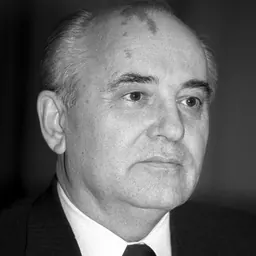

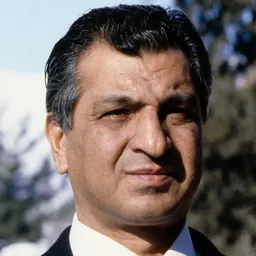
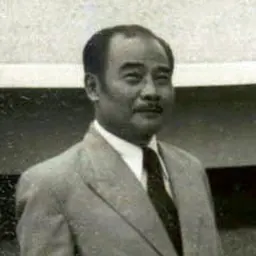

Related people
Same field, nearest in time



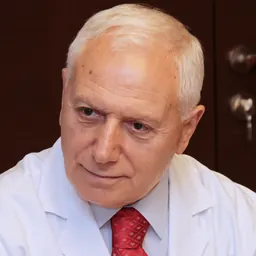


Contemporaries
People whose lives overlapped Sultan Ali Keshtmand's



Frequently asked questions
Who was Sultan Ali Keshtmand?
Afghan politician (1935~2026)
When was Sultan Ali Keshtmand born?
Sultan Ali Keshtmand was born on 22 May 1935 in Kabul.
When did Sultan Ali Keshtmand die?
Sultan Ali Keshtmand died on 13 March 2026 in London.
What was Sultan Ali Keshtmand's occupation?
Sultan Ali Keshtmand was a politician.
What nationality was Sultan Ali Keshtmand?
Sultan Ali Keshtmand was Afghan.
Sources & further reading
· Wikipedia: Sultan Ali Keshtmand
· DBpedia: Sultan Ali Keshtmand
Cite this page
APA: Biography.guide. (2026). Sultan Ali Keshtmand. https://biography.guide/sultan-ali-keshtmand/
MLA: "Sultan Ali Keshtmand." Biography.guide, https://biography.guide/sultan-ali-keshtmand/.
Chicago: "Sultan Ali Keshtmand." Biography.guide. https://biography.guide/sultan-ali-keshtmand/.
Data last updated: 2026-09-20 · Spot an error? Report a correction.
Page generated 2026-09-27 05:14 UTC