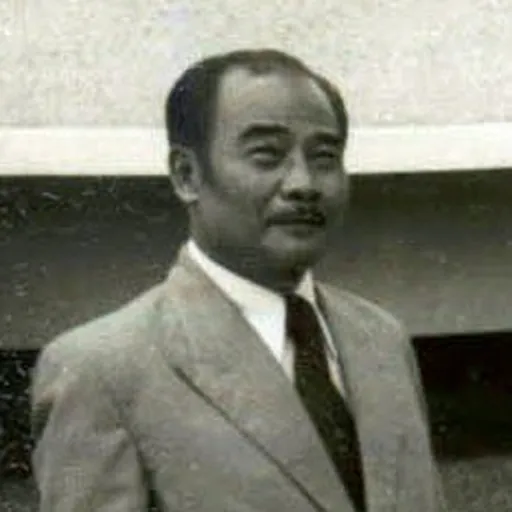
About Souphanouvong
Lived 1909 – 1995 (aged 85). Souphanouvong was a Laotian and French politician.
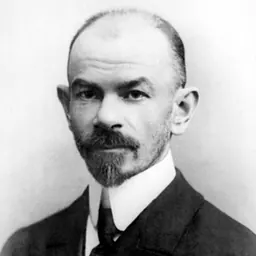
Prince Souphanouvong (13 July 1909 – 9 January 1995; ), nicknamed the Red Prince, was, alongside his half-brother Prince Souvanna Phouma and Prince Boun Oum of Champasak, one of the "Three Princes" who represented respectively the communist (pro-Vietnam), neutralist, and royalist political factions in Laos. He served as the President of Laos from December 1975 to October 1986.
Early life Souphanouvong was born in Palace Sisouvanna, Xieng Dong, Luang Prabang. He was one of the sons of Prince Bounkhong, the last viceroy of Luang Prabang. Unlike his half-brothers, Souvanna Phouma and Phetsarath Ratanavongsa, whose mothers were of royal birth, his mother was a commoner, Mom Kham Ouane.
He attended the Lycée Albert Sarraut in Hanoi, subsequently studying civil engineering at the École nationale des ponts et chaussées in Paris and working at a port in Le Havre. After graduating in 1937, he returned to French Indochina and worked at the public works bureau in Nha Trang, where he was responsible for the construction of bridges and roads in central Vietnam and Laos. He worked as a civil engineer until 1945.
His pro-Vietnamese orientation was perhaps more decisive. He had spent much of his adult life studying and working in Vietnam, and was married to a Vietnamese woman. As a result, he had more interactions with Vietnamese than with Laotians of his generation, and arguably a greater intellectual affinity with educated Vietnamese, whom he perceived as more dynamic, than with Lao elites, whom he described as apolitical and passive. He was thus part of a tradition of many aristocrats in Lao history who sought the support of one of their two large neighbors—either Thailand or Vietnam—in order to gain or retain power.
Souphanouvong joined the Lao People's Party (which later became the Lao People's Revolutionary Party) in 1955, but was not part of its leadership. However, he became chairman of the Lao Patriotic Front (Neo Lao Hak Sat), which was founded in 1956, and in which trade unions, women's and peasant associations were also represented. During the national unity government under his neutralist half-brother Souvanna Phouma, he was Minister for Planning, Reconstruction and Urban Development from 1957 to 1958. In May 1958, he was elected MP for Vientiane in the National Assembly of Laos with the highest number of votes among all candidates nationwide.
Souphanouvong tried again to create an alliance of Pathet Lao and neutralists to end the Laotian Civil War, in which his eldest son was killed. In 1972 and 1973, he was once more involved in talks that led to the third unity government, in which he took on no ministerial office. However, he presided over the National Political Consultative Council, which drafted the 18-point program that guided the government's policies.
Upon its successful seizure of power in 1975, he became the first President of the Lao People's Democratic Republic, a position he held until 1991. After 1986, Phoumi Vongvichit acted in his stead as president, though Souphanouvong still retained the presidential title. Kaysone Phomvihane succeeded him as president in 1991. He was the President of the Supreme People's Assembly from 1975 to 1988.
In 1991, he became an advisor to the Party's Central Committee.
Personal life He was married to Nguyen Thi Ky Nam, a Vietnamese woman who was the daughter of a civil servant. The two had ten children. Souphanouvong spoke eight languages, including Greek and Latin. His son, Khamsay Souphanouvong, escaped the country and applied for political asylum in New Zealand in 2000.
Souphanouvong died on 9 January 1995 in Vientiane, due to a heart disease. Following his death, the Laotian government decreed five days of mourning in his honour.
He is celebrated by the leadership of the Lao People's Democratic Republic and its press organs as a hero and "light figure" of the revolution and the Laotian nation. Especially on his 95th birthday in 2004, officials have increasingly emphasized his role in recent Laotian history and his services to the revolution, independence and national interests as well as the preservation of peace. He was buried in a stupa next to the Pha That Luang, and in 2012, his remains were moved to the newly constructed national cemetery in Vientiane.
Honours and awards Source:
Don’t just read it —
keep it.
Full-length biographies made to live with: read them, listen on the way to work, watch them tonight.
- E-book
- Audio
- Video
Instant download · yours to keep · every purchase keeps this site free
Important facts
Family & relationships
People in Souphanouvong's life
Named in this biography and alive at the same time




Related people
Same field, nearest in time



Contemporaries
People whose lives overlapped Souphanouvong's


Frequently asked questions
Who was Souphanouvong?
Laotian politician
When was Souphanouvong born?
Souphanouvong was born on 13 July 1909 in Luang Prabang.
When did Souphanouvong die?
Souphanouvong died on 9 January 1995 in Vientiane.
What was Souphanouvong's occupation?
Souphanouvong was a politician.
What nationality was Souphanouvong?
Souphanouvong was Laotian and French.
Sources & further reading
Cite this page
APA: Biography.guide. (2026). Souphanouvong. https://biography.guide/souphanouvong/
MLA: "Souphanouvong." Biography.guide, https://biography.guide/souphanouvong/.
Chicago: "Souphanouvong." Biography.guide. https://biography.guide/souphanouvong/.
Data last updated: 2026-09-22 · Spot an error? Report a correction.
Portrait: Wikimedia Commons · author & licence
Page generated 2026-09-27 05:03 UTC