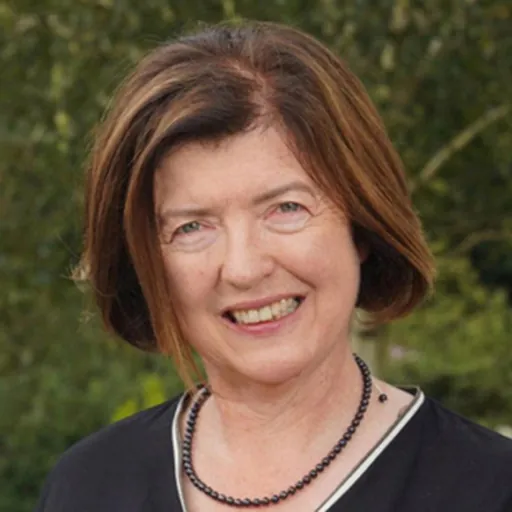
About Sue Gray
Born 1957. Sue Gray is a British civil servant and official.
Early life and background Born in north London in 1957, Gray is the daughter of Irish immigrants who moved to Tottenham in the early 1950s; her father was a furniture salesman and her mother a barmaid. She attended a state-funded Roman Catholic school. Following her father's sudden death in 1975, Gray abandoned her plan of going to university and joined the Civil Service straight from school. Her mother committed suicide after her father's death.
Gray took a career break in the 1980s, a step described by journalist Sam McBride as "strikingly unorthodox". During this time, she ran the Cove Bar, a pub in Newry, a border town in Northern Ireland, during The Troubles, with her husband Bill Conlon, a country music singer from Portaferry, County Down.
The family returned to London in 1987. Gray has family connections to Northern Ireland and is reported to have a fondness for the region, which she visits with her husband. She has two sons, including Liam Conlon, who is the chair of the Labour Party Irish Society and Member of Parliament for Beckenham and Penge.
Career Cabinet Office
Gray joined the Cabinet Office in the late 1990s, having previously worked at the departments of Health, Transport, and Work and Pensions. This role gave her a wide-ranging remit over the operation of ministerial offices, public appointments, and government ethics. She frequently dealt with sensitive matters and 'crises' arising from the operation of government. As such, she was described in 2017 as "the woman who runs the country".
She was appointed a Commander of the Order of the British Empire (CBE) in the 2007 New Year Honours for services as Director, Propriety and Ethics, and Head of Management Unit for Private Offices, Cabinet Office.
In 2011, Gray advised Michael Gove that conducting government business via private e-mail accounts would make it exempt from transparency legislation. The following year, the Information Commissioner found this guidance to be incorrect and ruled that emails that pertained to departmental business would be subject to the Freedom of Information Act.
She conducted the Cabinet Office inquiry into the behaviour of Andrew Mitchell during the 'Plebgate' affair in 2012. Mitchell later resigned as Chief Whip.
Northern Ireland Executive In January 2018, the Northern Ireland Executive announced that Gray would transfer to the Northern Ireland Civil Service as Permanent secretary of the Department of Finance in the Northern Ireland Executive from May 2018. In April 2018, it was announced that Gray had been replaced at the Cabinet Office by Helen MacNamara.
In 2020, Gray sought but failed to be appointed as the head of the Northern Ireland Civil Service, and in a subsequent interview with the BBC said: "I suspect people may have thought that I perhaps was too much of a challenger, or a disrupter. I am both…" and subsequently Gray took over the investigation.
Whether Prime Minister Boris Johnson knew about and participated in gatherings at Downing Street was part of the investigation. Gray's initial findings were published on 31 January 2022. In the report, Gray condemned "a serious failure" in the standards of leadership, and stated that a string of gatherings were "difficult to justify" while millions were unable to meet their friends and relatives. Publication of the full report was postponed pending the completion of an investigation by the Metropolitan Police. The police reported in May 2022 that their inquiries had resulted in 126 fixed penalty notices being issued. Gray's final report was delivered to Johnson on 25 May 2022 and was published later that morning. In a December 2022 article in The Guardian, Rajeev Syal wrote that friends of Gray said that she was "bruised" by the investigation. Gray resigned from her post as Cabinet Office Second Permanent Secretary and left the Civil Service. Gray started her role as Starmer's chief of staff on 4 September 2023 and formally joined the Labour Party in November 2023.
Her appointment was subject to the approval of the Advisory Committee on Business Appointments (ACOBA) and ultimately the prime minister, Rishi Sunak, who could have blocked the appointment. It was Gray's first party political role.
Following her resignation and her prospective employment within the Labour Party, some Conservative MPs criticised Gray: MP Alex Stafford told the BBC that Gray's appointment "undermines the work that she's done and undermines the civil service." Nadine Dorries questioned her ability to act impartially in her role as author of the Partygate report. By contrast former minister Francis Maude stated he had not the "slightest reason to question either her integrity or her political impartiality" and Bob Kerslake, former head of the civil service, stated he could not see a problem with the appointment given "the role is as much an organising one as a political one" and noted that Jonathan Powell and Ed Llewellyn, Tony Blair's and David Cameron's chiefs of staff respectively, were both previously employed in the civil service.
In June 2023, the Advisory Committee on Business Appointments recommended a six-month break from the date of Gray's resignation, meaning she could work for the Labour Party from September 2023. In July 2023, a Cabinet Office probe found that Gray had broken the civil service code with regard to her talks with the Labour Party.
Downing Street Chief of Staff Following Labour's victory in the 2024 general election and Keir Starmer becoming prime minister, Gray became his Downing Street Chief of Staff.
Rumours reported by The Guardian alleged that she adopted a "micromanagerial" leadership style with substantial control over ministerial and special adviser appointments, and had "extraordinary" control over access to Starmer and his agenda. The allegations were contested and emerged in the context of conflicting briefings from allies of Gray and Morgan McSweeney.
She received a salary of £170,000, £3,000 more than the prime minister, and more than any cabinet minister.
On 6 October 2024, Gray resigned as chief of staff, citing the "intense commentary" around her position risking becoming a distraction to the government.
House of Lords In December 2024, it was announced that Prime Minister Keir Starmer had nominated Gray for a life peerage in the House of Lords, where she would sit as a member of the Labour Party. She was created Baroness Gray of Tottenham, of Tottenham in the London Borough of Haringey on 4 February 2025.
Gray delivered her maiden speech on 27 March 2025. In her speech, she reflected on her career in the Civil Service and paid tribute to several public figures, including former prime minister Theresa May, for their support. Gray also commented on Starmer's plans to cut the Civil Service, warning him to be "careful" in doing so and calling on politicians to stop using derogatory language against civil servants.
Reputation
Gray has been portrayed as relatively unknown but once highly influential, and has been described as "an enigma". In 2015, a profile by Chris Cook, then policy editor for the BBC's Newsnight, said that she was "notorious… for her determination not to leave a document trail", had advised special advisers how to destroy emails through "double-deletion" and made at least six interventions "to tell departments to fight disclosures under the Freedom of Information Act". She was described by former prime minister Gordon Brown, in his memoir, as someone who could be counted on for "wise advice when – as all too regularly happened – mini-crises and crises befell". Political journalist Andrew Gimson wrote: "All power to the Civil Service is her modus operandi. She owes her allegiance to the permanent government and the deep state."
In 2023, after her appointment as Starmer's chief of staff was announced, Gray was named seventh in a list drawn up by the New Statesman, of "most influential" people "shaping Britain's progressive politics" and having "some affiliation with the Left".
Don’t just read it —
keep it.
Full-length biographies made to live with: read them, listen on the way to work, watch them tonight.
- E-book
- Audio
- Video
Instant download · yours to keep · every purchase keeps this site free
Important facts
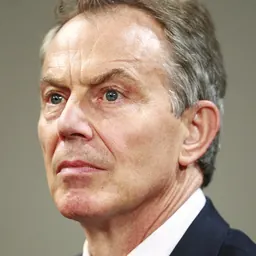
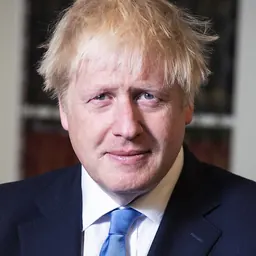
People in Sue Gray's life
Named in this biography and alive at the same time



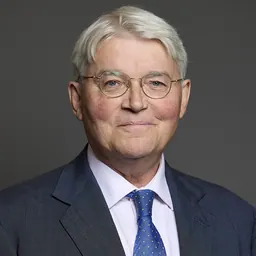

Related people
Same field, nearest in time

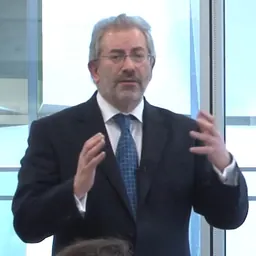

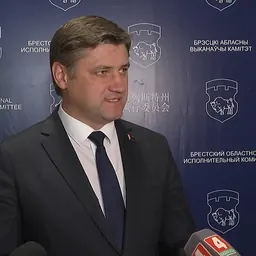
Contemporaries
People whose lives overlapped Sue Gray's

Frequently asked questions
Who is Sue Gray?
British civil servant and political advisor
When was Sue Gray born?
Sue Gray was born in 1957 in North London.
What is Sue Gray's occupation?
Sue Gray is a civil servant and official.
What nationality is Sue Gray?
Sue Gray is British.
Sources & further reading
· DBpedia: Sue Gray, Baroness Gray of Tottenham
Cite this page
APA: Biography.guide. (2026). Sue Gray. https://biography.guide/sue-gray/
MLA: "Sue Gray." Biography.guide, https://biography.guide/sue-gray/.
Chicago: "Sue Gray." Biography.guide. https://biography.guide/sue-gray/.
Data last updated: 2026-09-21 · Spot an error? Report a correction.
Portrait: Wikimedia Commons · author & licence
Page generated 2026-09-27 04:58 UTC