
About Sue Fuller
Lived 1914 – 2006 (aged 91). Sue Fuller was an American sculptor, printmaker, artist and draftsperson.
Early life Fuller was born and raised in Pittsburgh, Pennsylvania. Her father was an engineer who helped design bridges. Her mother worked in the home, constantly knitting and crocheting. Because of her mother, Fuller said she felt destined from childhood to work with threads one day. Because of her mother’s work Fuller had access to an abundance of threads. They, “were so wonderful, [she] couldn’t let them go to waste.” As a child, Sue Fuller would accompany her parents to the Carnegie Institute of Technology, where she was impressed by contemporary art from around the world. In 1934, she returned to the Ernest Thurn School to work under Hans Hofmann. In 1937, Fuller enrolled in a master's degree program at the Columbia University Teachers College. In the same year, Fuller travelled to Europe, where she saw the Degenerate Art Exhibition in Munich. During this time, she also taught children at the Museum of Modern Art. While working at the MoMA, Fuller studied with Josef Albers, learning many techniques such as Bauhaus techniques, collage making in print, and experimental weaving. Albers greatly influenced Fuller with his interest in optical illusions created by different colors and geometric abstraction. Working with new materials, she revitalized her needle and thread-work that she had begun in childhood. In 1944, five of Fuller's prints were included in the Museum of Modern Art exhibition "Hayter and Studio: New Directions in Gravure". In 1945, Fuller produced her best- known print, a semi abstract soft- grounded etching called The Hen. Fuller was also included in the printmaking selection for "Modern Art in the United States", which opened at the Tate Gallery in London in 1956.
By 1949, Fuller had begun making the abstract string compositions that would become her trademark, and was photographed with one of these large constructions for Life magazine. Fuller's own writing connected her abstract designs in string to the tradition of the cat's cradle, or string figure. In March 1949, Fuller had her first exhibition at the Bertha Shaefer Gallery, where she would continue to exhibit until 1969. In the early fifties, conservation concerns prompted Fuller to embark on a "relentless search for a permanent palette of thread colors," that prompted the artist to move from natural fibers to synthetic monofilaments. In 1951, she exhibited several string compositions at the Corcoran Museum of Art, and was included in the Museum of Modern Art exhibition "Abstract Painting and Sculpture in America." In 1954, the Whitney Museum of American Art acquired Fuller's String Composition #51, and the following year, the Metropolitan Museum of Art acquired her String Composition #50. Fuller also exhibited work at the Smithsonian in Washington, D.C. In the 1940s and 1950s she received fellowships from the Guggenheim and Tiffany Foundations, along with a grant from the National Institute of Arts and Letters.
Included in The Responsive Eye exhibition at the Museum of Modern Art in 1963, Fuller's work later came to be associated with the op art movement that this exhibition helped promote. Fuller received a mid-career survey at the Marion Koogler McNay Art Institute in 1967, an exhibition that brought together almost 100 of her works. Fuller was one of the first artists to use a technique of embedding her designs in plastic resin so that the "composition appears to float within a clear medium." a process for which the artist received a patent in 1969. She described this technique to be like putting "bananas in jello." In 1950, she contributed an article on fellow Pittsburgh-born artist Mary Cassatt to the journal Magazine of Art.
Fuller sent letters to a friend, Florence Forst. Many of these letters included photographs, press releases, exhibition posters, exhibition announcements and brochures, exhibition and art catalogs, notes, articles, newspaper clippings, biography and chronology, Christmas and postcards, and pen and ink sketches.
Letters relate to Fuller's artwork; her trips to Iraq and Iran in 1977; exhibitions at the Guggenheim and Brooklyn Museums in 1978; and Fuller's views regarding aesthetic merit and exhibitions of Henri Matisse, Pablo Picasso, Robert Motherwell, Ad Reinhardt, and others. Underlying themes throughout most of her correspondence dealt with feminism and feminist artists Cindy Nemser, feminist organizations like the "Guerrilla Girls," and writings by Linda Nochlin. Other topics discussed include the Bauhaus, Museum of Modern Art, and the College Art Association.
Don’t just read it —
keep it.
Full-length biographies made to live with: read them, listen on the way to work, watch them tonight.
- E-book
- Audio
- Video
Instant download · yours to keep · every purchase keeps this site free
Important facts
People in Sue Fuller's life
Named in this biography and alive at the same time

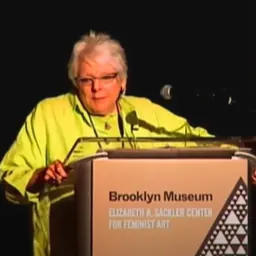
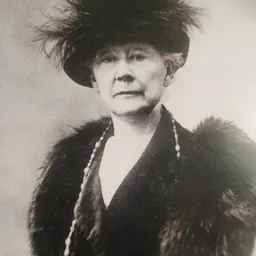
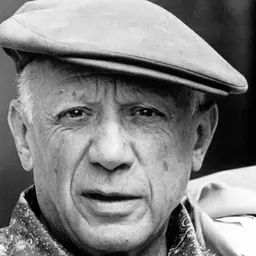
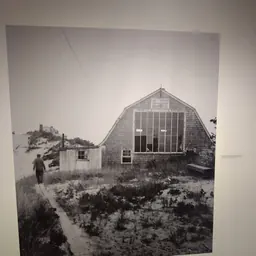

Related people
Same field, nearest in time


Contemporaries
People whose lives overlapped Sue Fuller's



Frequently asked questions
Who was Sue Fuller?
American sculptor (1914-2006)
When was Sue Fuller born?
Sue Fuller was born on 11 August 1914 in Pittsburgh.
When did Sue Fuller die?
Sue Fuller died on 19 April 2006 in Southampton.
What was Sue Fuller's occupation?
Sue Fuller was a sculptor, printmaker, artist and draftsperson.
What nationality was Sue Fuller?
Sue Fuller was American.
Sources & further reading
Cite this page
APA: Biography.guide. (2026). Sue Fuller. https://biography.guide/sue-fuller/
MLA: "Sue Fuller." Biography.guide, https://biography.guide/sue-fuller/.
Chicago: "Sue Fuller." Biography.guide. https://biography.guide/sue-fuller/.
Data last updated: 2026-09-20 · Spot an error? Report a correction.
Page generated 2026-09-27 05:21 UTC