
About Stuart Roosa
Lived 1933 – 1994 (aged 61). Stuart Roosa was an American military officer, astronaut, aircraft pilot, military flight engineer, fighter pilot and smokejumper.
Stuart Allen Roosa (August 16, 1933 – December 12, 1994) was an American aeronautical engineer, smokejumper, United States Air Force pilot, test pilot, and NASA astronaut, who was the Command Module Pilot for the Apollo 14 mission. The mission lasted from January 31 to February 9, 1971, and was the third mission to land astronauts (Alan Shepard and Edgar Mitchell) on the Moon. While Shepard and Mitchell spent two days on the lunar surface, Roosa conducted experiments from orbit in the Command Module Kitty Hawk. He was one of the 24 Apollo astronauts who reached the Moon, which he orbited 34 times.
Biography Early life and education Roosa was born on August 16, 1933, in Durango, Colorado, to parents Dewey Roosa and Lorine Roosa and grew up in Claremore, Oklahoma. He attended Justus Tiawah Grade School and Claremore High School in Claremore, Oklahoma, from which he graduated in 1951. Thereafter, he studied at Oklahoma State University and the University of Arizona, before graduating with a Bachelor of Science degree in aeronautical engineering with honors from the University of Colorado Boulder in 1960.
Military service In this photo of the Aerospace Research Pilot School's Class 64C, Roosa is in the front row, fourth from the left. To his left is Hank Hartsfield; the top row includes Al Worden (rightmost) and Charlie Duke (third from the left). Roosa began his career as a smokejumper with the U.S. Forest Service, dropping into at least four active fires in Oregon and California during the 1953 fire season. He was a graduate of the Aviation Cadet Program at Williams Air Force Base, Arizona, where he received his flight training commission in the U.S. Air Force. He also attended the U.S. Air Force Aerospace Research Pilot School (Class 64C) and was an experimental test pilot at Edwards Air Force Base in California before being selected for the astronaut class of 1966. He was a fighter pilot at Langley Air Force Base, Virginia, where he flew the F-84F Thunderstreak and F-100 Super Sabre aircraft. Following graduation from the University of Colorado, under the U.S. Air Force Institute of Technology Program, he served as Chief of Service Engineering (AFLC) at Tachikawa Air Base, Japan, for two years.
NASA career
Roosa was one of 19 people selected as part of the astronaut class of 1966. He was the Capsule communicator (CAPCOM) at the Launch Complex 34 blockhouse during the Apollo 1 fire on January 27, 1967. In 1969, he served as a member of the astronaut support crew for the Apollo 9 mission.
Roosa served as backup Command Module Pilot for Apollo 16 and Apollo 17. Based on crew rotations, he would probably have commanded one of the last missions had they not been cancelled. He was assigned to the Space Shuttle program until his retirement as a colonel from the Air Force in 1976. He founded Gulf Coast Coors in 1981; he served as its president until his death. His wife Joan died on October 30, 2007, in Gulfport, Mississippi. She was interred at Arlington with her husband.
Organizations Roosa's memberships include the Society of Experimental Test Pilots, New York Safari Club, Board of Directors, People-to-People Sports Committee, Hunting Hall of Fame, Circumnavigators Club, Explorers Club, Commemorative Air Force, Shikar-Safari-Club and Gulfport Yacht Club. and he was inducted into the International Space Hall of Fame in 1983. Roosa was posthumously inducted into the U.S. Astronaut Hall of Fame in 1997.
In media In the HBO miniseries From the Earth to the Moon (1998), Roosa was played by George Newbern. The book Smoke Jumper, Moon Pilot (2011), by Willie G. Moseley, is a biography on Roosa's life. In 2013, footage of Roosa's son holding a photo of Roosa with two of his granddaughters appears in USAA insurance television ads promoting availability to family members.
Don’t just read it —
keep it.
Full-length biographies made to live with: read them, listen on the way to work, watch them tonight.
- E-book
- Audio
- Video
Instant download · yours to keep · every purchase keeps this site free
Important facts
People in Stuart Roosa's life
Named in this biography and alive at the same time
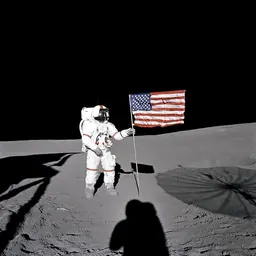


Related people
Same field, nearest in time

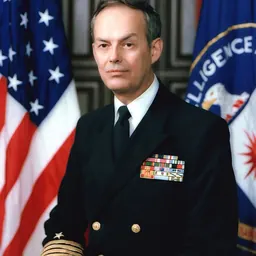

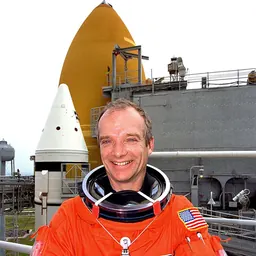
Contemporaries
People whose lives overlapped Stuart Roosa's


Frequently asked questions
Who was Stuart Roosa?
American astronaut (1933–1994)
When was Stuart Roosa born?
Stuart Roosa was born on 16 August 1933 in Durango.
When did Stuart Roosa die?
Stuart Roosa died on 12 December 1994 in Falls Church.
What was Stuart Roosa's occupation?
Stuart Roosa was a military officer, astronaut, aircraft pilot, military flight engineer, fighter pilot and smokejumper.
What nationality was Stuart Roosa?
Stuart Roosa was American.
Sources & further reading
Cite this page
APA: Biography.guide. (2026). Stuart Roosa. https://biography.guide/stuart-roosa/
MLA: "Stuart Roosa." Biography.guide, https://biography.guide/stuart-roosa/.
Chicago: "Stuart Roosa." Biography.guide. https://biography.guide/stuart-roosa/.
Data last updated: 2026-09-20 · Spot an error? Report a correction.
Page generated 2026-09-27 05:28 UTC