
About Stuart Firestein
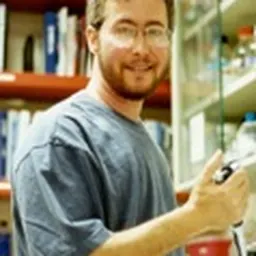
Born 1949. Stuart Firestein is an American neuroscientist, science communicator, researcher and biologist, known for Biology and Neuroscience.
Stuart J. Firestein is the chair of the Department of Biological Sciences at Columbia University, where his laboratory is researching the vertebrate olfactory receptor neuron. He has published articles in Wired magazine, Huffington Post, and Scientific American. Firestein has been elected as a fellow by the American Association for the Advancement of Science (AAAS) for his meritorious efforts to advance science. He is an adviser to the Alfred P. Sloan Foundation program for the Public Understanding of Science. Firestein's writing often advocates for better science writing. In 2012 he released the book Ignorance: How it Drives Science, and in 2015, Failure: Why Science Is So Successful.
Early life Firestein was raised in Philadelphia. As a child, Firestein had many interests. In an interview with a reporter for Columbia College, he described his early history. "I started out with the usual childhood things — cowboy, fireman. My first interests were in science. I wanted to be an astronomer." Firestein attended an all-boys middle school, a possible reason he became interested in theater arts, because they were able to interact with an all-girls school. Firestein worked in theater for almost 20 years in San Francisco and Los Angeles and rep companies on the East Coast. At the age of 30, Firestein enrolled in San Francisco State as a full-time student. He has credited an animal communication class with Professor Hal Markowitz as "the most important thing that happened to me in life." Firestein received his graduate degree at age 40.
Career After earning his Ph.D. in neurobiology, Firestein was a researcher at Yale Medical School, then joined Columbia University in 1993.
At the Columbia University Department of Biological Sciences, Firestein is now studying the sense of smell. In his neuroscience lab, they investigate how the brain works, using the nose as a "model system" to understand the smaller piece of a difficult complex brain.
Ignorance: How It Drives Science
In his 2012 book Ignorance: How It Drives Science, Firestein argues that pursuing research based on what we don't know is more valuable than building on what we do know. When asked why he wrote the book, Firestein replied, "I came to the realization at some point several years ago that these kids [his students] must actually think we know all there is to know about neuroscience. And that's the difference. That's not what we think in the lab. What we think in the lab is, we don't know bupkis. So I thought, well, we should be talking about what we don't know, not what we know." The book was largely based on his class on ignorance, where each week he invited a professor from the hard sciences to lecture for two hours on what they do not know. No audio-visuals and no prepared lectures were allowed, the lectures became free-flowing conversations that students participated in.
Firestein explained to talk show host Diane Rehm that most people believe ignorance precedes knowledge, but in science, ignorance follows knowledge. Knowledge enables scientists to propose and pursue interesting questions about data that sometimes don't exist or fully make sense yet. "I use that term purposely to be a little provocative. But I don't mean stupidity. I don't mean dumb. I don't mean a callow indifference to facts or data or any of that," Firestein said. Instead, thoughtful ignorance looks at gaps in a community's understanding and seeks to resolve them.
Scientific method The scientific method is a huge mistake, according to Firestein. He says that a hypothesis should be made after collecting data, not before. Firestein claims that scientists fall in love with their own ideas to the point that their own biases start dictating the way they look at the data. Oddly, he feels that facts are sometimes the most unreliable part of research. He feels that scientists don't know all the facts perfectly, and they "don't know them forever."
Personal life Firestein is married to Diana Reiss, a cognitive psychologist at Hunter College and the City University of New York, where she studies animal behavior.
Awards 2011 Lenfest Distinguished Columbia Faculty Award for excellence in scholarship and teaching 2011 Elected a fellow of the American Association for the Advancement of Science (AAAS). He was recognized for his "pioneering work" on the mammalian olfactory system.
Don’t just read it —
keep it.
Full-length biographies made to live with: read them, listen on the way to work, watch them tonight.
- E-book
- Audio
- Video
Instant download · yours to keep · every purchase keeps this site free
Important facts
Family & relationships
People in Stuart Firestein's life
Named in this biography and alive at the same time


Related people
Same field, nearest in time




Contemporaries
People whose lives overlapped Stuart Firestein's



Frequently asked questions
Who is Stuart Firestein?
American biologist
When was Stuart Firestein born?
Stuart Firestein was born in 1949.
What is Stuart Firestein's occupation?
Stuart Firestein is a neuroscientist, science communicator, researcher and biologist.
What is Stuart Firestein known for?
Stuart Firestein is known for Biology and Neuroscience.
What nationality is Stuart Firestein?
Stuart Firestein is American.
Sources & further reading
Cite this page
APA: Biography.guide. (2026). Stuart Firestein. https://biography.guide/stuart-firestein/
MLA: "Stuart Firestein." Biography.guide, https://biography.guide/stuart-firestein/.
Chicago: "Stuart Firestein." Biography.guide. https://biography.guide/stuart-firestein/.
Data last updated: 2026-09-20 · Spot an error? Report a correction.
Page generated 2026-09-27 05:28 UTC