
About Stino Mubi
Born 1966. Stino Mubi is a singer and singer-songwriter.
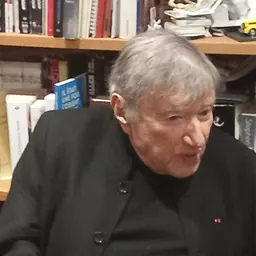
Justin Mubi Matadi (born 16 January 1966), known professionally as Stino Mubi, is a Congolese singer-songwriter, composer, and performer. Nicknamed "L'As de la Chorale" ("The Ace of the Choir") in 1984, he successfully auditioned to join Viva La Musica, a Congolese rumba band led by Papa Wemba. He became known for vocal range and sound fusing Congolese rumba with Western pop, funk, and soul. Over a career spanning more than four decades, Stino established himself as one of the emblematic artists of his era, achieving success as a member of Viva La Musica and as a solo performer.
His compositions such as "M.J. Ngoyi" and "Roméo et Juliette" are considered modern classics of Congolese music, while his stage style, inspired by Michael Jackson, introduced new performance aesthetics to the rumba scene.
Early life and career
1966–1984: Childhood, education and musical debut Justin Mubi Matadi was born on 16 January 1966, in Kikwit, a provincial town in the Bandundu Province, in the Democratic Republic of the Congo, to Rosa Ikuma and Boni Mubi. He comes from a family with roots in the Mbala and Yansi ethnic groups. As a child, Justin grew up surrounded by these sounds as well as Congolese rumba. His father's professional career required the family to move to Kinshasa when Justin was still young. There, Justin became an admirer of Viva La Musica, the band formed by Papa Wemba in 1977.
Although Mubi's passion for music was obvious, his father insisted that he first complete his education before considering a professional artistic career. He enrolled at the Ngolo Za Bambuta Institute, where he studied business administration. Only after receiving his diploma was he allowed to pursue music seriously. In the early 1980s, he adopted the stage name "Stino", derived from the ending of his given name Justin, and began performing in local groups. The band had lost King Kester Emeneya two years earlier, when the singer left to form his own group, Victoria Eleison, and Wemba was seeking to reinforce his vocal lineup.
In 1987, Papa Wemba made the strategic decision to relocate to Paris, seeking to establish Viva La Musica on the international stage. French producers encouraged him to streamline the band to a core of twelve musicians for this new chapter. Among those chosen was Stino. Over the next two years, he performed with Molokai, Wemba's international backing band, accompanying Papa Wemba as the band's reputation grew beyond Africa. In 1988, he participated in the promotion of the self-titled album Papa Wemba, produced by Martin Meissonnier, which introduced the band's sound to a global audience by fusing Congolese rumba with elements of world music and pop. For Stino, the experience provided invaluable exposure to international production standards and stagecraft.
To balance the band's international ambitions with the expectations of fans in Zaire, Viva La Musica began encouraging its members to release domestic-oriented projects. In 1989, Mubi recorded and released his first solo album, Femme Sans Bijoux, in Paris. The album included the title track "Femme Sans Bijoux", "Elenge Ya Paris", "Zoulema", and "Tapez 36.15", a re-work of "Mulolo Yikima". The standout track, "M.J. Ngoyi", became a defining song for him, gaining significant popularity in Kinshasa and among the Congolese diaspora in Europe.
Viva La Musica faced internal tensions regarding salaries, as the growing number of musicians made it increasingly difficult to ensure equitable compensation. In October 1992, Stino briefly aligned with singer Lidjo Kwempa and drummer Awilo Longomba to form a splinter band called Nouvelle Génération de la République Démocratique, but he quickly withdrew and stayed with Viva La Musica. In the same period, he embarked on his second solo project, Roméo et Juliette. Recording sessions began in the United States, with arrangements by Bongo Wende and Shakara Mutela, and were later completed in Paris. The album was released in early 1994 under Éditions Kaluila. It blended rumba with funk, pop, and new jack swing. The record included Papa Wemba, Gloria Tukhadio, Richacha Balengola, Djeffard Lukombo, Dodo Munoko and many others. Songs such as "Roméo et Juliette", "Mista", and "Tanya" became hits.
In 1993–1994, he participated in Peter Gabriel's Secret World Tour, performing alongside Papa Wemba and fellow Viva La Musica singer Reddy Amisi. In December 1998, Stino released his third solo album, Invitation, under the Ngoyarto label. The project featured collaborations with JB Mpiana, Bozi Boziana, Papa Wemba, and Madilu System in tracks such as "Portugaise", "15 Ans Ya Monzemba", and "Arthur Nzemene". By the late 1990s, the Congolese music scene was dominated by the ndombolo wave. Both Stino and his fellow Viva La Musica alumnus Reddy Amisi incorporated it into their albums. Papa Wemba, however, publicly disapproved, dismissing Invitation and Reddy's Étoile as excessively commercial. This criticism led Stino and Reddy to consider recording a joint project to prove their artistic seriousness. The collaboration was fraught with disagreements, but it ultimately produced the album Fin d'exil, released in 2000 by JPS Production, with Rigo Star as artistic director. Although the project was turbulent, it represented Stino's last major contribution to the Viva La Musica orbit. His final appearance with Papa Wemba came in 1999, when he participated in the recording of the album M'zee Fula Ngenge.
Solo career In 2001 Stino departed from Viva La Musica and largely withdrew from recording. For more than fifteen years, he concentrated on live performances and collaborations but did not release new solo albums. He performed in LSC, Saint Denis on 19 October 2002. In 2022, he signaled a comeback with the singles "Melina la Parisienne" (a re-work of Papa Wemba's song) and the original composition "Parigo". Three years later, on 8 March 2025, he released "+243 I Love You Congo", a patriotic single dedicated to the Armed Forces of the Democratic Republic of the Congo (FARDC).
Discography
Studio albums
Femme Sans Bijoux (1989) Roméo et Juliette (1994) Invitation (1998) Fin d'Exil (2000) – with Reddy Amisi
Singles
"Mélina la Parisienne" (2022) "Parigo" (2022) "+243 I Love You Congo" (2025)
References list
Don’t just read it —
keep it.
Full-length biographies made to live with: read them, listen on the way to work, watch them tonight.
- E-book
- Audio
- Video
Instant download · yours to keep · every purchase keeps this site free
Important facts
People in Stino Mubi's life
Named in this biography and alive at the same time








Related people
Same field, nearest in time






Contemporaries
People whose lives overlapped Stino Mubi's


Frequently asked questions
Who is Stino Mubi?
singer-songwriter
When was Stino Mubi born?
Stino Mubi was born on 16 January 1966 in Kikwit.
What is Stino Mubi's occupation?
Stino Mubi is a singer and singer-songwriter.
Sources & further reading
Cite this page
APA: Biography.guide. (2026). Stino Mubi. https://biography.guide/stino-mubi/
MLA: "Stino Mubi." Biography.guide, https://biography.guide/stino-mubi/.
Chicago: "Stino Mubi." Biography.guide. https://biography.guide/stino-mubi/.
Data last updated: 2026-09-20 · Spot an error? Report a correction.
Page generated 2026-09-27 05:28 UTC