
About Steve Beshear
Born 1944. Steve Beshear is an American lawyer and politician.
Steven Lynn Beshear ( ; born September 21, 1944) is an American attorney and politician. A member of the Democratic Party, he served as the 61st governor of Kentucky from 2007 to 2015. He served in the Kentucky House of Representatives from 1974 to 1980, was the state's 44th attorney general from 1980 to 1983, and was the 49th lieutenant governor from 1983 to 1987.
After having graduated from the University of Kentucky College of Law in 1968, Beshear briefly practiced law in New York before returning to Kentucky and being elected to the state legislature, where he gained a reputation as a consumer advocate. He parlayed that reputation into a term as attorney general, serving under Governor John Y. Brown Jr. As attorney general, Beshear issued an opinion that copies of the Ten Commandments must be removed from the walls of the state's classrooms in the wake of the U.S. Supreme Court's decision in Stone v. Graham. He also clashed with first lady Phyllis George Brown when he opposed the practice of charging an admission fee for visitors to view the renovated governor's mansion. In the 1983 lieutenant gubernatorial election, Beshear was elected to the administration of Governor Martha Layne Collins. His most significant action in this capacity was the formation of the Kentucky Tomorrow Commission, a panel charged with making recommendations for the future of the state.
Beshear's initial rise to political prominence was interrupted in 1987 when he finished third in a five-candidate Democratic gubernatorial primary election. The Beshear campaign's sparring with that of former governor Brown, the second-place finisher in the primary, opened the door for political novice Wallace Wilkinson's well-financed campaign to achieve a come-from-behind upset in the race. For the next 20 years, Beshear practiced law at a Lexington law firm. His only foray into politics during this period was an unsuccessful challenge to Senator Mitch McConnell in 1996.
In 2007, Beshear was drawn back into politics by the vulnerability of incumbent Republican Governor Ernie Fletcher, whose administration was under extended investigation by then-Attorney General Greg Stumbo, over violations of the state's merit system. In the 2007 gubernatorial election, Beshear emerged from a six-candidate Democratic primary—largely on the strength of his pledge to expand casino gambling as a means of further funding social programs like education—and defeated Fletcher in the general election. Beshear was reelected in 2011, defeating Republican David L. Williams and Gatewood Galbraith, an Independent. He was ineligible for reelection in 2015 due to term limits imposed by the Kentucky Constitution, and was succeeded by Republican Matt Bevin. Bevin lost reelection in 2019 to Beshear's son Andy.
Early life Steve Beshear was born on September 21, 1944, in Hopkins County, Kentucky. He is the third of five children born to Orlando Russell and Mary Elizabeth (Joiner) Beshear. His father, grandfather, and uncle were Primitive Baptist lay ministers, and in his childhood years, Beshear attended both his father's church and the Christian Church where his mother was a member. Beshear also accompanied his uncle, Fred Beshear, as he traveled around the county during several races for a seat in the state House of Representatives. He was also elected student body treasurer and from 1964 to 1965 served as student body president. Following their marriage, the Beshears moved to New York City, where Steve worked for the Wall Street law firm of White & Case. He also served as an intelligence specialist in the United States Army Reserve, performing some of the duties of a Judge Advocate General.
After two and a half years, the family returned to Kentucky, where Beshear joined the Lexington law firm of Harbison, Kessinger, Lisle, and Bush. During his first term, his colleagues named him the most outstanding freshman legislator.
As a legislator, Beshear gained a reputation as a consumer advocate, and sponsored bills to increase environmental protections and end the practice of commercial bail bonding. The central issue of Beshear's campaign was his pledge to be an advocate of the consumer in cases of proposed utility rate hikes. After winning the Democratic primary, he defeated Republican nominee Ron Snyder by a vote of 471,177 to 302,951. When incumbent attorney general Stephens resigned in December 1979 to accept an appointment to the Kentucky Supreme Court, Beshear was appointed to fill the vacancy until his term officially began in January. As attorney general, Beshear created the state's first Medicaid fraud division, and his office took a leading role in the Leviticus Project, an eight-state coalition committed to prosecuting organized crime in the country's coal fields. The ruling struck down the state law requiring the posting of the Ten Commandments in all of the state's classrooms on grounds that it violated the Establishment Clause of the federal constitution. Beshear then issued an advisory opinion that displaying the Commandments in classrooms under any circumstances was banned by the Court's ruling.
The second controversy arose as a result of the renovation of the governor's mansion. Phyllis George Brown, Kentucky's first lady, created the Save the Mansion Fund to help cover the costs of the renovation. When the renovation was complete, she planned a nine-day showcase of the mansion for the general public. Guests were charged $10 to take a tour of the mansion. Legislator Eugene P. Stuart objected to taxpayers being charged a fee to view a mansion their tax dollars supported. He asked Beshear to protest the charge, and Beshear requested an injunction against the Save the Mansion Fund. A Lexington judge refused to grant the injunction, and Beshear appealed to the Kentucky Court of Appeals, which upheld the lower court's decision. Beshear's actions caused a rift between him and Governor John Y. Brown Jr.
Lieutenant governor Limited to one term as attorney general by the state constitution, Beshear declared his candidacy for lieutenant governor in 1983. In a seven-candidate Democratic primary in May, Beshear captured 183,662 of the 575,022 votes cast to defeat a field that included former state Auditor George L. Atkins, Jefferson County judge executive Todd Hollenbach, Agriculture Commissioner Alben Barkley II, and former Kentucky Wildcats basketball star Bill Spivey. In the general election, Beshear faced Republican Eugene Stuart and Don Wiggins, who became the nominee of the newly formed Consumers Lobby Party after losing in the Republican gubernatorial primary. Stuart categorized Beshear as being too liberal for Kentucky, citing his opinion in the Ten Commandments case, as well as his support for abortion rights and gun control.
Several changes were proposed to the office of lieutenant governor during Beshear's tenure. In 1984, state representative Bobby Richardson proposed a constitutional amendment to abolish the office. When that effort failed, Richardson introduced a bill in the 1986 General Assembly that would have revoked the lieutenant governor's right to live rent-free in the state's Old Governor's Mansion, eliminated police protection, and restricted the lieutenant governor's use of the state's two executive helicopters. The measure would also have eliminated the lieutenant governor's salary, paying him or her per diem for days served as acting governor or president of the state senate instead. The measure would further have lifted the ban on the lieutenant governor holding other employment. Although the bill would have exempted Beshear from its provisions, Beshear still opposed it and charged that it was politically motivated. During its 1987 organizational session, the General Assembly relieved the lieutenant governor of his membership on the committees that assigned bills to other committees and that managed the flow of legislation on the Senate floor. Among the recommendations in the commission's report were several changes to the state constitution, adopted in 1891. The recommended changes included eliminating the offices of state treasurer, secretary of state, and superintendent of public instruction, holding elections only in odd-numbered years instead of every year, and raising the term limit for the state's constitutional officers from one term to two consecutive terms.
In 1987, Beshear entered a crowded Democratic gubernatorial primary that included former governor Julian Carroll, millionaire bookstore magnate Wallace Wilkinson, and Eastern Kentucky physician Grady Stumbo. Beshear had the backing of the Collins administration and the endorsement of several labor leaders and the state teachers' association; he appeared to be the front-runner in the race until former governor John Y. Brown Jr. entered late and became the instant favorite. Brown countered with ads claiming that Beshear was distorting the facts and could not be trusted.
Political interim and 1996 Senate bid
After his defeat in the 1987 election, Beshear moved to a farm in Clark County.
Mitch McConnell turned back Beshear's challenge for his Senate seat in 1996.
Beshear did little in the political arena for almost a decade after his 1987 primary defeat, but in late 1995, he was encouraged by Democratic leaders – including former governor Ned Breathitt, Senator Wendell H. Ford, and Democratic Senatorial Campaign Committee chair Bob Kerrey – to challenge incumbent Republican senator Mitch McConnell.
Beshear faced heavy deficits in polls against McConnell throughout the general election campaign. McConnell also raised twice as much money as Beshear during the campaign. Beshear tried to make McConnell's fundraising a campaign issue, claiming much of the money came from political action committees that represented interests that lobbied the Senate committees on which McConnell served. McConnell defended his contributors, saying that the right to free speech included the right to donate money. Beshear charged that Republicans, including McConnell, had voted to cut Medicare; McConnell responded that Republicans had not cut Medicare, but had put forward a plan to curb its growth, a plan that didn't differ significantly, McConnell said, from the one proposed by Democratic President Bill Clinton.
The campaign turned personal during the second of two debates between the two candidates when McConnell charged that the Iroquois Hunt Club, to which Beshear belonged, had no African-American members and was racially discriminatory. Beshear denied that the club was discriminatory and fired back that a prominent McConnell supporter from Louisville was "virulently anti-women." Ultimately, none of Beshear's arguments gained much traction, and he lost the race by 724,794 votes (55.5%) to 560,012 (42.9%). At the time, it was the largest victory margin of McConnell's career. In a 2009 biography of McConnell, author John David Dyche wrote that Beshear "had no illusions about his chance of success [in the race against McConnell], but for the sake of his party, and hoping to ride the coattails of President Clinton's likely re-election, he got in the race." After the book's release, Beshear said through a spokesman that Dyche's assessment "sounds accurate." The firm also represented four creditors of Wallace's Bookstore, the company through which Wilkinson had made his fortune.
2007 gubernatorial campaign
alt=A dark-haired man in his forties wearing glasses and a suit. He is smiling and facing left. Governor Ernie Fletcher failed in his re-election bid against Beshear.On December 18, 2006, Beshear announced that he would enter the 2007 gubernatorial race with Hazard physician and state senator Daniel Mongiardo as his running mate. Beshear promised to return "integrity" to the governor's office, a slap at sitting governor Ernie Fletcher, who was seeking re-election despite a recently concluded investigation into his administration's hiring practices conducted by Democratic Attorney General Greg Stumbo. By the filing deadline, the list of Democratic challengers had grown to include Louisville millionaire businessman Bruce Lunsford, former lieutenant governor Steve Henry, Speaker of the Kentucky House of Representatives Jody Richards, and perennial candidate Gatewood Galbraith.
Early polls showed that Beshear and Henry led the Democratic field in name recognition, but both trailed Fletcher and his Republican primary rival Anne Northup in that area. Early in the campaign, Beshear attempted to set himself apart from the other candidates by supporting a constitutional amendment that would allow expanded casino gambling in the state, which he claimed could generate $500 million in new revenue without the need to raise taxes.
In April 2007, Beshear received the endorsement of former governor Brereton Jones. Just two weeks before the primary, candidate Jonathan Miller dropped out of the race and endorsed Beshear. Miller, who was consistently lagging in the polls, indicated that he was endorsing Beshear to prevent an "unelectable" candidate from becoming the Democratic Party's nominee for the fall campaign.
Incumbent governor Fletcher emerged from the Republican primary, and Beshear immediately looked to make the investigation against Fletcher the primary issue of the campaign. Fletcher countered by strengthening his opposition to Beshear's casino expansion plan. Further, polling showed that more than half of the state's voters believed Fletcher had acted unethically about the claims in the hiring investigation, while 81% believed the casino gambling amendment should be placed on the ballot. Late in the campaign, eight of Kentucky's leading newspapers endorsed Beshear. Ultimately, Beshear was elected by a vote of 619,567 to 435,856.
2011 gubernatorial campaign
Governor Beshear and his wife Jane at Fancy Farm 2011On January 26, 2009, Lieutenant Governor Daniel Mongiardo announced that he would seek the Democratic nomination to challenge incumbent senator Jim Bunning (who later chose to retire instead) in the 2010 senatorial election. The move effectively prohibited Mongiardo from running for re-election with Beshear in the 2011 gubernatorial contest.
Beshear faced no opposition in the Democratic gubernatorial primary, held on May 17, 2011. In the Republican primary, Senate President David Williams defeated Louisville businessman Phil Moffett, a favorite of the Tea Party Movement, and Bobbie Holsclaw, county clerk of Jefferson County.
On November 8, 2011, Beshear was re-elected as governor of Kentucky with close to 56% of the vote in a three-way race. Democratic candidates won all but one of the statewide offices on the same night.
Governorship Soon after taking office, Beshear ordered $78 million in budget cuts, citing a $434 million projected deficit in the state budget. Republican Senate President David Williams questioned the legality of the cuts, claiming that the shortfall was only $117.5 million and that $145 million in surplus funds from the previous fiscal year would cover the difference. Beshear countered that the legislature had already authorized $138 million in expenditures from the surplus fund and that his reckoning of the deficit also included $300 million in "additional spending needs". Williams stopped short of filing a legal challenge to the cuts, but warned Beshear that the General Assembly would closely monitor the cuts and override any they disagreed with by passing modifications to the 2006–2008 budget after the commencement of the legislative session in February.
Beshear was dealt the first political setback of his term in the special election to fill the state Senate seat of his lieutenant governor, Daniel Mongiardo. Despite a 2-to-1 voter registration advantage in the district for Democratic candidates and the fact that both Beshear and Mongiardo campaigned heavily for Democratic nominee Scott Alexander, Republican Brandon Smith captured the open seat by 401 votes. The loss by Alexander was the most expensive in state legislative history and gave Republicans a 22–15 advantage over Democratic members in the state senate; the chamber also included one Independent. Beshear expressed surprise that the budget issues consumed so much of the Assembly's time during the session, but admitted that the legislature had become much more independent of the governor than it was when he was a legislator two decades earlier. Beshear's plan included a constitutional amendment allowing 12 casinos to be licensed in the state – seven at each of the state's horse racetracks and five additional free-standing casinos – and a companion bill specifying how the increased revenues would be spent. One proposal, authored by House Speaker Jody Richards, would have guaranteed five casino licenses to the state's racetracks and allowed the other four to go to free-standing casinos. A competing measure, drafted by House Majority Whip Rob Wilkey and Speaker Pro Tem Larry Clark, would have allowed all nine licenses to be awarded competitively, with none specifically reserved for racetracks. Following Sims' removal the committee passed the amendment. Besides the state budget, major legislation passed during the session included incentives for homeowners and businesses to utilize energy efficiency measures, anti-bullying legislation, and increased penalties for animal cruelty.
Dissatisfied that the General Assembly had not acted to shore up the state pension system, Beshear called a special legislative session for July 23, 2008, after House and Senate leaders informed him that they had reached an agreement on a plan after the regular legislative session's end. The session lasted five days, the minimum amount of time required to maneuver the bill through the legislative process.
Other matters of 2008 Following the legislative session, Beshear began to address his agenda related to energy production. In April 2008, he announced that he would divide the state's Environmental and Public Protection Cabinet to form a new Energy and Environmental Cabinet. The move essentially reversed the consolidation of Environmental, Public Protection, and Labor Cabinets effected under Beshear's predecessor, Ernie Fletcher. The plan called for expansion of solar, wind, and biomass energy generation, as well as more speculative ventures such as coal gasification and carbon capture and sequestration. The state also offered the company $48 million in tax incentives, contingent upon its delivering a promised 4,000 jobs. Construction of the proposed plant stalled, however, when GE Capital, a primary investor, pulled out of the project.
In September 2008, Beshear's administration attempted to seize control of 141 gambling-related domain names in an attempt to block Kentucky residents from accessing those websites. Beshear claimed the sites were conducting illegal, unregulated gambling operations in the state and providing untaxed competition to the state's horse racing industry. Later that year, a Franklin County judge ruled that Beshear had the authority to seize the domain names, but the Kentucky Court of Appeals overturned that ruling on appeal. Beshear appealed to the Kentucky Supreme Court, partially because the website owners were being represented by gambling associations and players groups who, Beshear said, had no legal standing in the case. In 2010, the Kentucky Supreme Court agreed with Beshear and ordered the website owners themselves to appear before the court. On December 23, 2015, Franklin County Circuit Court Judge Thomas Wingate ruled in favor of the state and awarded it $870 million in damages. The other party to the case, Amaya Gaming, announced it would appeal the decision.
2009 legislative session During the organizational session of the 2009 General Assembly, House Speaker Jody Richards was ousted by House Democratic members by a three-vote margin in favor of former Majority Leader and Attorney General Greg Stumbo. Some speculated that Beshear had personally interfered on behalf of Stumbo, a charge he denied. Expanded gambling was again proposed as a possible source of revenue, and a bill to allow slot machines at the state's racetracks passed the House Licensing and Occupations Committee, but died in the House Appropriations and Revenue Committee. Speaker Stumbo expressed doubt that he had enough votes to pass the measure even if it were brought to the House floor. The chamber allowed Beshear's one veto to stand and adjourned a day early. Democratic representative Jody Richards also asked for an advisory opinion as to whether a constitutional amendment was required to allow video lottery terminals at the state's racetracks or whether they could be construed as legal under the amendment that allowed a state lottery. Critics charged that Conway had a conflict of interest in the matter because his father was a member of the Kentucky Horse Racing Commission, but Conway denied that a conflict existed, and the state Executive Branch Ethics Board refused to take a position unless an official request for an investigation was made. Conway subsequently opined in June 2009 that video lottery terminals would be legal if governed by the Kentucky Lottery Corporation and in January 2010 that instant racing would be allowable under the state's parimutuel betting statutes with a few regulatory changes.
In April 2009, Beshear announced a partnership between the University of Kentucky, the University of Louisville, and Chicago-based Argonne National Laboratory to construct a research facility in Lexington to develop advanced battery technologies that could be used to power electric cars. A week later, the National Alliance for Advanced Transportation Battery Cell Manufacture announced they would locate a battery manufacturing plant in Hardin County, citing the nearby research facility as an incentive for choosing Kentucky over competing sites.
Beshear called another special legislative session in June 2009 to address another $1 billion shortfall in the state budget. Later, Beshear amended the call to include the economic incentives package that was not approved during the regular session and, in light of Attorney General Conway's opinion on video lottery terminals, a measure to expand gambling in the state by statute. The amended budget and the economic incentives bills both passed in the 10-day session. Shortly after the special session, Beshear named Republican senator Charlie Borders to the state Public Safety Commission.
2010 legislative and special sessions Early in the 2010 legislative session, Beshear presented his biennial budget proposal to the General Assembly. The state projected a $1.5 billion shortfall for the biennium, and Beshear once again proposed to make up for the shortfall with revenue generated from expanded gambling. Days after Beshear presented the proposal, both House Speaker Stumbo and Senate President Williams declared all gambling legislation "dead" for the session, saying there was no political will in either chamber to pass such legislation ahead of the legislative elections in November. Announcing his intent to call a special session to pass a budget and prevent a state government shutdown, Beshear blasted the leadership of both chambers for discarding his budget proposal. Beshear utilized his line-item veto on 19 items in the budget, claiming they restricted his ability to implement the reduction in executive expenses mandated by the budget. Later in the month, Beshear announced exceptions from the furlough for public safety and mental health care workers. A month later, AFCSME agreed to drop the suit and address the furlough issue through Beshear's Employee Advisory Council.
2011 legislative and special sessions
In the lead-up to the 2011 legislative session, state senator and former governor Julian Carroll declared, "In all the years I've been around the Capitol, I can't recall people expecting so little from a legislative session." Carroll's pessimism was the result of Senate President David Williams' announcement that he would challenge Beshear in the upcoming gubernatorial election, which Carroll believed would disincentivize cooperation between the two leaders.
Among the items passed in the legislative session were a bill allowing optometrists to perform eye surgery (a procedure usually reserved for ophthalmologists), a ban on the sale of a psychoactive drug marketed as "bath salts", and a measure allowing community supervision and addiction treatment as jail alternatives for non-violent drug criminals. Measures that did not pass included tougher measures to curb illegal immigration advocated by Williams and raising the legal age for dropping out of high school from sixteen to eighteen, a proposal supported by Beshear. Beshear's plan involved moving $166 million from the second year of the biennial budget to cover the shortfall and cover the costs in the second year through savings achieved by switching to a managed care plan for Medicaid. Without a plan in place, Beshear estimated that the state would have to cut Medicaid reimbursements to health care providers by 30 percent. Following the session, the National Education Association honored Beshear with its America's Greatest Education Governor Award for 2011, citing his advocacy for raising the minimum dropout age and his consistent refusal to cut education funding.
Post-governorship Beshear delivered the Democratic response to a speech to a joint session of the United States Congress given by President Donald Trump on February 28, 2017. Beshear was chosen due to his successful implementation of the Affordable Care Act in Kentucky and to bring back the white, rural voters that Democrats felt they had lost in the 2016 presidential election. Connecticut Congresswoman Rosa DeLauro, a Democrat, praised the choice, saying "[Beshear] led the country in the health care exchanges in the Affordable Care Act, knows firsthand about the success of the Affordable Care Act" Fox News reported that the speech was "widely mocked". The New York Post noted one particularly resonating statement when Beshear said, "I'm a proud Democrat, but first and foremost, I'm a proud Republican, and Democrat, and mostly, American." The criticism extended to Beshear's choice of backdrop – "people sitting behind him, near motionless, in a dimly lit diner" – which comedian Stephen Colbert described as your "normal, relatable everyday diner where everyone faces the same direction in terrified silence."
Don’t just read it —
keep it.
Full-length biographies made to live with: read them, listen on the way to work, watch them tonight.
- E-book
- Audio
- Video
Instant download · yours to keep · every purchase keeps this site free
Important facts
Family & relationships
People in Steve Beshear's life
Named in this biography and alive at the same time




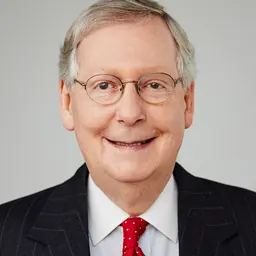
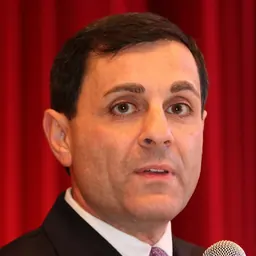

Related people
Same field, nearest in time

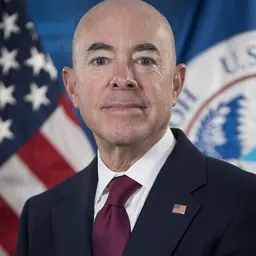

Contemporaries
People whose lives overlapped Steve Beshear's


Frequently asked questions
Who is Steve Beshear?
61st governor of Kentucky
When was Steve Beshear born?
Steve Beshear was born on 21 September 1944 in Dawson Springs.
What is Steve Beshear's occupation?
Steve Beshear is a lawyer and politician.
What nationality is Steve Beshear?
Steve Beshear is American.
Sources & further reading
Cite this page
APA: Biography.guide. (2026). Steve Beshear. https://biography.guide/steve-beshear/
MLA: "Steve Beshear." Biography.guide, https://biography.guide/steve-beshear/.
Chicago: "Steve Beshear." Biography.guide. https://biography.guide/steve-beshear/.
Data last updated: 2026-09-20 · Spot an error? Report a correction.
Page generated 2026-09-27 05:25 UTC