
About Stephen Murray-Smith
Lived 1922 – 1988 (aged 65). Stephen Murray-Smith was an Australian historian and writer.
Stephen Murray-Smith AM (9 September 1922 – 31 July 1988) was an Australian writer, editor and educator.
Early life and education Murray-Smith's father ran a lucrative business shipping Australian horses to India for the armed forces. It enabled the family to live in Toorak, one of Melbourne's wealthiest suburbs, and to send Stephen to board at Geelong Grammar School from 1934. He described his home as "bookless", adding however that his mother was "a voracious reader all her life", getting her books from the circulating and public libraries.
The business, and the wealth, came "to a dead end in 1938, when the Indian army mechanised", but generosity from the school and from Murray-Smith's grandfather allowed him to remain at Geelong Grammar and complete his schooling in 1940. Murray-Smith later described Geelong Grammar as "a good but conservative middle-class school". In his position as secretary of the Public Affairs Society at the school he "invited Ralph Gibson of the Communist Party down to talk to us at school—under J.R. Darling it was that kind of school".
He spent a year at the University of Melbourne before enlisting in the army at the end of 1941. An avid reader from childhood, he recorded that in the three years before he enlisted he read 314 books, of which only one, Francis Ratcliffe's Flying Fox and Drifting Sand, was Australian. Murray-Smith later recalled: "The army consolidated the two important lessons I had already learned from boarding school: how to stay alive under difficulties, and the idiocy of authority."
After his discharge in early 1945 he resumed his studies at Melbourne, completing an honours Arts degree in history followed by a Dip.Ed., while taking a prominent part in student politics with his close friend Ian Turner. He edited several editions of the Group's magazine, Realist Writer, from 1952 to 1954. In 1954, with financial assistance brokered by Judah Waten, he founded the quarterly literary magazine Overland. Overland, said Murray-Smith later, aimed "to talk of books and writing in an unselfconscious way with the assumption that there was no reason whatsoever why 'ordinary people' should not enjoy such writing and participate in it".
In 1958, when Ian Turner was expelled from the Communist Party, Murray-Smith resigned his membership. In order to prevent the Communists taking over Overland, he and Turner took the subscriber lists and hid them. Murray-Smith was determined that Overland should "avoid the dreadful humorlessness and dogmatism of the fully convinced". He continued to edit Overland until his death in 1988.
Academic career Murray-Smith worked for the Victorian Teachers’ Union from 1958 to 1961, then returned to the University of Melbourne, as research fellow, then as lecturer, then as reader in education by the time of his retirement in 1987. He edited the annual publication Melbourne Studies in Education from 1973 to 1982.
He called himself "a historian by profession" whose "special areas of historical research" were "technical education, on the one hand, the regional history of the Bass Strait area, and culture conflict therein, on the other". but this was one of several projects his death precluded.
Values Murray-Smith espoused what he called "radical nationalism", adding that Australia's radicals "should not seek to destroy the past, but to build on it". In 1981 he wrote:
I am a man whose emotional roots are in a simpler, less cosmopolitan Australia. I am grateful for my years in the Communist Party and for my involvement with the Jewish community, because these events have prevented me from being just another middle-aged, middle-class ex-public schoolboy, but deep down and far back my Australia is an Australia of the work ethic, of the dunny in the back yard ... of men going to football matches with hats on; and of the expansion of the Australian suburb, surely in many respects an original and beneficent Australian "invention".
Death and legacy Murray-Smith died of a heart attack on 31 July 1988 at his home in Mount Eliza. His family buried his ashes under a cairn at Erith Island.
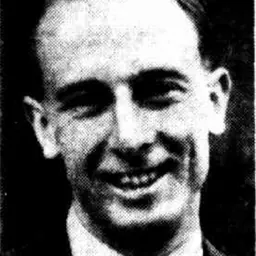
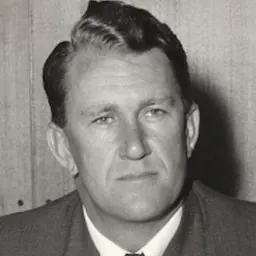
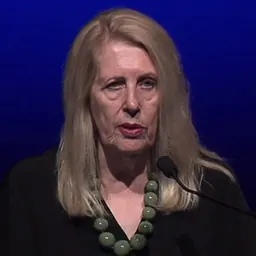
The State Library of Victoria has held an annual Stephen Murray-Smith Memorial Lecture since 1992, with the aim of promoting "research and debate in the broad areas of Stephen's interest and influence". Lecturers have included Geoffrey Serle, Geoffrey Blainey, Malcolm Fraser, Anne Summers and Maxine McKew.
Don’t just read it —
keep it.
Full-length biographies made to live with: read them, listen on the way to work, watch them tonight.
- E-book
- Audio
- Video
Instant download · yours to keep · every purchase keeps this site free
Important facts
Family & relationships
People in Stephen Murray-Smith's life
Named in this biography and alive at the same time




Related people
Same field, nearest in time

Contemporaries
People whose lives overlapped Stephen Murray-Smith's

Frequently asked questions
Who was Stephen Murray-Smith?
Australian writer, editor and educator
When was Stephen Murray-Smith born?
Stephen Murray-Smith was born on 9 September 1922 in Melbourne.
When did Stephen Murray-Smith die?
Stephen Murray-Smith died on 31 July 1988 in Mount Eliza.
What was Stephen Murray-Smith's occupation?
Stephen Murray-Smith was a historian and writer.
What nationality was Stephen Murray-Smith?
Stephen Murray-Smith was Australian.
Sources & further reading
· Wikipedia: Stephen Murray-Smith
· DBpedia: Stephen Murray-Smith
Cite this page
APA: Biography.guide. (2026). Stephen Murray-Smith. https://biography.guide/stephen-murray-smith/
MLA: "Stephen Murray-Smith." Biography.guide, https://biography.guide/stephen-murray-smith/.
Chicago: "Stephen Murray-Smith." Biography.guide. https://biography.guide/stephen-murray-smith/.
Data last updated: 2026-09-20 · Spot an error? Report a correction.
Page generated 2026-09-27 05:26 UTC