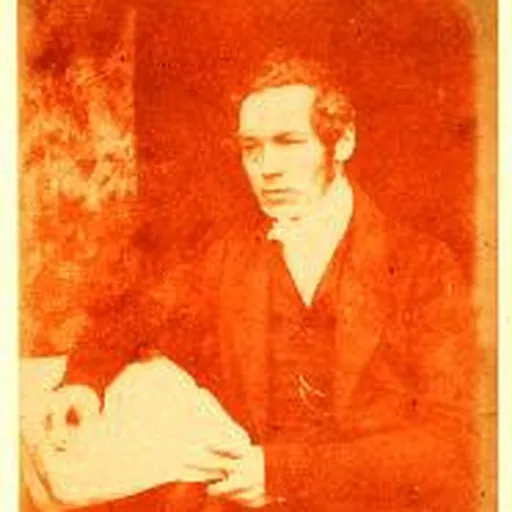
About Stephen Hislop
Lived 1817 – 1863 (aged 45). Stephen Hislop was a geologist.
Stephen Hislop (8 September 1817, in Duns, Scotland – 4 September 1863, in Takalghat) was a Scottish missionary who worked with the Free Church in India, an educationist and a keen geologist. Hislop College, Nagpur is named after him, as is the green mineral Hislopite. Among his geological discoveries is the fossil reptile, Brachyops laticeps which he found in his geological explorations of the Nagpur region.
Early life Hislop was born in Duns, Berwickshire on 8 September 1817, the youngest son of Stephen Hislop, a local builder, and his wife, Margaret Thomson. As a boy, he, like his older brother Robert, collected insects in the country around Duns, and rocks such as copper ore from old mine workings.
He arrived by ship at Bombay on 13 December 1844. As soon as he was fluent, he began his missionary work, opening a school in Nagpur in May 1846; it later developed into Hislop College.
Reception
Sir Richard Temple, who became chief commissioner of the central provinces in 1862, praised Hislop as "among the most gifted and accomplished missionaries whom this generation has seen in India"; as being notable "for philology and antiquarian research"; and "for physical science, especially botany and geology".
Geology and natural history The Labyrinthodont reptile, Brachyops laticeps (Owen, 1854) was discovered by Hunter and Hislop in India. Hislop was assisted by another Free Church of Scotland missionary, Robert Hunter (1823-1897), who later edited the Encyclopædic Dictionary. Both men were naturalists and keen amateur geologists, and as they walked the area around Nagpur, studied the local geology and sent papers home to be read at the Geological Society of London.
Joint papers with Hunter for the Geological Society included "On the Geology of the Neighbourhood of Nagpur, Central India"; "On the connection of the Umret Coal Beds with the Plant-beds of Nagpur, and of both with those of Burdwan".
Papers by Hislop (after Hunter became ill and returned to Britain) for the Geological Society included "Tertiary Deposits associated with Trap-Rock in the East Indies, and Fossil-shells from those deposits"; "On the Age of the fossiliferous thin-bedded Sandstone and Coal of Nagpur"; and "Fossil Teeth and Bones of Reptiles from Central India".
Hislop wrote three papers for the Royal Asiatic Society's Journal: "Geology of the Nagpoor State"; "On the Age of the Coal Strata in Western Bengal and Central India"; and "Remarks on the Geology of Nagpoor".
Activities
In 1857, Hislop's connections to local people were instrumental in saving the lives of the Europeans in Nagpur: one of his Muslim friends warned him of an impending attack during the "Indian mutiny";
Hislop wrote several essays on different, mostly Dravidian, tribes of the Nagpur region. These essays were published posthumously by R. Temple in 1866. This work resulted in a mission for the Gondi people.
Family
Hislop's older brother Alexander Hislop (1807-1865), who wrote The Two Babylons, was also a minister of the Free Church of Scotland, representing East. Arbroath. They had several children: Margaret Erasma Hislop (d.1927); Stephen Robert Hislop (1846-1908); Elizabeth Crichton Hislop (1848-1920); and Wilhelmina Maitland Hislop (1851-1924). The daughters lived together as spinsters at 20 Viewforth Terrace.
Don’t just read it —
keep it.
Full-length biographies made to live with: read them, listen on the way to work, watch them tonight.
- E-book
- Audio
- Video
Instant download · yours to keep · every purchase keeps this site free
Important facts
People in Stephen Hislop's life
Named in this biography and alive at the same time



Related people
Same field, nearest in time

Contemporaries
People whose lives overlapped Stephen Hislop's



Frequently asked questions
Who was Stephen Hislop?
British geologist (1817–1863)
When was Stephen Hislop born?
Stephen Hislop was born on 8 September 1817 in Duns.
When did Stephen Hislop die?
Stephen Hislop died on 4 September 1863.
What was Stephen Hislop's occupation?
Stephen Hislop was a geologist.
Sources & further reading
Cite this page
APA: Biography.guide. (2026). Stephen Hislop. https://biography.guide/stephen-hislop/
MLA: "Stephen Hislop." Biography.guide, https://biography.guide/stephen-hislop/.
Chicago: "Stephen Hislop." Biography.guide. https://biography.guide/stephen-hislop/.
Data last updated: 2026-09-22 · Spot an error? Report a correction.
Portrait: Wikimedia Commons · author & licence
Page generated 2026-09-27 05:00 UTC