
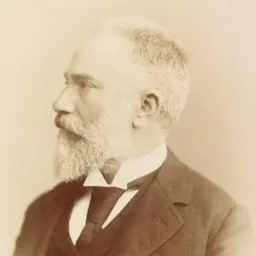
Stephen Henry Hobhouse
English peace activist, prison reformer, and religious writer
About Stephen Henry Hobhouse
Lived 1881 – 1961 (aged 79). Stephen Henry Hobhouse was a British writer and peace activist.
Stephen Henry Hobhouse (5 August 1881 – 2 April 1961) was an English peace activist, prison reformer, and religious writer.
Family Stephen Henry Hobhouse was born in Pitcombe, Somerset, England. He was the eldest son of Henry Hobhouse, a wealthy landowner and Liberal Party MP from 1885 to 1906, and Margaret Heyworth Potter. Both sides of his family included a number of reformers and progressive politicians: As an MP, his father was behind the Education Act 1902. His paternal cousin Emily Hobhouse (1860–1926) was known for bringing attention to British concentration camps in South Africa during the Second Boer War. Her views greatly influenced Stephen. His paternal cousin Leonard Trelawny Hobhouse (1864–1929) was a sociologist and one of the founders of social liberalism. His brother Arthur Hobhouse (1886–1965) was the architect of the system of National parks of England and Wales. His maternal aunt Catherine Courtney, Baroness Courtney of Penwith (1847–1929), was a social worker and internationalist. His maternal aunt Beatrice Webb (1858–1943), was a sociologist, economist, and social reformer who played key roles in founding both the London School of Economics and Political Science and the Fabian Society. His maternal grandfather Richard Potter (1817–1892) was a chairman of the Great Western Railway. His maternal great-grandfather Richard Potter (1778–1842) was a radical Liberal Party MP.
Education and formative years
Stephen Hobhouse was brought up as a member of the Church of England. He was educated at Eton, where he won prizes in both academics and sports, and at Balliol College, Oxford. Hobhouse attended Quaker meetings in Hampstead after graduation and officially became a member of the Society of Friends in 1909.
The Second Boer War broke out when he was 18. He originally supported the war but his views were soon challenged by his cousin Emily. "Thus, no doubt, it was that my mind was prepared for the awakening". What he regarded as an awakening came from a 1902 reading of a pamphlet by Leo Tolstoy. This tract had a profound influence on him and he became an ardent pacifist.
He worked as a civil servant for seven years in the Board of Education. During the Balkan Wars of 1912–1913, he resigned his post to go to Constantinople as a volunteer with a Quaker relief mission that helped refugees and saw firsthand the damage that war can do. Together they wrote a biography of Samuel Hahnemann, the founder of homeopathy. Both Hobhouses were believers in homeopathy, and Steven translated articles for the Homeopathic Journal.
As eldest son of a wealthy family, Stephen stood to inherit a large fortune, but, influenced by Tolstoy again, he renounced his inheritance. He and his wife adopted a lifestyle of poverty, living in Hoxton, then a slum district in East London. At the same time they joined the Quakers and became active in Quaker service. By mid-1917, after 112 days in jail, followed by a second jail sentence, his health was declining rapidly. His health had always been frail: he had previously suffered nervous breakdowns and scarlet fever. His wife was angry about his treatment in prison and some said that he never recovered his health entirely.
Nearly every feature of prison life seems deliberately arranged to destroy a man's sense of his own personality, his power of choice and initiative, his possessive instincts, his concept of himself as a being designed to love and serve his fellow-man. His very name is blotted out and he becomes a number; A.3.21 and D.2.65 were two of my designations. He and his fellows are elaborately counted, when-ever moved from one location to another, in the characteristic machine-like way. He is continually, of course, under lock and key, ignored except as an object for spying.
His mother, Margaret, was a supporter of the First World War, in which three of her four sons served: the youngest Paul Edward was killed in March 1918. She was determined, however, to save her eldest son Stephen's life and to draw attention to the predicament of 1,350 war resisters then being held in prison.
She maintained that "absolutists" like Stephen should either receive a King's Pardon or be released into civilian life. Margaret produced a pamphlet, I Appeal unto Caesar: the case of the conscientious objectors, with an introduction by the classicist and public figure Gilbert Murray, publicising the plight of the conscientious objectors. The pamphlet sold over 18,000 copies. (Recent research by Jo Vellacott has revealed that the appeal's author was actually Bertrand Russell.) This active public campaign was aided discreetly by the influential Alfred Milner, who was a family friend. The case of Stephen Hobhouse was first raised in Parliament on 9 July 1917. The campaign prevailed and in December 1917 Stephen, and some 300 other COs, was released from prison on grounds of ill health.
In prison Hobhouse met Fenner Brockway, a "fiery socialist" and fellow anti-war activist. After the war, they wrote English Prisons Today, sponsored by the Prison System Enquiry Committee. This book, which appeared in 1922, was a critique of the English prison system,
Writings Hobhouse wrote many books on prison reform, Quakerism, and religion. Selected works include: 1918 1919 1919 1922 1927 1934 1937 1948 1944? 1946 1951 1952 1954
Don’t just read it —
keep it.
Full-length biographies made to live with: read them, listen on the way to work, watch them tonight.
- E-book
- Audio
- Video
Instant download · yours to keep · every purchase keeps this site free
Important facts
Family & relationships
People in Stephen Henry Hobhouse's life
Named in this biography and alive at the same time



Related people
Same field, nearest in time

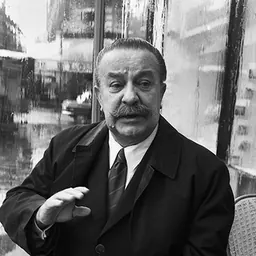
Contemporaries
People whose lives overlapped Stephen Henry Hobhouse's

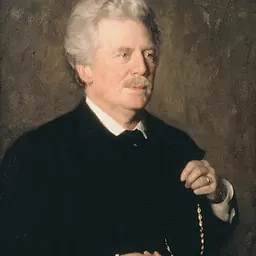
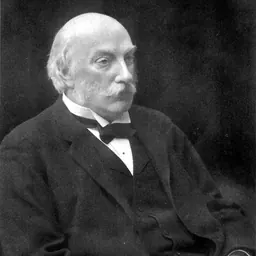
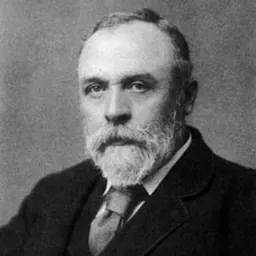

Frequently asked questions
Who was Stephen Henry Hobhouse?
English peace activist, prison reformer, and religious writer (1881-1961)
When was Stephen Henry Hobhouse born?
Stephen Henry Hobhouse was born on 5 August 1881 in Pitcombe.
When did Stephen Henry Hobhouse die?
Stephen Henry Hobhouse died on 2 April 1961.
What was Stephen Henry Hobhouse's occupation?
Stephen Henry Hobhouse was a writer and peace activist.
What nationality was Stephen Henry Hobhouse?
Stephen Henry Hobhouse was British.
Sources & further reading
· Wikipedia: Stephen Henry Hobhouse
Cite this page
APA: Biography.guide. (2026). Stephen Henry Hobhouse. https://biography.guide/stephen-henry-hobhouse/
MLA: "Stephen Henry Hobhouse." Biography.guide, https://biography.guide/stephen-henry-hobhouse/.
Chicago: "Stephen Henry Hobhouse." Biography.guide. https://biography.guide/stephen-henry-hobhouse/.
Data last updated: 2026-09-22 · Spot an error? Report a correction.
Page generated 2026-09-27 05:20 UTC