
About Stephen H. Weed
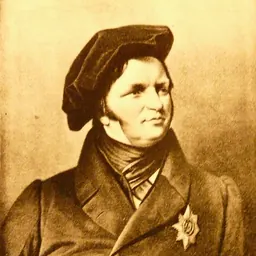
Lived 1831 – 1863 (aged 31). Stephen H. Weed was an American military officer.
Stephen Hinsdale Weed (November 17, 1831 – July 2, 1863) was a career military officer in the United States Army. He fought in the Seminole Wars and the Utah War. He was killed defending Little Round Top during the Battle of Gettysburg in the American Civil War.
Early life and career Weed was born in Potsdam, New York, the second of four children born to John Kilbourne and Charity Winslow Weed. He was appointed to the United States Military Academy, graduating 27th of 46 students in the Class of 1854. Among his classmates were ten other future Civil War generals, including Oliver O. Howard and J.E.B. Stuart. He received a brevet rank of second lieutenant and was assigned to the 2nd U.S. Artillery on July 1, 1854. He served on frontier duty in Texas. In December, he received his regular rank of second lieutenant in the 4th U.S. Artillery.
Two years later, he was promoted to first lieutenant and fought in Florida in the Seminole Wars in 1856–57. He was engaged in quelling the Kansas disturbances in 1858. By now a combat veteran commanding Battery B, 4th U.S. Artillery, he participated in the Utah War, helping restore order to the territory. He saw action again fighting Indians at the Battle of Egan Station in the Utah Territory on August 11, 1860, and at the Battle of Deep Creek on September 6, 1860.
Civil War With the outbreak of the Civil War, Weed was promoted to captain of the newly formed Battery I, 5th U.S. Artillery in May 1861. He remained at Camp Curtin in Harrisburg, Pennsylvania, training his crews until the spring of 1862, when they served in the Peninsula campaign and at Second Bull Run. He commanded his battery during the fierce artillery duel at Antietam. Promoted to command of all the artillery of the V Corps, his guns were in action at the Battle of Fredericksburg. From December 1862 through January 1863, he was stationed at Falmouth, Virginia. After a short leave of absence, he took part in the Battle of Chancellorsville, commanding the artillery of the 2nd Division, V Corps. On June 6, 1863, Weed left the regular army artillery to accept a commission as a brigadier general in the volunteer army.
Weed's body was returned home and buried in the Moravian Cemetery in New Dorp, a village on Staten Island in Richmond County, New York.
In memoriam Redoubt A of the military defenses around Washington, D.C., was renamed "Fort Weed" in September 1863 in his memory. Following the war, Post #91 of the Grand Army of the Republic in New York City was named the Stephen H. Weed Post. In 1902, Army General Orders No. 16 renamed a portion of Fort Wadsworth along The Narrows in New York Harbor as Battery Weed. In 1930, a street in New Dorp Beach, Staten Island was named Weed Avenue, dedicated to Stephen H. Weed.
Don’t just read it —
keep it.
Full-length biographies made to live with: read them, listen on the way to work, watch them tonight.
- E-book
- Audio
- Video
Instant download · yours to keep · every purchase keeps this site free
Important facts
Related people
Same field, nearest in time

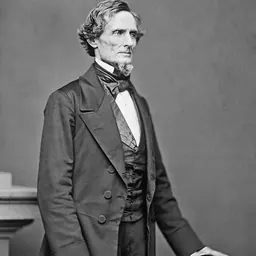
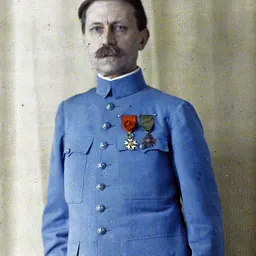


Contemporaries
People whose lives overlapped Stephen H. Weed's



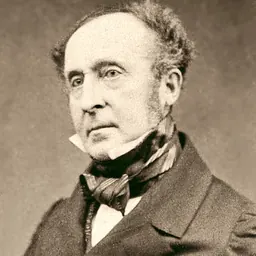
Frequently asked questions
Who was Stephen H. Weed?
Union Army general (1831-1863)
When was Stephen H. Weed born?
Stephen H. Weed was born on 17 November 1831 in Potsdam.
When did Stephen H. Weed die?
Stephen H. Weed died on 2 July 1863 in Gettysburg.
What was Stephen H. Weed's occupation?
Stephen H. Weed was a military officer.
What nationality was Stephen H. Weed?
Stephen H. Weed was American.
Sources & further reading
Cite this page
APA: Biography.guide. (2026). Stephen H. Weed. https://biography.guide/stephen-h-weed/
MLA: "Stephen H. Weed." Biography.guide, https://biography.guide/stephen-h-weed/.
Chicago: "Stephen H. Weed." Biography.guide. https://biography.guide/stephen-h-weed/.
Data last updated: 2026-09-24 · Spot an error? Report a correction.
Page generated 2026-09-27 05:01 UTC