
About Stephen Albert
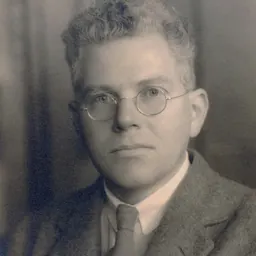
Lived 1941 – 1992 (aged 51). Stephen Albert was an American composer and music teacher.
Stephen Joel Albert (February 6, 1941 – December 27, 1992) was an American composer. He is best known for his Pulitzer Prize winning Symphony No. 1 RiverRun and his Cello Concerto (1990), written for Yo-Yo Ma. He made sketches for a Second Symphony, but was unable to complete it before his death in an automobile accident in 1992. The work was subsequently completed by Sebastian Currier. Albert was posthumously commemorated in music by fellow composers Aaron Jay Kernis and Christopher Rouse.
Biography Childhood Albert was born on February 6, 1941, in the Jamaica neighborhood of the borough of Queens in New York City. He was one of two children born to Jeanette (née Robbins) and Sidney G. Albert.
He lived his childhood in the village of Great Neck, where at an early age he developed his interest in music. During his elementary school years he feigned illness in order to stay home and play on the family piano. He also studied French horn and trumpet during this period, though he later told the music critic Richard Dyer that he had been "a terrible player".
Formative in Albert's development were early hearings of music by Domenico Scarlatti, which he first heard on an LP his brother had brought home, and recordings of music by Richard Wagner conducted by Arturo Toscanini:
Something caught me — I didn't take it for granted and listened over and over again to find out what it was. It was the same way with Toscanini's record of Wagner... I loved the sunlight-and-shadow quality of that music; it was like wandering in a dark forest, and then, suddenly, there would come a luminous clearing.
Albert's first attempts at composition began at the age of 13. They originated from musical games and improvisations he played with fellow students at Camp Greylock, a boys' summer camp in Becket, Massachusetts. When he returned home, he began to study piano with Leonid Hambro, to whom he had been referred by another piano teacher. Although Albert considered himself an unskilled student, he credited Hambro for cultivating his musical appreciation, especially of 20th-century music, to which he previously expressed antipathy. In 1988 he told the Philadelphia Inquirer that in his youth he disliked the Second Viennese School and Béla Bartók, and that he preferred the Four Last Songs by Richard Strauss. He described his musical tastes as "non-20th-century", and said that the composers he had admired most were Modest Mussorgsky and Nikolai Rimsky-Korsakov. Albert's dislike of Arnold Schoenberg and the musical attitudes his school fostered continued into adulthood, but he later regarded Bartók as one of the composers "from the margins of European life" he held in highest regard.
Education In search of guidance Taking note of Albert's aptitude for composition, Hambro introduced him to Elie Siegmeister. Albert studied composition with him from 1956 to 1958; he later expressed gratitude to Siegmeister for deepening his understanding of musical analysis.
Later in 1958, Albert went to the Aspen Music Festival and School, where he enrolled as one of the youngest students in Darius Milhaud's composition class. Against his teacher's advice, Albert subsequently continued his musical education at the Eastman School of Music, where he rapidly became dissatisfied with its pedagogy. Thereafter he left for Sweden to study for a short period with Karl-Birger Blomdahl.
Studies with Rochberg In the early 1960s Albert returned to the United States, and enrolled at the University of Pennsylvania as a graduate student of George Rochberg. At his preliminary enrollment audition, an interviewer who had read through Albert's compositional portfolio noted the music's traditionalism and strongly criticized it. Angered by the comment, Albert briefly considered abandoning music in favor of jurisprudence. With atonal and experimental music in the ascendant, what he retrospectively described as an "atmosphere of terrorism" beset musical academia of this period. "There were no two sides to the issue", he noted. Dissent from prevailing attitudes, he also said, was responded to by the academic establishment with a notion that if "[you did] not believe in [serialism or experimental music], that you were wrong, that you were morally culpable". Albert was, therefore, surprised when Rochberg, then an advocate of serialism, approached him with a personal invitation to join his class shortly after this incident.
In Rochberg, Albert found a friend and, unexpectedly, a senior musical figure sympathetic to his own aesthetic ideals. They met for lunch on a weekly basis to discuss contemporary musical affairs in the United States. Catalyzed by younger students who questioned the musical avant-garde, Rochberg in the early 1960s was beginning his own stylistic transformation into a music that referenced the past. Conversely, Albert was grateful to Rochberg for helping him to maintain his interest in musical composition. Their friendship also offered them relief from personal worries both composers were facing: Albert from a recently ended romantic relationship, Rochberg from his son's terminal brain cancer diagnosis.
Though Albert had studied with Rochberg and credited his teacher with guiding him through a difficult time, he clarified that he did not regard himself as part of a "Rochberg school". His musical evolution had occurred concurrently and, sometimes, anticipated Rochberg's. Their friendship continued for the rest of Albert's life. Its dynamic demonstrated, according to the musicologist Amy Lynn Wlodarski, "that the sphere of influence and guidance was neither unilateral nor top-down — from teacher to student — but rather reciprocal".
Uncertainty In addition, he also studied at the Philadelphia Musical Academy with Joseph Castaldo, who introduced him to string quartets by Bartók and Alban Berg. Albert earned his degree from the institution in 1962, which at the time was not accredited; it was the only schooling in higher education that he completed.
Various factors dissuaded Albert from continuing further musical studies: health problems, dislike of mainstream musical pedagogy, and his opposition to the trends shaped by the composers of the Columbia-Princeton Electronic Music Center. In 1990 he told the Baltimore Sun that his decision to abandon higher education had been "a real gamble".
Early career Albert composed in various musical genres during the 1960s, with his electronic and atonal music the first to gain him wider professional attention. He earned the Rome Prize in 1965 and 1966. In 1967 he was awarded a Guggenheim Fellowship, the first of two he would earn.
Influenced by the music of Johannes Brahms and Gustav Mahler, as well as with Rochberg's support, Albert's approach to composition in the mid-1960s shifted towards 19th-century musical procedures. With this stylistic turn, according to the Washington Post, Albert thereby became one of the "trendsetters for the baby-boom generation's revolt against academicism". The composer Christopher Rouse, a friend and colleague, called him "one of the founding fathers of... the new romanticism". As Albert explained in an interview to the Baltimore Sun in 1990:
I felt that music had reached an impasse. The only real masterpieces [composed] after World War II had been by [Dmitri] Shostakovich. The only place most new music was going was over a cliff into an abyss, and the so-called conservative alternative seemed to be mired in stasis. The only way out of it, it seemed to me, was to go back to where music had been shortly before the turn of the century... I wanted a complexity of inner textures that bears repeated hearings and I wanted at the same to have a surface accessibility.
In 1968 and 1969, Albert composed what Wlodarski called one of his "most dissonant and cataclysmic" scores, Wolf Time. A response to the "political assassinations, [the] Vietnam War, and other grim realities of American life", the work was inspired by the composer's reading of the poetry of Immanuel Velikovsky. A few years later, in 1971 and 1972, a viewing of a documentary about Pablo Casals that included a scene in a cathedral of the cellist playing one of the Cello Suites by Johann Sebastian Bach led Albert to compose an electro-acoustic work, Cathedral Music.
During the early 1970s, Albert lived in Philadelphia and taught part-time at his alma mater, the Philadelphia Musical Academy. Through his teaching work he met William Smith, the associate conductor of the Philadelphia Orchestra, who in turn introduced the composer to Carlo Maria Giulini. Curious about Albert's music, he requested to see some of his scores. Several months later, in 1975, Giulini conducted the premiere of Leaves from the Golden Notebook.
Maturity From 1985 to 1988 he worked as the Seattle Symphony's composer-in-residence.
His notable students included Daniel Asia, Amanda Harberg, and Dan Coleman.
Death On the afternoon of December 27, 1992, Albert and his family were traveling southbound in their Acura sedan through moderately heavy traffic on Route 6 in Cape Cod. According to reports, they were returning to their home in Newton, Massachusetts from another home they owned in Truro. At approximately 3:15 p.m., Albert swerved his car onto the northbound lane, sideswiped a Volkswagen Jetta, then collided directly with a Ford Aerostar. Albert, who was trapped in his car, was declared dead at the scene; he was the only fatality in the three-vehicle collision. Preliminary investigations by the Truro Police concluded that alcohol intoxication was not a factor in the accident.
Personal life Albert married Marilyn Blanche Silagy on August 7, 1965, at a wedding ceremony held at The Pierre in New York City. The couple had two children.
Awards and honors Stephen Albert was awarded Guggenheim Fellowships for Music Composition in 1968 and 1978. He won the 1985 Pulitzer Prize for Music for his Symphony No. 1, RiverRun. He posthumously won a Grammy Award in 1995 in the Best Classical Contemporary Composition category for his Cello Concerto as performed by Yo-Yo Ma in a 1990 recording with the Baltimore Symphony Orchestra, conducted by David Zinman.
Works A number of Albert's works were based on James Joyce texts. Finnegans Wake inspired three of Albert's pieces: To Wake the Dead, TreeStone, and Symphony RiverRun. Albert's paired "Distant Hills" arias Flower of the Mountain and Sun's Heat were based on Ulysses, and the song "Ecce Puer" from Joyce's poem of the same name.
His Cello Concerto began as a request from the Baltimore Symphony in 1987 for a 15-minute orchestral piece. In 1988 the commission was changed to a concerto for Yo-Yo Ma. The composer credited Ma with his help completing the work. Albert started with material drawn two earlier works from 1988, "Anthem and Processionals" and "The Stone Harp." He started the composition in 1989 and finished in 1990. The premiere was on 31 March 1990 and featured Yo-Yo Ma along with the Baltimore Symphony Orchestra conducted by David Zinman. A revised version was featured on a 1993 album, "The New York Album." Symphony No. 2 (1992) – 30 minutes (orchestration completed by Sebastian Currier) Tapioca Pudding (1991) – 2 minutes
Concertante Concerto for Violoncello and Orchestra (1990) – 30 minutes Distant Hills (orchestra version) (1989) – 31 minutes Flower of the Mountain from "Distant Hills" (orchestra version) (1985) – 16 minutes In Concordiam (1986) – 17 minutes Into Eclipse (orchestra with voice version) (1981) – 30 minutes Sun's Heat from "Distant Hills" (orchestra version) (1989) – 15 minutes Wind Canticle for Clarinet and Orchestra (1991) – 14 minutes Wolf Time (1968) – 20 minutes
Ensemble (7 or more players) Distant Hills (chamber version) (1989) – 31 minutes Flower of the Mountain from "Distant Hills" (chamber version) (1985) – 16 minutes Sun's Heat from "Distant Hills" (chamber version) (1989) – 15 minutes TreeStone (1983) – 45 minutes
Chamber Tribute (1988) – 9 minutes
Choral Bacchae: A Ceremony in Music (1967) – 8 minutes
Vocal Ecce Puer (1992) – 6 minutes Rilke Song – On Nights Like This (1991) – 5 minutes The Stone Harp (1988) – 14 minutes To Wake the Dead (1977) – 25 minutes Wedding Songs (1964) – 10 minutes
Posthumous tributes Several composers posthumously commemorated Albert's life and work in their music. In 1993, Aaron Jay Kernis dedicated his Still Movement with Hymn, a composition for piano quartet, in memory of Albert. The following year, in 1994, Christopher Rouse composed in his Symphony No. 2 a slow movement that was a memorial to Albert. Edward Applebaum in his Symphony No. 4 from 1995 contributed another symphonic elegy to Albert's memory. The symphony contains musical quotations from Albert's music, including of "Albert quoting Mahler".
For a January 2002 concert commemorating Albert, Jonathan Leshnoff and James Willey each composed works in his memory. The former's Racing Pulse for orchestra was based on memories of the composer's studies with Albert, in particular his theories about harmony. Willey's contribution was Three Pieces in Memory of Stephen Albert, a tripartite chamber work scored for viola, clarinet, and piano.
Don’t just read it —
keep it.
Full-length biographies made to live with: read them, listen on the way to work, watch them tonight.
- E-book
- Audio
- Video
Instant download · yours to keep · every purchase keeps this site free
Important facts
People in Stephen Albert's life
Named in this biography and alive at the same time




Related people
Same field, nearest in time

Contemporaries
People whose lives overlapped Stephen Albert's


Frequently asked questions
Who was Stephen Albert?
American composer (1941-1992)
When was Stephen Albert born?
Stephen Albert was born on 6 February 1941 in New York City.
When did Stephen Albert die?
Stephen Albert died on 27 December 1992 in Cape Cod.
What was Stephen Albert's occupation?
Stephen Albert was a composer and music teacher.
What nationality was Stephen Albert?
Stephen Albert was American.
Sources & further reading
Cite this page
APA: Biography.guide. (2026). Stephen Albert. https://biography.guide/stephen-albert-composer/
MLA: "Stephen Albert." Biography.guide, https://biography.guide/stephen-albert-composer/.
Chicago: "Stephen Albert." Biography.guide. https://biography.guide/stephen-albert-composer/.
Data last updated: 2026-09-20 · Spot an error? Report a correction.
Page generated 2026-09-27 05:17 UTC