
About Stephan Ludwig Roth
Lived 1796 – 1849 (aged 52). Stephan Ludwig Roth was an Austrian and Hungarian writer, parson, teacher, politician, pastor and opinion journalist.
Stephan Ludwig Roth (24 November 1796 – 11 May 1849) was a Transylvanian Saxon Lutheran pastor, educator, and political reformer active in the Principality of Transylvania during the first half of the 19th century. He was a prominent advocate for educational modernization based on Pestalozzian principles into Saxon schooling. He also politically campaigned for Romanians to be recognized in Saxon and the coexistence of Transylvania's multiethnic population of Hungarians, Romanians, and Transylvanian Saxons. His reformist activism brought him into conflict with the Hungarian authorities during the Hungarian Revolution of 1848, and he was executed by the Hungarian revolutionary forces under the command of Lajos Kossuth in 1849. He later became a posthumous martyr amongst the Transylvanian Saxons for his progressiveness and advocating for a multiethnic empire.
Educated in Hermannstadt during his primary years, he later attended the University of Tübingen studying theology. After graduating, he worked at Johann Heinrich Pestalozzi's institute in Yverdon, before returning to Transylvania in order to spread Pestalozzi's educational and linguistic ideas. He began his career as a gymnasium professor in Mediasch and was later a Lutheran pastor in Nimesch and Meschen. During his time as pastor, he addressed a wide range of issues, which led to him becoming a political reformist. He published his ideas on guilds and promoted agricultural ideas to address rural policy. He became widely known for his 1842 publication Der Sprachkampf in Siebenbürgen, which addressed the Transylvanian Diet amongst debates over what should be the official language of Transylvania. During the Hungarian Revolution in 1848, he was appointed by the Habsburg government as the Commissioner for the 13 Saxon villages in Nagy-Küküllő, but was later arrested by Hungarian revolutionaries and executed by firing squad. Though widely commemorated later for his progressive ideals among the Transylvanian Saxons, his legacy remains complicated by present-day historians. He has been criticized more recently for his writing on Jewish people for perpetuating antisemitic stereotypes and opposing Jewish emancipation. Roth's life and work, however, continued to be studied as part of Transylvania's history, both educationally and politically, and he continues to be widely commemorated.
Early life
Stephan Ludwig Roth was born on 24 November 1796 in Mediasch in the Principality of Transylvania. His grandfather through his paternal side was Stephan Rothmann, a shoemaker, and his maternal side was a pastoral family that had held village pastorates like Martin Fay (his great-grandfather). Early on during 1803, his father was elected pastor of Kleinschelken to succeed Johann Gunnesch, who was his father's father-in-law, so the family moved there, with the city eventually becoming Roth's village home and the place he did his early schooling.
He eventually transferred from the syntax class of Mediasch to Hermannstadt High School in May 1809, where he became part of the "Selekta" and a student inspector. During his time there in Hermannstadt, he became close to his brother-in-law, Bergeileter, who held the post of principal of the Hermannstadt Gymnasium and who influenced him to improve his intellectual development. In 1815, after Bergleiter died, Roth also became student librarian of the school before his examinations on 22 July 1816. His final topic for the examinations was written in Latin over the natural order of the cosmos and disciplined thinking, which was a reflection of the nationalist spirit that was at Hermannstadt Gymnasium. He passed the matura with first class with eminence.
Tübingen and years with Pestalozzi To follow in his father's footsteps and enter the clergy, he applied for a scholarship at the Tübingen Theological Seminary, which was accepted in August 1816 by Frederick I of Württemberg as a special favor. On 26 September 1816, he was informed and granted a two-year stay as a guest student at Tübingen. However, he did not start at the university until 3 May 1817. This was further compounded by the fact he acquired an illness in Mediasch during the winter of 1816–1817, and he finally departed for the university from 11 to 14 June 1817 by horse.
The journey from Mediasch in June 1817 to Tübingen to 11 October 1817, took the better part of a few months, which allowed him to reflect deeply and which he later called his "educational journey". He spent time in Pest and Vienna, where he reflected on Romanticism and agricultural advancements that were not seen in Transylvania at the time. At this point, he considered himself a citizen of the Kingdom of Hungary, referring to himself on passports as an "Austrian native son" who liked the House of Habsburg.
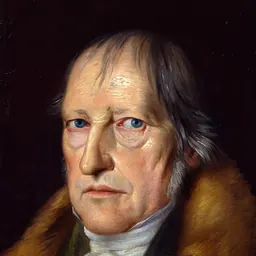
In a formative event in his life, on 19 July 1818, he met Wilhelm Stern while in Karlsruhe on vacation with friends to visit philosopher Georg Wilhelm Friedrich Hegel. Stern taught Latin and Greek with Johann Heinrich Pestalozzi. This led him to engage in conversations during September at the university with Professor Holzmann, who was from Karlsruhe and had previously lived near Pestalozzi. Not even a few months after arriving at Tübingen to study theology, he interrupted his studies again, inspired by his conversations with Holzmann, and arrived in Yverdon (Switzerland) on 1 October 1818 and was greeted by Pestalozzi and his associate Josef Schmid. At this point, his wish was to become an educator of the people, spurred on by Pestalozzi's direction in Switzerland. He went with Pestalozzi soon after to visit two collaborators of his, Niederer and Krüst, who had founded their own educational institution after working with Pestalozzi in Yverdon, which greatly inspired Roth. On 25 December 1818 Pestalozzi formally asked Roth's father to approve a one-year stay for Stephan at the institute stating it would benefit the future of education in Transylvania, with Roth writing back a few days later stating his motivation was out of personal affection for him and a deep commitment to educational reform that Pestalozzi was developing. His father quickly approved this request, and on 1 January 1819 he became a "member of the household", which meant he had received private instruction and could live in the castle at Yverdon where the institute was housed. He was initially tasked with teaching Latin using Pestalozzi's method to the townspeople. He was thus part of a philological team under Pestalozzi that created methods and textbooks for foreign language teaching alongside Stern, Meyer Marx, and Hirt. However, he was the one who took a central position under Pestalozzi because he came from a region where multiple languages were spoken, which enabled him to understand multilingual acquisition better, like John Amos Comenius or even Pestalozzi himself.
In August 1819 he retreated to Bullet, and began drafting a work that Pestalozzi had commissioned him to write on teaching classical languages This work, which became known as Der Sprachunterricht (Language Instruction), was developed mostly towards the end of 1819 and was translated into French and English to provide instructions on learning languages using Pestalozzi's method. However, in January 1820, he fell seriously ill with a chest and stomach infection and paused work on Sprachunterricht, which eventually made Roth's father write to Pestalozzi demanding he return home. Sprachunterricht itself was never finished and only survived in handwritten versions as a manuscript, unlike his colleagues' works, like Marx's method for teaching ancient language. On 5 April 1820 Pestalozzi granted Roth's leave and gave a testimonial which praised his mnemonic devices and improving language instruction and the application of these principles to Latin teaching, before Roth departed on 6 April.
Return to Transylvania and Mediasch Roth taught and was later rector of Mediasch Gymnasium (pictured here in 1912), which was later renamed in his honor to Stephan Ludwig Roth Theoretical High School. He then returned home to Transylvania, staying in Freiburg where he was offered an invitation to teach at a lyceum in London which he declined, for a while before moving. He made frequent stops during this journey, notably visiting Philipp Emanuel von Fellenberg at his Hofwyl School with the goal of getting his knowledge on how to recruit an agricultural student trained there to work in Transylvania. He also wants to learn himself through Fellneberg the new agricultural methods. He also did research on the Bell–Lancaster method, which had recently been developed, when he went to Fellenberg. Fellenberg, wanting him to stay, offered him a teaching position at his school but Roth declined citing his parents' desire for him to return and went to Basel to eventually go through Karlsruhe to Tübingen. Between 26 June and 30 June 1820, while staying in Tübingen, he wrote his dissertation on philosophy titled "The Nature of the State as an Educational Institution for the Human Calling", which was formally accepted on 4 July, and he was given his doctorate.
In December 1822, he formally took the position at Mediasch and was assigned to teach history, periodology, and style. He also began to introduce gymnastics into the curriculum, which was the first time the class had ever been part of instructions in a school in Transylvania. During the year 1823 little is known about him, besides that he continued with the education of the young people, which was met with success, especially for his lectures on general and national history. He also completed the manuscript for Sprachunterricht at this time, but struggled to get it published due to the increased hostility to Pestalozzianum ideas thanks to Pestalozzi's former assistant, Johannes Niederer, attacking the viewpoint. In the classroom, he also heavily started applying Pestalozzi's pedagogical basic idea while also helping with practical training for people going into the trades and for future teachers looking to teach at grammar schools. Lastly, he started his three-volume work "History of Transylvania", which was made in response to Martin Felmer's work (his work "Primae Lineae Historiae Transilvaniae" was a widely used history textbook at the time) and was intended to be the new standard for the history of Transylvania. It covered the earliest records of its existence to 1699, which was based on an earlier manuscript from 1822.
Finally, in 1828, he became vice-principal (Konrektor) of the gymnasium in Mediasch. He was promoted to rector of the institution on 13 April 1831.
Consistoral conflict and appointment to first pastor In March 1834, Pastor Johann Syll of the parish of Wurmloch in Mediasch was declared unfit for service and was released from duties. To fill the pastorate, an electoral forum was held where Roth received the majority of the votes, 89, compared to the other 19 that Reverend Georg Friedrich Müller received. Some historians view this demotion was because of his efforts to remove Mediasch Gymnasium from the influence of the city's elites, which brought him into conflict with the Saxon patrician families. For example, his ascension sermon was almost entirely influenced by Kant's epistemological idealism, while also at the same time he expressed a supranaturalist stance (a theological stance emphasizing truth or realities that are above nature) in letters to his nephew Adolf Bergleiter. His father was previously the pastor of Nimesch 35 years earlier, in 1802, for a briefly period before taking on the pastoral role of Kleinschelken. His first concern in Niemsch was to help the peasants there by studying the state of agricultural affairs and thus turn the parish's fields into a model farm for the community. To this extent, he also sought to improve livestock breeding, viticulture, and fruit cultivation. Since he could not establish the training center for young teachers that he had hoped for in the early 1820s, he instead resolved to set an example of teachings so that the Saxon peasants and Wallachians could learn from.
By 1840, Roth started taking into account Johann Gottlieb Fichte's ideas, particularly his development of German nationalism, alongside Johann Gottfried Herder's philosophy of history. Starting in 1842, also, Pestalozzi's influence also started spreading in Hungary due to Ludwig Schedius and Teréz Brunszvik (although Roth was never acknowledged in the region for his ideas). He also acquired a plot of land in Rohrau near Mediasch on the road to Hermannstadt, which included a tennant's cottage. He planned to bring a farmer from Germany to live in the cottage as a tenant and introduce rational agriculture to the townspeople through observation and examples.
On 21 February 1847, after around 10 years in his post as pastor of Nimesch, he was elected pastor of Meschen . That year he presented at a pastoral conference in Reichesdorf, where he espoused his Christian faiths. He wrote his position in the Hermannstadt newspaper Transsilvania. The diet itself by this point was composed of privileged nations: Hungarians, Szeklers, and Saxons. 'Der Sprachkampf was addressed implicitly to Emperor Ferdinand I, in the hopes that he would block the law's ratification (although it was passed, it still needed the emperor's approval). These views can best be seen through quotes from Der Sprachkampf:
Subsequently, he was sent to Klausenburg prison on either 27 April or 28 April. Rescue attempts were made for him: some students from Schäßburg attempted to free him during a stopover when moving to Klausenburg, but Roth refused for unknown reasons. In prison, he submitted a written defense to the charges: he did not deny the first three, and he believed that, because of the situation at the time, they seemed lawful and legitimate, and he believed he had acted correctly. He prayed the Lord's Prayer, and three shots were fired in a short interval, with the third being the fatal shot as it passed through his head. They first met in September 1819 when Roth was in Yverdon to work as Johann Heinrich Pestalozzi's assistant. Schmid was the sister of Pestalozzi's assistant, Josef Schmidk, and was the head of the poorhouse of Pestalozzi's in Yverdon.
Either way, after this heartbreak, he went to Mediasch and in June 1822 became engaged to Sophie Auner. She was the daughter of the pastor of Großkopisch , Georg Gottlieb Auner. Together, they had four children. The first of them was Maria Elisabeth Sophie (born 1826), who married merchant Michael Gottlieb Rosenauer, and they together they had many children together until her death in 1913 - most descendants of Roth come from her. They also had two other children: Stephan Ludwig Heinrich (born 1824), who died in 1841, and was a shop servant in Nimesch from emaciation, and Friederike Josepha (born 1829) who died in 1841 from emaciation also. In 1831, Auner died from tuberculosis in Mediasch. He later remarried his second wife, Karoline Henter, on 18 February 1837. Henter was the daughter of Bogeschdorf pastor Andreas Henter. Together, they had five children. One emigrated out of Transylvania, Stephan Andreas (born 1838), to the United States with his wife Christine Ruder from Vienna but died in a traffic accident in 1907 in Cleveland. His other children were Johanna Karolina (born 1839), who married merchant Josef Traugott Theil, and another was Stephan Gottlieb (born 1847), who was a cadet in the 17th Jägerbataillon but died from tuberculosis. The last two were Regina Karolina Theresia (born 1845) who died at the age of ten and Maria Karolina (born 1847) who married Heinrich Siegmund, a pharmacist, and later captain Bernhard Sykan. He also had one adopted child who he started taking care of in October 1848 after finding them in a forest near Meschen.
After his death, he asked the state for continued support for his foster child. He has been considered one of the most progressive figures in advocating for social justice and equality, and was called a "man ahead of his time". Throughout out his life, however, he was respected but also controversial - his ideas on official languages were known, but more of his reformist ideas went unheard of or failed. Roth was illustrated on a stamp with a face value of 3.90 Lei.
Views on Jews Authors like Kroner later attempted to analyze his views on Jewish people to see if he truly advocated for a peaceful coexistence. Kroner found that Roth was often deeply contradictory between theological ideas and antisemitic prejudice that was present in Austria-Hungary. Roth expressed admiration for the ancient Hebrews, who he viewed as industrious, and praised the Hebrew language and Old Testament for shaping human morality and intellectual development. He wanted people to study Hebrew as a root language, and said the biblical Israelites were part of the "oriental heights" from which education and spiritual progress first emerged in the world.
On the other hand, Roth viewed contemporary Jews in Austria-Hungary in a demeaning manner. He often invoked antisemitic tropes, describing them as "bloodsuckers", "money-creatures", and "parasitic plants", accusing them of economic exploitation and deceit. He opposed any Jewish emancipation, saying they lacked civic virtue and they should be excluded from Austrian citizenship until they proved themselves. He specifically criticized the Talmud as promoting anti-Christian views. He often generalized his views from isolated experiences, thus leading him to believe that economic reforms should restrict Jewish participation.
These views on ambivalence mirrored people Roth admired, like Herder and Pestalozzi, who would praise the Hebrew past of Jews but would be antisemitic in the present. Kroner used this to argue that Roth was not truly consistently tolerant like Folberth believed, but was contradictory in advocating for reforms while at the same time perpetuating prejudices that he reformed against.
Don’t just read it —
keep it.
Full-length biographies made to live with: read them, listen on the way to work, watch them tonight.
- E-book
- Audio
- Video
Instant download · yours to keep · every purchase keeps this site free
Important facts
People in Stephan Ludwig Roth's life
Named in this biography and alive at the same time

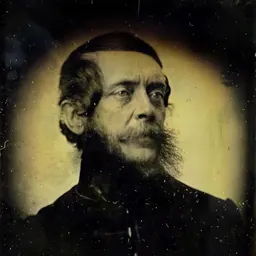

Related people
Same field, nearest in time
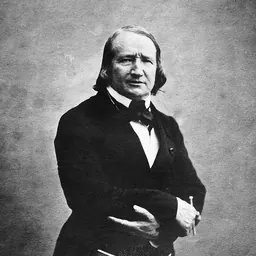


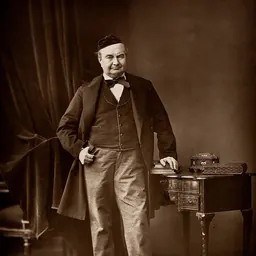


Contemporaries
People whose lives overlapped Stephan Ludwig Roth's





Frequently asked questions
Who was Stephan Ludwig Roth?
Transylvanian Saxon intellectual, pedagogue and Lutheran pastor (1796-1849)
When was Stephan Ludwig Roth born?
Stephan Ludwig Roth was born on 24 November 1796 in Mediaș.
When did Stephan Ludwig Roth die?
Stephan Ludwig Roth died on 11 May 1849 in Cluj-Napoca.
What was Stephan Ludwig Roth's occupation?
Stephan Ludwig Roth was a writer, parson, teacher, politician, pastor and opinion journalist.
What nationality was Stephan Ludwig Roth?
Stephan Ludwig Roth was Austrian and Hungarian.
Sources & further reading
· Wikipedia: Stephan Ludwig Roth
· DBpedia: Stephan Ludwig Roth
Cite this page
APA: Biography.guide. (2026). Stephan Ludwig Roth. https://biography.guide/stephan-ludwig-roth/
MLA: "Stephan Ludwig Roth." Biography.guide, https://biography.guide/stephan-ludwig-roth/.
Chicago: "Stephan Ludwig Roth." Biography.guide. https://biography.guide/stephan-ludwig-roth/.
Data last updated: 2026-09-27 · Spot an error? Report a correction.
Page generated 2026-09-27 05:17 UTC