
About Stella Rotenberg
Lived 1916 – 2013 (aged 97). Stella Rotenberg was an Austrian writer and poet.
Stella Rotenberg (born Stella Siegmann: 27 March 1915 - 3 July 2013) was a German language writer of prose and lyric poetry, originally from Vienna. For reasons of race and politics she was obliged to abandon her university medical studies in 1938 and to flee the country. She was keen to emigrate to England, but the necessary visa was not forthcoming and in March 1939 she fled, instead, to the Netherlands. Her brother Erwin had escaped to Sweden the previous year. For her Jewish parents, who were by this time beyond working age, there seemed to be no hope of admission to a foreign country: they remained behind. Stella Siegmann's long-awaited visa from the British was finally received in August 1939 and she moved to England where, a few months later, she married a fellow Austrian exile called Wolf Rotenberg. For the remaining 64 years of her life Stella Rotenberg lived in England, from 1948 in Leeds (Yorkshire). The language she preferred to use for her published work was always German, however.
Life Provenance and early years Stella Siegmann was born into an assimilated Jewish family in Vienna and grew up in the city's 20th district, a densely populated quarter a little to the north of the city centre, and located on the island formed by the channeling that two centuries before created the "Danube Canal". Bernhard Siegmann, Stella's father, was a trader in textiles and fabrics. Her brother, Erwin, was a year older than she. The family was not wealthy, but Bernhard and Regine Siegmann were keen to ensure that their two children received a proper education. Beyond that they were, by the standards of the time and place, open-minded and flexible in their approach to parenting, allowing their children a considerable degree of freedom. She spoke about this to the Refugee Committee in den Haag who switched her to an alternative (but unpaid) job, in return for her board and lodging, at an orphanage in den Haag. At around the same time Wolf Rotenberg was accepted into the Pioneer Corps of the British army.
1940s England In the early part of 1940 Stella Rotenberg wrote her first published poem. She wrote, sources insist, not for publication, and certainly not for publication in Germany or Austria, but because of a compulsion to write. It would indeed be several decades before any of her poems were published. (Her poems were always written in German.) Her first poem was written while Wolf was away in France and Stella was living as a subtenant in a small room in Colchester. She was always hungry. The she was taken in by a family who fed her properly. She became a little less thin and felt a little better. There was still, in her room, hardly enough space for a bed. Nevertheless, she was able to set her suitcase before the door. Under these conditions she wrote "Ohne Heimat" (loosely, "Without a Homeland"). Her short poem corresponded with the conditions under which she was living.
"I wanted absolutely nothing to do with Austria. I thought it wrong: everyone was blaming the Germans, and the Austrians were just the same. Hitler was Austrian ... In England only the German language is missing. Otherwise I'm just fine. Otherwise I'd have no reason to want to leave. But the absence of the [German] language, that is something that I find unfortunate." "Ich wollte mit Österreich überhaupt nichts zu tun haben. Denn ich habe gedacht, das ist ungerecht: Alles schimpft auf die Deutschen, und die Österreicher waren genauso. Hitler war Österreicher... Mir fehlt ja in England nur die deutsche Sprache. Sonst geht’s mir ja gut. Sonst würde ich ja gar nicht weg wollen. Aber dass mir die Sprache fehlt, das finde ich ein Malheur."
In 1946 Stella Rotenberg was granted British citizenship. Erwin Siegmann, her brother, made plans to return "home" to postwar Austria, but antisemitic incidents that he came across during a visit caused him to abandon the idea: when he died in 1990 he was still living in Stockholm.
There were other German refugees also living in Leeds, but none of them felt comfortable speaking German: Stella Rotenberg was acutely aware that her English was accented. Native-born English neighbours were friendly up to a point, but acceptance was never entirely unqualified and her written work continued to reflect a sense of social isolation consistent with the Rotenbergs' position as foreign-born exiles. She also continued to be haunted by a belief that being cut off from daily use of the German language was diminishing her skill as a practitioner of it, and she feared that losing her fluency also removed one of her last surviving connections to her murdered mother.
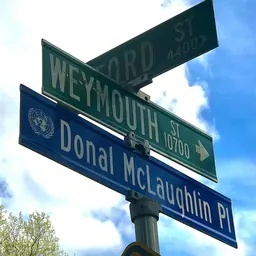
The next significant compilation, published by J. G. Bläschke in Darmstadt, was "Die wir übrig sind" ("Die wir übrig sind" is translated by Donal McLaughlin as "Those of us who remain" Back in Austria, in 2001 Stella Rotenberg became the first recipient of the Prize for Resistance Writing in Exile awarded (since then) annually by the Vienna-based Theodor Kramer Society.)
Death Wolf Rotenberg died in 1992. Stella Rotenberg died in Leeds on 3 July 2013.
Published output (selection)
Don’t just read it —
keep it.
Full-length biographies made to live with: read them, listen on the way to work, watch them tonight.
- E-book
- Audio
- Video
Instant download · yours to keep · every purchase keeps this site free
Important facts
People in Stella Rotenberg's life
Named in this biography and alive at the same time

Related people
Same field, nearest in time

Contemporaries
People whose lives overlapped Stella Rotenberg's



Frequently asked questions
Who was Stella Rotenberg?
Austrian author (1916–2013)
When was Stella Rotenberg born?
Stella Rotenberg was born on 27 March 1916 in Vienna.
When did Stella Rotenberg die?
Stella Rotenberg died on 3 July 2013 in Leeds.
What was Stella Rotenberg's occupation?
Stella Rotenberg was a writer and poet.
What nationality was Stella Rotenberg?
Stella Rotenberg was Austrian.
Sources & further reading
Cite this page
APA: Biography.guide. (2026). Stella Rotenberg. https://biography.guide/stella-rotenberg/
MLA: "Stella Rotenberg." Biography.guide, https://biography.guide/stella-rotenberg/.
Chicago: "Stella Rotenberg." Biography.guide. https://biography.guide/stella-rotenberg/.
Data last updated: 2026-09-22 · Spot an error? Report a correction.
Page generated 2026-09-27 05:18 UTC