
Stefanus François Naudé Gie
South African diplomat and politician
About Stefanus François Naudé Gie
Lived 1884 – 1945 (aged 60). Stefanus François Naudé Gie was a South African diplomat, politician, historian and writer.
Stefanus François Naudé Gie (13 July 1884 – 10 April 1945) was a South African historian, politician, and diplomat.
Educator Gie was born in Worcester, Cape Colony (now the Western Cape province) to an Afrikaner family. He was of Dutch, French and German descent. His parents were Coenraad Johannes Carolus Gie and Martha Naude. Gie was educated at the Worcester Boys High School and at the Victoria College (now Stellenbosch University) in Stellenbosch. Subsequently, he studied at the University of Amsterdam and at Humboldt University of Berlin, where he received his PhD. One South African architect, Geoffrey Pearse recalled: "Under the Act a Board of Education was set up. At its first meeting Dr Gie, Secretary for Education was present to discuss the educational requirements of the Institute and particularly the entrance qualifications of students. When I proposed that the Matriculation examination should be accepted this was opposed by Mr Howden, President in Chief of the Institute of South African Architects and Mr. Moore, the Vice President, who did not think this was necessary. I was amused when Dr Gie folded up his papers and said that under the circumstances the training of architects could be undertaken by the Technical Colleges. This was a shock to the opposition who finally agreed that all architectural education should be undertaken by the Universities and that the Matriculation examination should be the entrance qualification."
Diplomat From 1934 to 1939, he served as the South African minister-plenipotentiary to Germany. Gie was a Germanophile who very much enjoyed his positing in Berlin, the city where he was awarded his PhD. Gie embraced Nazism. In his dispatches to Pretoria he portrayed the Nazi regime in the most favorable light possible while constantly going on about alleged "conspiracies" by the Jews against Germany. Gie attributed to the Jews vast and sinister powers to manipulate world politics and economies, and in his reading of events Germany was forever the victim of the Jews. The Prime Minister J. B. M. Hertzog did not share Gie's antisemitism, but the mostly positive picture of the Third Reich presented by Gie was used by the prime minister to support his foreign policy. Hertzog also worked as his own foreign minister, and all of Gie's dispatches went straight to him. Hertzog was not anti-Semitic, but he was an ardent Germanophile. The deputy Prime Minister, Jan Smuts was a Christian Zionist who worked closely with various Zionist leaders, and he had an anti-anti-Semitic viewpoint. As a consequence, Gie's relations with Smuts were difficult as Gie was openly hostile towards Smut's Zionism.
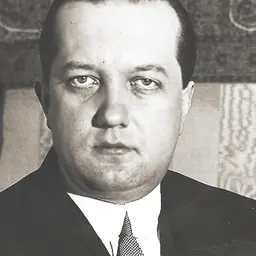
In January 1935, the German cruiser Emden visited Cape Town, South Africa's chief seaport, where the South African Defense minister Oswald Pirow arrived to welcome Karl Dönitz, the captain of the Emden, to South Africa. In a speech to the crew of the Emden, Pirow stated: "Germany as a civilised state, is one of the chief exponents of our Western culture, which can be maintained only by white peoples, and preserved only by the united co-operation of all. Today, more than ever, when the rising tide of the colored races is reaching higher and higher, the active help of a strong Germany is more than ever necessary. For us in South Africa the maintenance and spread of our white civilisation is a question of life and death. In this sense, I express the hope that Germany will again soon become a colonial power in Africa". Pirow's speech was ignored at first being only reported in the Cape Argus newspaper until the British journalist George Ward Price, the "extra-special correspondent" of the Daily Mail, brought it up in an interview with Adolf Hitler. In response, Hitler stated: "Until it has been confirmed I should not like to pass any opinion. I will only say that if South Africa or any other government would offer to give us back any of our colonies we would accept them willingly". At that point, the speech became the subject of much debate both within South Africa and in Great Britain, where it was felt to be an offer to return Southwest Africa (modern Namibia) to Germany.
In the British Foreign Office, it was believed that Hitler was "testing the weaker vessel first" as a gambit to force the British, the French and the Belgians to return the former German African colonies. Pirow denied in the South African parliament that the South African government was planning to return Southwest Africa. Pirow maintained that he was only expressing the wish that Germany have a colonial empire in Africa again. According to the British embassy in Berlin which had learned of the contents of a meeting between Johan Paul van Limburg Stirum, the Dutch minister plenipotentiary to Germany, and Gie, Pirow's speech was not an off-hand statement, but rather the beginning of a new policy as Hertzog felt that having Germany return as a colonial power in Africa was crucial "for the future safety of the white population". According to the source, Hertzog was planning to keep Southwest Africa and also felt that Britain should not return either Tanganyika (modern Tanzania) or Cameroon to Germany. However, the source reported that for Hertzog it would be "ideal" if Germany could take over the Portuguese colonies in Africa, and that it was in this sense that Pirow's speech should be understood.
On 22 October 1935, Gie wrote to the Secretary of External Affairs, Helgard Bodenstein, that the South African Legation in Berlin was being overwhelmed with German Jews seeking to immigrate to South Africa. Gie had an extremely negative view of the German Jews who were lining up in front of the legation on every weekday, writing to Bodenstein that he thought that most of them were Communists, and even those who were not he doubted would fit in very well into South Africa. Gie was in frequent contact with Eric Louw, the South African minister-plenipotentiary in Paris, who shared his antisemitism. In January 1936, Louw submitted to Hertzog a "Memorandum on European Emigration To South Africa" that was co-signed by himself; Gie; Charles te Water, the High Commissioner in London; Wilhelm Heymans, the minister-plenipotentiary in Rome; and Hermann van Broekhuizen, the minister-plenipotentiary in The Hague. The memo is more commonly known as the "te Water Memorandum" as te Water was the best known South African diplomat in the world at the time. The memo warned that South Africa was on the verge of receiving a massive number of European Jews, which the document stated were of "...a type in question that does not inspire confidence. Can South Africa without detriment and even danger to its national interests continue to allow its commerce and related vocations to be fed by recruits of this type from overseas?" The memo ended with the warning that continuing Jewish immigration would affect "the future racial, social and economic structures of White South Africa", and advised ending Jewish immigration at once.
In 1936, Gie took part in the celebrations of the 450th anniversary of Heidelberg university, representing both South Africa as the minister to Germany and representing Stellenbosch University as a noted alumni and former professor. The 1936 celebrations of the 450th anniversary of the founding of Heidelberg university in 1386 were highly controversial with all French universities; almost all British universities led by Oxford and Cambridge universities; and all Canadian universities boycotting the celebrations under the grounds that in Nazi Germany academic freedom did not exist. Most American universities boycotted the celebrations through Harvard, Yale, Cornell and Columbia universities all sent delegations led by their university presidents to praise the process of academic life at Heidelberg under the Nazi regime. The English language South African universities boycotted the celebrations at Heidelberg, but the Afrikaans language South African universities all sent delegations to take part in the celebrations. Gie's own remarks in praise of academic life at Heidelberg under the Third Reich were very controversial at the time and since.
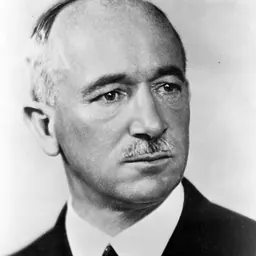
In August 1938, Gie reported to Pretoria that Germany only wanted autonomy for the Sudetenland and was not seeking to annex the Sudetenland. Gie stated if the Czechoslovak president Edvard Beneš was willing to accept the "Karlsbad programme" put forward by the Sudeten German leader Konrad Henlein on 24 April 1938 calling for a wide-ranging autonomy for the Sudetenland, the crisis would be settled. Gie stated it was his impression after talking to Hitler-whom he called the "Olympian Jove"-and his entourage that they did not want a war, but "they will, however, not stand for overmuch Czech intransigence. If the Czechs want a war, they'll get it". Only on 12 September 1938 in a speech to the Nazi Party Congress in Nuremberg did Hitler call for the Sudetenland to "go home to the Reich".
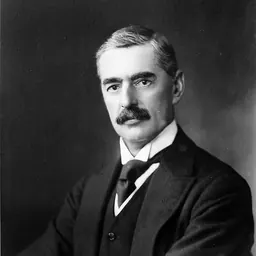
During the height of the Sudetenland crisis in September 1938, Gie depicted Hitler in the words of the Canadian historian Michael Graham Fry as "volatile, oratorically violent, risk acceptant, fanatically determined and difficult to predict". Gie felt that Hitler was only reacting to the system by the Treaty of Versailles, but warned it was quite possible that he would order an invasion of Czechoslovakia at any given moment. After the Munich Agreement of 30 September 1938, Gie believed that there was a real possibility of an Anglo-German understanding that might secure the peace of the world. Like te Water in London, Gie had hopes that Neville Chamberlain's plans for a four power pact consisting of Britain, France, Italy and Germany might be realised with the United Kingdom and the Reich as the senior members. Both Gie and te Water believed that such a four power directory would regulate European and African affairs and kept the dreaded Soviet Union, the nation that South African leaders feared the most, at bay. South African elites in common with elites throughout the Commonwealth had an intense fear of another Anglo-German war, believing that it would so weaken the two leading "white" powers that whoever was victorious would be so weakened as to be unable to resist the Soviet Union. In turn, the dominance of the Soviet Union would allow so-called "inferior races" to take over the world as Sir Nevile Henderson, the British ambassador to Germany, put it. Gie warned of dangerous forces at work in both Britain and Germany, one of them being "the Hitler of Godesburg and his Sportspalast speech". However, Gie wrote with the Munich Agreement ending the Sudetenland crisis there was nothing at present that would justify a war for the next "two years at least".
During the Danzig crisis, Gie largely supported the German viewpoint that the Free City of Danzig (modern Gdańsk, Poland) should be allowed to "go home to the Reich". In a dispatch to Herzog on 3 May 1939, Gie wrote that the German claim to Danzig was "just and right", and accused Poland of being the principle danger to the peace of the world. Gie also stated that he believed that Adolf Hitler did not intend to start a war, but that German public opinion might push him into a rash move, especially if the Poles continued to refuse to allow Danzig to rejoin Germany. The British Foreign Secretary Lord Halifax who had just read a briefing on the history of Danzig wrote after reading a dispatch from Gie passed on to him by te Water that Gie "should learn some history". Throughout the Danzig crisis, Gie was in close contact with Charles te Water, the South African High Commissioner in London as the two diplomats worked together to ensure South Africa would be neutral if the crisis led to war. Gie was one of the relatively few diplomats in Berlin with whom the British ambassador Sir Nevile Henderson associated with during the Danzig crisis. The other two diplomats whom Henderson often saw were the Belgian minister Vicomte Jacques Davignon and the Italian ambassador Baron Bernardo Attolico. Davignon, Attolico and Gie were all supporters of the line that the Free City of Danzig should be allowed to "go home to the Reich", which was also Henderson's long-standing belief. By contrast, Henderson avoided seeing very much of either the Polish ambassador Józef Lipski or the French ambassador Robert Coulondre, both of whom were stoutly opposed to allowing the Free City to rejoin Germany.
Gie very briefly served as the South African minister plenipotentiary to the Netherlands in 1939. From 1939 to 1944, he served as the South African minister plenipotentiary to Sweden and in 1944–1945, he served as the South African minister to the United States, where he died from a cerebral hemorrhage.
Don’t just read it —
keep it.
Full-length biographies made to live with: read them, listen on the way to work, watch them tonight.
- E-book
- Audio
- Video
Instant download · yours to keep · every purchase keeps this site free
Important facts
People in Stefanus François Naudé Gie's life
Named in this biography and alive at the same time




Related people
Same field, nearest in time

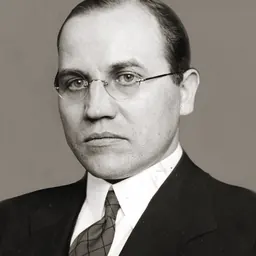
Contemporaries
People whose lives overlapped Stefanus François Naudé Gie's

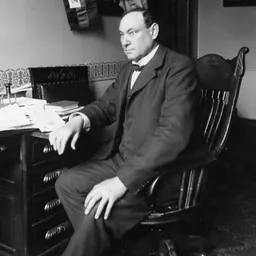
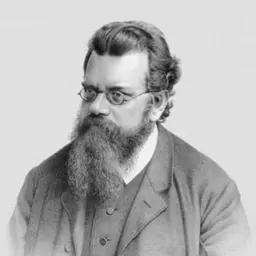


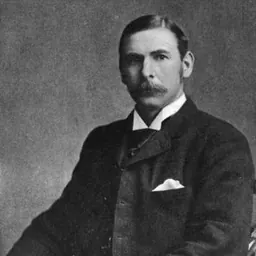
Frequently asked questions
Who was Stefanus François Naudé Gie?
South African diplomat and politician (1884-1945)
When was Stefanus François Naudé Gie born?
Stefanus François Naudé Gie was born on 13 July 1884 in Worcester.
When did Stefanus François Naudé Gie die?
Stefanus François Naudé Gie died on 10 April 1945 in United States of America, Washington D.C..
What was Stefanus François Naudé Gie's occupation?
Stefanus François Naudé Gie was a diplomat, politician, historian and writer.
What nationality was Stefanus François Naudé Gie?
Stefanus François Naudé Gie was South African.
Sources & further reading
· Wikipedia: Stefanus François Naudé Gie
Cite this page
APA: Biography.guide. (2026). Stefanus François Naudé Gie. https://biography.guide/stefanus-francois-naude-gie/
MLA: "Stefanus François Naudé Gie." Biography.guide, https://biography.guide/stefanus-francois-naude-gie/.
Chicago: "Stefanus François Naudé Gie." Biography.guide. https://biography.guide/stefanus-francois-naude-gie/.
Data last updated: 2026-09-22 · Spot an error? Report a correction.
Page generated 2026-09-27 05:27 UTC