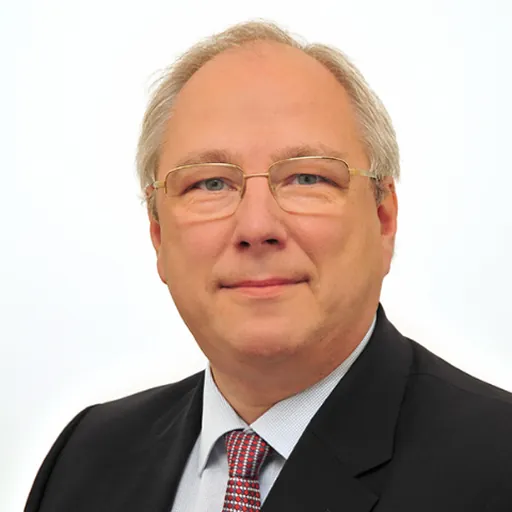
About Stefan D. Anker
Born 1965. Stefan D. Anker is a German cardiologist, researcher and physician, known for Anemia, Cachexia and Heart failure.
Stefan D. Anker is a German cardiologist who is Head of Field "Tissue Homeostasis and Cachexia" at Charité University, Berlin, Germany. Previously, he was Professor of Innovative Clinical Trials at University Medical Center Göttingen in Germany. The main focus of the Innovative Clinical Trials department was research in the field of chronic heart failure, including the development and clinical testing of new therapies. As a W3 professor, he ranks in the top 1% worldwide experts in cachexia, sarcopenia, weight loss, iron deficiencies and heart failure according to the ScienceLeadR platform. Research.com places Stefan Anker as 111th best medicine scientist globally and in 2nd position in Germany.
Education Anker studied medicine at Charité Medical School of Humboldt-University Berlin, Germany (1987-1993) , Australia, Poland and Italy.
His particular research interests include the pathophysiology and treatment of acute and chronic heart failure (CHF), cardiac device therapy, clinical evaluation of cardiovascular biomarkers, pathophysiology of muscle wasting, cachexia therapy in CHF, ageing, sarcopenia and cancer.
Anker serves on the editorial boards of European Heart Journal and European Journal of Heart Failure. He is founding Editor-in-Chief of the Journal of Cachexia, Sarcopenia and Muscle and of ESC Heart Failure, which is the first open access heart failure journal.
Anker has won two American Heart Association Young Investigator Awards and has obtained two National Institutes of Health (NIH) grants (Warfarin Versus Aspirin in Reduced Cardiac Ejection Fraction (WARCEF) Trial), two grants from the EU's Seventh Framework Programme for Research (FP7), and one Innovative Medicines Initiative / Horizon 2020 grant. Recently Anker 's research included the role of low-level microcurrent stimulation in heart failure.
Memberships Anker has been a member of the German Cardiac Society and of the European Society of Cardiology (ESC) since 1995. He was vice president of the ESC between 2016-18 in charge of 'National Cardiac Societies and Communications.' He has been serving on the board of the ESC since 2012. In addition, he has been serving on the board of the Heart Failure Association (HFA) of the ESC since 2006. He was HFA President between 2012 and 2014 and he chairs the HFA committee on regulatory affairs.
Anker is the founding president of the International Society on Sarcopenia, Cachexia and Wasting Disorders (SCWD).
Selected publications Anker has authored more than 1400 original papers, reviews, and editorials. Total citations exceed 200,000, including over 50 papers with more than 200 citations. He has an h-index of 200.
Anker SD, Butler J, Filippatos G, Ferreira JP et al; EMPEROR-Preserved Trial Investigators. Empagliflozin in Heart Failure with a Preserved Ejection Fraction. N Engl J Med. 2021 Oct 14;385(16):1451-1461. Anker SD, Friede T, von Bardeleben RS, Butler J, Khan MS, Diek M, et al; RESHAPE-HF2 Investigators. Transcatheter Valve Repair in Heart Failure with Moderate to Severe Mitral Regurgitation. N Engl J Med. 2024 Nov 14;391(19):1799-1809. doi: 10.1056/NEJMoa2314328. Stone GW, Lindenfeld J, Rodés-Cabau J, Anker SD, Zile MR, et al; RELIEVE-HF Investigators. Interatrial Shunt Treatment for Heart Failure: The Randomized RELIEVE-HF Trial. Circulation. 2024 Dec 10;150(24):1931-1943.
Consensus meetings and guidelines Anker has participated in and chaired several consensus meeting and guidelines committees: Co-chair, Consensus Group "The definition of Cachexia" (Evans et al., Clinical Nutrition 2008) AHA Consensus Group "State of the science: promoting self-care in persons with heart failure: a scientific statement from the American Heart Association." (Riegel et al., Circulation 2009) ADQI 7 Consensus Group "Cardio-Renal Syndromes" (Ronco et al., Eur Heart J 2010) Co-chair, Consensus Group "Endpoints for Cachexia Trials & Nutrition for Cachexia and Sarcopenia" (Morley et al., JAMDA 2010) Nutritional recommendations for the management of sarcopenia. Co-chair. (Morley el al., JAMDA 2010) "Definition and classification of cancer cachexia" (Fearon et al. Lancet Oncol 2011) ESC/HFA Guideline on Diagnosis & treatment of acute and chronic heart failure (McMurray et al., EHJ 2012) HFA/WGTE of ESC Consensus on thromboembolism & anti-thrombotic therapy in heart failure with sinus rhythm (Lip et al. Eur J HF 2012) ESH/ESC Guidelines for the management of arterial hypertension. Reviewer. (Mancia et al. EHJ 2013) ESC/EASD Guidelines on diabetes, pre-diabetes, and cardiovascular diseases. (Ryden et al. EHJ 2013) SC/ESA 2014 Guidelines on non-cardiac surgery: cardiovascular assessment and management. (Kristensen et al. EHJ 2014) Reporting on patient reported outcomes in cardiovascular trials – Position statement of the ESC cardiovascular round table. (Anker et al. EHJ 2014) ESC/HFA Guideline on Diagnosis & treatment of acute and chronic heart failure (Ponikowski et al., EHJ 2016)
Research Anker has been a member of more than 30 international clinical trial steering committees, chairing or co-chairing more than 10 (including the FAIR-HF, TIM-HF, BACH, AUGMENT-HF, ACT-ONE, RESHAPE-HF2, IMPULSE-HF, FAIR-HF2, Fair-HFpEF, and RELIEVE-HF trial ). He served in several data and safety monitoring boards (chairing five) and end-point committees (chairing three).
Honors and awards 2006: Samuel A. Levine Young Investigator Award (Clinical Cardiology) for the AHA for the paper: Okonko D, Poole-Wilson PA, Anker SD, Ponikowski P. Intravenous iron therapy in patients with chronic heart failure with and without anemia 2018: Copernicus Award from the Deutsche Forschungsgemeinschaft (DFG, German Research Foundation) and the Fundacja na rzecz Nauki Polskiej (FNP, Foundation for Polish Science) for services to German-Polish research collaboration 2020: Doctor honoris causa, Medical University of Wroclaw — Awarded in recognition of his decades of contributions to cardiovascular medicine and his longstanding research collaboration with Polish cardiologists , notably Prof. Piotr Ponikowski. 2021: Doctor honoris causa, Semmelweis University, Budapest — Awarded for his advancements in cardiology and long-standing partnerships with Hungarian physicians and researchers
Don’t just read it —
keep it.
Full-length biographies made to live with: read them, listen on the way to work, watch them tonight.
- E-book
- Audio
- Video
Instant download · yours to keep · every purchase keeps this site free
Important facts
People in Stefan D. Anker's life
Named in this biography and alive at the same time

Related people
Same field, nearest in time





Contemporaries
People whose lives overlapped Stefan D. Anker's

Frequently asked questions
Who is Stefan D. Anker?
German cardiologist
When was Stefan D. Anker born?
Stefan D. Anker was born in 1965 in Berlin.
What is Stefan D. Anker's occupation?
Stefan D. Anker is a cardiologist, researcher and physician.
What is Stefan D. Anker known for?
Stefan D. Anker is known for Anemia, Cachexia, Heart failure and Sarcopenia.
What nationality is Stefan D. Anker?
Stefan D. Anker is German.
Sources & further reading
Cite this page
APA: Biography.guide. (2026). Stefan D. Anker. https://biography.guide/stefan-d-anker/
MLA: "Stefan D. Anker." Biography.guide, https://biography.guide/stefan-d-anker/.
Chicago: "Stefan D. Anker." Biography.guide. https://biography.guide/stefan-d-anker/.
Data last updated: 2026-09-20 · Spot an error? Report a correction.
Page generated 2026-09-27 05:09 UTC