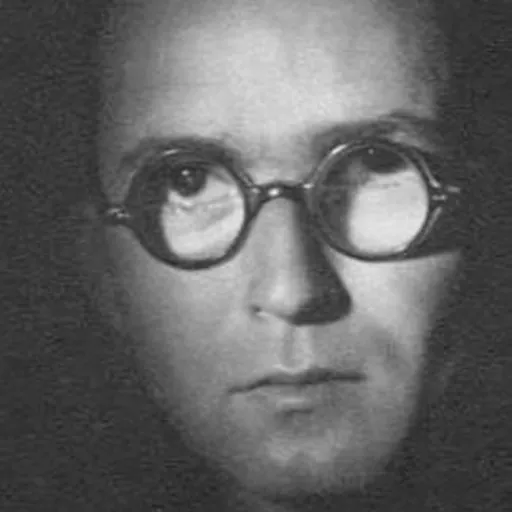
About Ștefan Baciu
Lived 1918 – 1993 (aged 74). Ștefan Baciu was a Romanian and Brazilian linguist, poet, diplomat, literary historian, translator and literary critic.
Ștefan Aurel Baciu (, ; October 29, 1918 – January 6, 1993) was a Romanian and Brazilian poet, novelist, publicist and academic who lived his later life in Hawaii. A precocious, award-winning, young author in interwar Romania, he was involved in editing several literary magazines. Attracted into left-wing democratic politics and the Social Democratic Party (PSDR), he camouflaged his views while working for the fascist press under dictatorial regimes, but returned in 1944 to manage the PSDR's Libertatea newspaper. Witnessing first-hand the gradual communist takeover, Baciu managed to have himself assigned to a diplomatic posting in Switzerland, and ultimately defected in 1948. A resident and then citizen of Brazil, and a traveler throughout Latin America, he wrote works in Portuguese, Spanish, English and German, as well as in his native Romanian.
Involved with the Congress for Cultural Freedom and a friend of independent socialists such as Juan Bosch, Baciu spoke out against South American communism and criticized Fidel Castro. He eventually moved to the United States, as a professor at the University of Washington, and, from 1964, the University of Hawaii. He put out the international magazine Mele, which, although rudimentarily printed and little circulated, remains a noted source of information about avant-garde writers of the Romanian diaspora, from Andrei Codrescu to Dolfi Trost and Sesto Pals. Baciu was also a preeminent historian and anthologist of South and Central American surrealism, as well as a translator of Latin American literature into Romanian and German.
Biography Early life Ștefan Baciu was born in Brașov, some months before the city became part of Greater Romania. His was a multicultural intellectual family. His father was the ethnic Romanian Ioan Baciu, a product of Austro-Hungarian schooling, was at the time a teacher of German at the Șaguna National College. He is remembered as the co-author of a pioneering introductory Romanian textbook for the benefit of Saxons and Hungarians. In 1930, he built for his family the "Yellow House" in Lunca Plăieșului residential property, which had recently been opened for settlement. Baciu's sister, Ioana Veronica, had a successful career in the theater. Raised Romanian Orthodox, and still a practicing believer in the 1960s, Baciu considered himself a "cosmopolitan" one.
Baciu was a precocious child. Bookish from an early age, despite being heavily myopic, he discovered Romanian and German poetic anthologies, including Kurt Pinthus' expressionistic chrestomathy, Menscheitsdämerung. In addition to German, he taught himself French, English, Spanish and Portuguese. he made friends with two of his teachers, writers Octav Șuluțiu and Emil Cioran.
Baciu made his editorial debut as a teenager, with German- and Romanian-language poems published in the local reviews Klingsor and Răboj. In September 1933, having been denied sponsorship of a literary magazine by Șaguna College, he set up his own, avant-garde sheet called Start. It was indebted to surrealist automatism and by André Gide's rebellious philosophy. He was presented with the company's own Young Writers Award and received the Romanian Writers' Society Poetry Prize. Also that year, he was included in the anthology 13 poeți, with Horia, Caledoniu, Constantin Virgil Gheorghiu, Simion Stolnicu, Dumitru Gherghinescu-Vania and various others.
Baciu had since enlisted at the University of Bucharest Faculty of Law, whence he graduated in 1941. Baciu had begun collaborating in the semi-official newspaper, Sfarmă-Piatră, published by the fascist sympathizer Nichifor Crainic. He had a literary history column, Cronici germane ("German Chronicles"), with which he aimed to popularize "that superb German Romanticism". He was in correspondence with a more senior poet, Emil Giurgiuca, offering to popularize Giurgiuca's work "in Sfarmă-Piatră or wherever".
Having openly supported the Iron Guard as a radical fascist alternative to the establishment, Sfarmă-Piatră was also falling into disfavor with the National Renaissance Front regime. Early in 1939, following bloody clashes between the Front and the Guardists, Sfarmă-Piatră was outlawed. Baciu moved to the more mainstream Universul, becoming its editor
During the early stages of World War II, Crainic gave Baciu the office of editorial secretary at Gândirea magazine, but sacked him upon finding out about his Social Democratic loyalties. According to communist sources, Baciu was himself an affiliate or sympathizer of the Iron Guard—a claim that has since been disputed; Baciu's PSDR membership and his mother's Jewishness disqualified him for such an enterprise. By his own account, Baciu was a malagambist, meaning that he followed the zoot-clad jazzman Sergiu Malagamba and had cosmopolitan, Americophile tastes. He did however befried the Guard's poet laureate, Radu Gyr, helping him publish in Gândirea even after the Guard's violent fall from grace in early 1941.
Upon his graduation, Baciu became translator for the Institute of Statistics (under Sabin Manuilă),
While at university, Baciu had met and fallen in love with Mira Simian (born 1920). The daughter of Dinu Simian, a National Peasants' Party politician from Vâlcea County, heir to a tanning and footwear-making empire, and his Polish wife, Mira attended the Bucharest Faculty of Letters, then worked as a pharmacist in Râmnicu Vâlcea. She married Baciu upon the war's end.
PSDR journalist, diplomat, defector The August 23, 1944 Coup unsealed Romania's alliance with Nazi Germany, and brought back democracy, but also signified the onset of Soviet occupation. Shortly after the legalization of political parties, Baciu became editor of the Social Democratic press organ Libertatea ("Liberty"). From October 1944 to December 1945, and Dolfi Trost.
With his party falling under the influence of Romanian Communists, Baciu remained close to the independent pro-Western wing, under Constantin Titel Petrescu. As he would note in 1992, Baciu had always been "an adept of democratic socialism". He referred to Petrescu as "the tocsin-sounder of the great perils that were knocking on our door, perils not just for the existence of social democracy, but also of Romania's very existence as a free democratic state".
Baciu described with alarm the rapid communization of his writer friends, recording Beniuc's enthusiasm at seeing liberal demonstrators being repressed with machine guns. He also witnessed the desperation of his friend Gyr, who attempted suicide in Râmnicu Vâlcea. At the time, Communist Party politicians tempted him with offers to become Prefect or theater manager. Baciu was present at the PSDR Congress of March 10, 1946, which resulted in the party's electoral alliance with the Communists. His testimony describes Petrescu's anti-fusion speech as the point of view of a "good and courageous Romanian". Baciu further recalls: "I walked [Petrescu] back to his home alongside some hundreds of partisans".
In October 1946, owing to his Social Democratic credentials, During the interval, Baciu was publishing essays and in Literarische Tat, In late 1952, alongside Faust Brădescu, he was editing Înșir-te Mărgărite, a magazine for the Romanian Brazilian community, which also reached Romanian communities from Argentina to Francoist Spain.
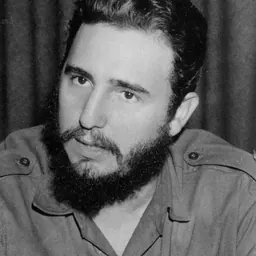
Also in 1953, Baciu was made editor of the foreign politics page at Carlos Lacerda's Tribuna da Imprensa. According to the Securitate, this was a "newspaper of the fascist kind". Meanwhile, Mira Baciu worked as a translator for the Deputies' Chamber. He prepared for publishing Cugler's Afară de unul singur, but the manuscript was lost in the process (although an earlier print was eventually recovered in 1998). Baciu also embarked on a mission to popularize Romanian avant-garde writers, publishing Spanish and Portuguese essays about Urmuz and Constant Tonegaru. Together with Salvadorean diplomat Rafael Barraza Monterrosa, the Bacius managed a Panhispanist association, called Ruy Barbosa Circle, building personal contacts with Juan Bosch, the exiled Dominican socialist, and Carlos Mérida, the Guatemalan painter. In 1956, he had an encounter with Cuban revolutionary Fidel Castro, and became a sympathizer of his 26th of July Movement. The organization was in part funded by the Central Intelligence Agency, through its Paris agent, John Hunt (with whom Baciu corresponded), and answered directly to the Spaniard Julián Gorkin. Baciu joined the staff of Cadernos as editor in chief (with Afrânio Coutinho as editorial manager) and was General Secretary of the CCF until August 1962; Mira was the Executive Secretary. Together with Bosch, he organized a negative campaign against the Republic of Cuba, but Bosch refused any explicit endorsement of Castro's guerrilla. In January 1959, following the success of the Cuban Revolution, Baciu was invited by the new government in Havana, to report on the work of the revolutionary tribunals. In 1960, he was awarded honorary citizenship of Rio. Meanwhile, Baciu's Romanian relatives were suffering under communist persecution. Dinu Simian was mistreated and tortured in Sighet prison, where he eventually died; Dinu's wife, Constanța, was also detained, and, upon her 1962 release, had to struggle to make ends meet. He rendered it even more explicit in the poem Eu nu îl cînt pe Che ("I Do Not Sing for Che"), known in Spanish as Yo no canto al Ché. This change of attitudes was radical, as Baciu moved to confront the communists directly, and, in his letters to Gorkin, stated his desire to purge the CCF itself of "camouflaged" Brazilian Communists. Such ideas alarmed the CIA, since they risked alienating the anticommunist left. John Hunt and Keith Botsford repeatedly asked Baciu to focus on anti-Casto, rather than "right-wing", propaganda (Hunt referred to Baciu as "a right-wing democratic socialist", a Betancourt associate, and a "maniac"). By then, the Brazilian CCF was vulnerable, its CIA connections brought up for public debate by communist intellectuals like Jorge Amado and Egídio Squeff. Although he did not formally adhere to any Romanian anticommunist organization, However, it was Baciu's extreme anticommunism that prompted Hunt to demand his resignation and appoint Vicente de Paulo Barretto as the new CCF General Secretary. Baciu later commented that the CCF had committed "suicide" by moderating its tone, noting that its "constructive dialogue with proven communists" was a moral victory for "Eurocommunism".
Between Seattle and Honolulu Baciu's Rio colleagues backed him in his bid for the Brazilian literature chair at the University of Washington. He obtained it, and moved to Seattle, where Mira began her own career as a Spanish-language teacher. However, Mira detested the Oceanic climate, and the couple was often taking trips back to Latin America. Afterwards, they also visited neighboring Haiti, The same year, Baciu published in Mexico City his poetic cycle Poemele poetului pribeag ("Poems of the Outcast Poet"). In 1967, the Bacius' home in Honolulu hosted Valeriu Anania, the writer and abbot of the Romanian Orthodox Church in America. A former Iron Guard man and prisoner of the communists, released with the spell of liberalization in 1964, Anania was treating his depression in Hawaii. He was putting to paper a novel and poetry that he had "written inside his brain" while in jail, and doing research into Hawaiian folklore. He was under contract with publishing houses in West Germany, such as Peter Hammer and Neues Leben, translating for them five volumes of poetry by Ernesto Cardenal. Baciu had begun a vast work of research into the history of Latin American avant-garde literature, and spent some time in Peru and Bolivia. By his own account, he interviewed "my great friend" Tristán Marof, Luis Alberto Sánchez, Javier Sologuren and Emilio Adolfo Westphalen, and helped rediscover the anticommunist surrealist Rafael Méndez Dorich. As noted by Sologuren, Baciu's studies also helped revive interest in the poetry of César Moro. In Argentina, Baciu befriended Aldo Pellegrini, who let him discover early avant-garde texts by Jorge Luis Borges and "the extraordinary" Antonio Porchia. Pellegrini also introduced him to Enrique Gómez Correa and the Chilean surrealist scene. Introduced to Jean Charlot by Mérida, Baciu researched the history of Mexican muralism, and discovered the proto-surrealism of José Guadalupe Posada. Baciu later exposed communist censorship, noting for instance the cuts that had been made into the published diaries of Șuluțiu, and the exclusion of concrete poetry from the Brazilian anthologies of Darie Novăceanu. As he put it, "I believe it a duty of the exile writer to defend the Romanian language from the 'party-minded' invasion of the mediocrities, the boot-lickers, the savvy ones and the profiteers, be they talented or talentless." Nevertheless, the new communist regime of Nicolae Ceaușescu made some efforts to appease Baciu and enlist him to write "propaganda for Romanian art and culture during the years of socialist consolidation",
In 1974, Baciu ultimately put out at SUNY Press an overall anthology of Latin American poetry (Antología de la poesía latinoamericana), and at Editorial Joaquín Mortiz, in Mexico City, a critical anthology of Latin American surrealism, Antología de la poesía surrealista latinoamericana. The latter book was enthusiastically reviewed in Plural magazine by the writer Octavio Paz, who noted that it was "indispensable" to the study of local surrealism and that it marked the "end of gossip" about the phenomenon. It is seen by literary historians as "orthodox" in comparison with Pellegrini's earlier chrestomathy. In 1975, he edited in Madrid posthumous reissue of Cugler's Vi-l prezint pe Țeavă.
Mira's death left Baciu in near-complete isolation from the Romanian-speaking public. As he later noted: "I literally have no one to whom I would read the things I write. There are at most ten Romanian speakers living in Honolulu and none of them, absolutely none, has ever been to a bookstore or a library to peek into, or to ask for, or to purchase a single book of poetry." A new volume of his memoirs saw print in Honolulu in 1980, as Praful de pe tobă ("The Dust on the Drum"). It was taped by Virgil Ierunca and serialized by Radio Free Europe (RFE), which broadcast clandestinely into Romania. In addition to putting out Mele and his own works therein, Baciu published the Spanish-language collection of his poetry, El que pierde gana ("He Who Loses Wins", UNAN, 1978) and Pasaporte y pãnuelo ("Passport and Handkerchief", Revista Conservadora del Pensamiento Centroamericano, 1982). He returned to Portuguese-language writing in 1982, with Carioca honorário ("An Honorary Carioca"), which came out in 1982 at Pernambuco's Edições Pirata, and Lavradio 98, a memoir of his work under Lacerda, at Editora Nova Fronteira of Rio. and a Heredia University biography of Francisco Amighetti. Baciu also tracked down and interviewed poet-draftsman Paul Păun, who, like Pals, moved from Romania to Israel. However, his friendship with Lucian Boz had deteriorated from 1978, when Mele hosted a piece by César Tiempo, seen by Boz as "ferociously antisemitic".
As remarked by Mateescu, in 1984 the correspondence was abruptly interrupted, "even though [Baciu], well informed about our country's realities, was prudent and restrained in his statements". A new edition of Praful de pe tobă saw print at Editura Eminescu in 1995. In 2006, when his Cetatea lui Bucur was reissued to critical acclaim, the "Yellow House" in Brașov was opened for the public as a Ștefan Baciu Memorial House, presently maintained by Brașov City Hall. ridiculed at the time by the mainstream review Viața Românească for its "jolly good" metaphors: "It tells us that hounds feed on warm meat and that legs will sing when they walk." In Poeme de dragoste, Streinu suggests, "the tone is youthful", but the subject matter is excessively lyrical and self-absorbed.
Returning to the avant-garde with Muzica sferelor, with its homages to unconventional heroes such as Urmuz and George Ciprian, Baciu wrote poems dedicated in part to each Latin American country he visited, and made unexpected connections between them and his native country. One such piece, honoring the Cuban dissident movement, reads:
Baciu's other poems include a set of pastiches and parody pieces, from Emil Botta, Lucian Blaga, Ion Barbu and Ion Vinea. They stand alongside satirical pieces targeting poets who had made compromises with the political system. In one such work, Baciu scolds Tudor Arghezi:
Don’t just read it —
keep it.
Full-length biographies made to live with: read them, listen on the way to work, watch them tonight.
- E-book
- Audio
- Video
Instant download · yours to keep · every purchase keeps this site free
Important facts
People in Ștefan Baciu's life
Named in this biography and alive at the same time





Related people
Same field, nearest in time


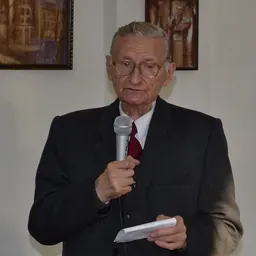

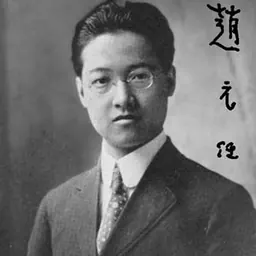
Contemporaries
People whose lives overlapped Ștefan Baciu's

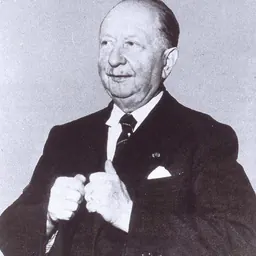
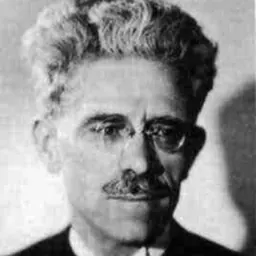

Frequently asked questions
Who was Ștefan Baciu?
Romanian and Brazilian writer (1918–1993)
When was Ștefan Baciu born?
Ștefan Baciu was born on 29 October 1918 in Brașov.
When did Ștefan Baciu die?
Ștefan Baciu died on 6 January 1993 in Honolulu.
What was Ștefan Baciu's occupation?
Ștefan Baciu was a linguist, poet, diplomat, literary historian, translator and literary critic.
What nationality was Ștefan Baciu?
Ștefan Baciu was Romanian and Brazilian.
Sources & further reading
Cite this page
APA: Biography.guide. (2026). Ștefan Baciu. https://biography.guide/stefan-baciu/
MLA: "Ștefan Baciu." Biography.guide, https://biography.guide/stefan-baciu/.
Chicago: "Ștefan Baciu." Biography.guide. https://biography.guide/stefan-baciu/.
Data last updated: 2026-09-22 · Spot an error? Report a correction.
Portrait: Wikimedia Commons · author & licence
Page generated 2026-09-27 05:03 UTC