
About Stanley Wilson
Lived 1915 – 1970 (aged 54). Stanley Wilson was an American composer, conductor, arrangement, conducting and music director.
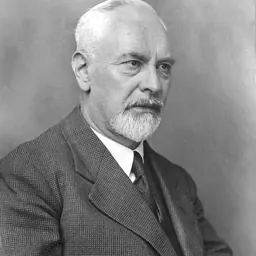
Stanley Wilson (November 25, 1917 – July 12, 1970) was an American musical conductor, arranger and film composer. Wilson was one of the most prolific collaborators in the Hollywood music industry for more than three decades. The creator of original themes and incidental music for several TV series, he also composed, arranged, or orchestrated more than 100 films. Wilson is considered "truly outstanding and most deservedly well loved of all the music directors".
Early life Stanley James Wilson was born on November 25, 1917, in Long Beach, New York, the youngest of Regina (née Reiman) and Philip Wilson's four children: Nancy, Ruth, Mitchell, Stanley. Wilson's father had emigrated from Russia, his mother emigrated from Vienna, Austria. Wilson's parents had a brief career in the Yiddish Shakespeare Theatre.
Wilson had his first trumpet recital at the age of five and was a trumpet player in a police band at 7.
Republic Studios Wilson wrote scores for countless B-movies and serials for the next twelve years. While at Republic, he provided the music support for classic serials as King of the Rocket Men and Zombies of the Stratosphere, as well in exciting adventures featuring western heroes as Rex Allen, Wild Bill Elliott, Allan Lane and Roy Rogers.
Television career Revue Studios In 1953, Wilson became the music supervisor of Revue Studios production unit. Wilson stayed on when it became Universal Studios. Quick turnarounds were a constant concern and a constant challenge. Goldsmith said “On Thriller, you’d get the show on Friday and have to record it Monday morning".
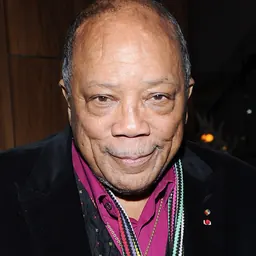
Universal Studios The composer John Williams remembered working for Wilson, saying "In 1960, at Universal Studios, (music supervisor) Stanley Wilson had a music department. In the hallway there, there were five or six rooms, little rooms with no windows. And each room had a little piano and on any given day I would be in one room, Jerry Goldsmith in the next one, Lalo Schifrin in the next one, Quincy Jones in the next one, Morty Stevens, also Conrad Salinger and the late Bernard Hermann, who made it his home for a couple of years and wrote some great music and drove everyone crazy. It was a situation where we taught each other and learned from each other and it was a group effort that produced the results that each one of us was able to accomplish.”
In 1964, MCA formed Universal City Studios, Inc., merging the motion pictures and television arms of Universal Pictures Company and Revue Productions.
Toward the end of his career with Universal, as head of creative activities of the Motion Picture and Television Music Department of Universal City Studios, he began to dedicate more of his own time to specific shows, composing themes and much of the background music for It Takes A Thief, The Bold Ones, Ironsides, Columbo, Marcus Welby MD, among others. In 1955, Wilson wrote an arrangement of Gounod's "Funeral March of a Marionette" as the theme music for Alfred Hitchcock Presents.
Wilson also was the music director for M Squad, the police series starring Lee Marvin, working in collaboration with Count Basie, Sonny Burke, Pete Carpenter, Benny Carter and John Williams. Wilson composed the theme music for the first season, winning the 1959 Grammy Award for the Best Soundtrack Album and Background Score from Motion Picture or Television. Wilson said at the time, "There is nothing new about jazz. But there is plenty new about using it to underscore exciting action on the TV screen. A show like M Squad is supposed to move; jazz moves. I feel we have the best marriage of drama and jazz music in show business".
For the second and third seasons, he entrusted Basie to compose a new theme. Wilson, along with Esquivel, composed the now famous Revue Studios/Universal Television fanfare, which lasted for nearly three decades.
Wilson traveled to France in 1963 to record the soundtrack to the television special, Princess Grace's Monaco. After the shooting was finished, he arranged and conducted The World of Sights and Sounds, Stop One: Paris, an album of French standards. This time Wilson was accompanied by a small jazz combo fronted by M Squad colleague and jazz legend, Benny Carter, and included a string section orchestra and a wordless vocal choir led by Michel Legrand's sister, Christiane.
In 1967 Wilson co-produced, with Robert Wagner, a documentary film of the International Music Festival in Rio de Janeiro, entitled The World Goes On. It was to be a pilot for the documentation of music festivals worldwide.
In 1969, Wilson collaborated with composer, arranger Oliver Nelson on the album, Black, Brown and Beautiful, described as, 'A stirring tribute to Dr. Martin Luther King that is as searching and angry as it is contemplative and compassionate'.
Death and legacy Wilson died of a heart attack in Aspen, Colorado, at the age of 52, moments after addressing the 1970 Aspen Music Festival on the subject of composing for films and television. He was survived by Gertrud, his wife of 29 years and their three children: Phyllis Wilson Paul (Westlake Village CA.), Philip Wilson (Kaneohe Hawaii), Peter Wilson.
In 2014 'Stanley Wilson Avenue' was named on the Universal City lot. It is at the location of Stanley's office. John Williams inscribed a commemorative plaque which is installed on Stanley Wilson Avenue to honor his mentor.
Selected filmography
Films The Kid from Cleveland (1949) Belle of Old Mexico (1950) Federal Agent at Large (1950) Gunmen of Abilene (1950) Tarnished (1950) Twilight in the Sierras (1950) Code of the Silver Sage (1950) Harbor of Missing Men (1950) The Arizona Cowboy (1950) Women from Headquarters (1950) Salt Lake Raiders (1950) The Invisible Monster (1950) The Showdown (1950) Cuban Fireball (1951) The Dakota Kid (1951) Havana Rose (1951) Insurance Investigator (1951) Missing Women (1951) Secrets of Monte Carlo (1951) Tropical Heat Wave (1952) The Fabulous Senorita (1952) Down Laredo Way (1953) Woman They Almost Lynched (1953) Missile Monsters (1958) The Killers (1964) Two Mules for Sister Sara (1970)
Serials Federal Agents vs. Underworld, Inc. (1949) King of the Rocket Men (1949) The James Brothers of Missouri (1949) Radar Patrol vs Spy King (1949) Desperadoes of the West (1950) Flying Disc Man from Mars (1950) Don Daredevil Rides Again (1951) Radar Men from the Moon (1952) Zombies of the Stratosphere (1952) Canadian Mounties vs. Atomic Invaders (1953) King of the Carnival (1955) Ghost of Zorro (1959)
TV shows The Adventures of Kit Carson (1951) Commando Cody: Sky Marshal of the Universe (1953) The Pepsi-Cola Playhouse (1955) The Millionaire (1955-1957) General Electric Theater (1956-1957) Tales of Wells Fargo (1957) Alfred Hitchcock Presents (1955-1957) M Squad (1957) Schlitz Playhouse of Stars (1957–1959) Leave It to Beaver (1957–1963) Wagon Train (1957–1961, 1963–1964) Cimarron City (1958–1959) Broken Arrow (1958) Buckskin (1958) Shotgun Slade (1959) Johnny Staccato (1959–1960) Markham (1959-1960) Riverboat (1959–1961) Laramie (1959-1962) Overland Trail (1960) Bachelor Father (1957–1961) Boris Karloff's Thriller (1960–1962) Checkmate (1960–1962) The New Bob Cummings Show (1961-1962) Ripcord (1961) 87th Precinct (1962) The Alfred Hitchcock Hour (1962–1965) The Jack Benny Program (1962–1965) McHale's Navy (1962–1966) The Virginian (1962–1970) Arrest and Trial (1963–1964) Kraft Suspense Theatre (1963–1965) The Munsters (1964–1966) Laredo (1965–1967) Run for Your Life (1965–1967) Pistols 'n' Petticoats (1966) Dragnet 1967 (1967-1969) Ironside (1967-1970) Adam-12 (1968-1969) It Takes a Thief (1968-1970) The Bold Ones: The Lawyers (1969-1970) The Bold Ones: The New Doctors (1969-1970) The Bold Ones: The Protectors (1969-1970) Marcus Welby, M.D. (1969-1970)
Discography Wilson rarely featured his talent on records, but today some of his albums are classics of space age pop and exotica audiences. This list include: Wagon Train (1957) The Music From M Squad (1959) Themes to Remember (1964) The Lost Man (The Original Soundtrack Album) (1960) Pagan Love (1961) The Great Waltz - American Continental (1961) The World of Sights and Sounds Stop One: Paris (1963)
As conductor With Quincy Jones The Lost Man (soundtrack) (Uni, 1969) With Oliver Nelson Black, Brown and Beautiful (Flying Dutchman, 1969)
Don’t just read it —
keep it.
Full-length biographies made to live with: read them, listen on the way to work, watch them tonight.
- E-book
- Audio
- Video
Instant download · yours to keep · every purchase keeps this site free
Important facts
People in Stanley Wilson's life
Named in this biography and alive at the same time






Related people
Same field, nearest in time



Contemporaries
People whose lives overlapped Stanley Wilson's



Frequently asked questions
Who was Stanley Wilson?
American composer (1915-1970)
When was Stanley Wilson born?
Stanley Wilson was born on 25 November 1915 in New York City.
When did Stanley Wilson die?
Stanley Wilson died on 12 July 1970 in Aspen.
What was Stanley Wilson's occupation?
Stanley Wilson was a composer, conductor, arrangement, conducting and music director.
What nationality was Stanley Wilson?
Stanley Wilson was American.
Sources & further reading
· DBpedia: Stanley Wilson (composer)
Cite this page
APA: Biography.guide. (2026). Stanley Wilson. https://biography.guide/stanley-wilson/
MLA: "Stanley Wilson." Biography.guide, https://biography.guide/stanley-wilson/.
Chicago: "Stanley Wilson." Biography.guide. https://biography.guide/stanley-wilson/.
Data last updated: 2026-09-20 · Spot an error? Report a correction.
Page generated 2026-09-27 05:19 UTC