
Stanley Orr
British aviator and flying ace of the Second World War
About Stanley Orr
Lived 1916 – 2003 (aged 86). Stanley Orr was a British aircraft pilot and vospers.
Stanley Gordon Orr, (28 September 1916 – 11 August 2003) was the highest scoring fighter ace of the Royal Navy during the Second World War. Flying with the Fleet Air Arm he was credited with the destruction of 17 aircraft. |group=nb The squadron was equipped with the Blackburn Skua and Blackburn Roc, another two seater fighter, and at the time was tasked with attacking German shipping and oil storage facilities in Norway. Later, the squadron was moved to RAF Detling, in Kent, to provide air cover for Operation Dynamo, the evacuation of the British Expeditionary Force from Dunkirk. In June, 806 Squadron was converted to fly the Fairey Fulmar, another two seater fighter, and was posted to the air group on the newly commissioned aircraft carrier .
Mediterranean
Illustrious left Scapa Flow in August and arrived in the Mediterranean by September. Orr became an ace in the following months, claiming seven aircraft shot down out of 30 claimed by his squadron. One of the first larger missions Orr took part in was providing the fighter cover for the Fairey Swordfish attack on the Italian fleet at Taranto. Other missions included attacks on German army positions at Bardia, bombing Tripoli in Libya, and attacks on the Rhodes airfields.
On 10 January 1941, Orr and Sub-Lieutenant Graham Hogg observed two Savoia-Marchetti SM.79s making a torpedo bombing run on Illustrious; after a long chase they managed to shoot one of them down. The Italian planes, however, had just been a diversion, because at the same time three squadrons of Junkers Ju 87 dive bombers from Sturzkampfgeschwader 1 and Sturzkampfgeschwader 2 arrived over the carrier. With Illustrious damaged and unable to land her remaining seven Fairey Fulmar fighters, the aircraft were ordered to land at RAF Hal Far on Malta.
From RAF Hal Far, 806 Naval Air Squadron provided air cover for Malta and Illustrious which was berthed in the Grand Harbour at Valletta, under repair. On 5 February Orr shot down a Junkers Ju 88 that was bombing the city. The damage to Illustrious could not be repaired at Malta so she was sent to the United States for repairs. Meanwhile, 806 Naval Air Squadron remained in the Mediterranean, joining another Illustrious-class aircraft carrier. When Formidable was put out of action by German Ju 87 dive bombers, 806 Naval Air Squadron was again sent to operate from land. This time they were based at the naval Dekheila Airfield near Alexandria in Egypt and, at the same time, were re-formed with Hawker Hurricane fighters. In June, the squadron took part in operations against the Vichy French in Palestine. #tag:ref|Orr liked the Hellcat and went on record stating: "The Hellcat was without doubt the best, and most popular, naval fighter of the period. It suffered none of the Corsair's stall and visibility problems, being an easy aircraft both to fly and to deck land. It bestowed upon its pilot immense confidence, which was an important thing in those days, as you usually had your hands full coping with the enemy!" The force included the fleet carriers and , which were tasked with carrying the main strike force of Fairey Barracudas and Vought F4U Corsairs, while the main fighter force was provided by the escort carriers Emperor, which was equipped with Grumman Hellcats, together with and , carrying Grumman Wildcats.
804 Squadron pilots planning the attack on the German battleship Tirpitz.
Orr, who was in command of the second strike group, remembered: "Upon arrival over Tirpitz it was found that the smoke screen generated by the Germans had ridden half way up the mountains on either side of the Kaafjord. Each flight attacked their pre-briefed gun sites once it was clear that no enemy fighters were in the area. The Hellcat proved itself to be an excellent gun platform on this mission." At the same time he also shared in the destruction of two Blohm & Voss BV 138 flying boats and two more Heinkel floatplanes, for which he was mentioned in despatches.
Later career In September 1944, Orr was posted to RNAS Henstridge as the chief flying instructor. Later he was transferred to Boscombe Down where he joined the Empire Test Pilot School. While undertaking this role, he gained experience flying jet fighters and four engined bombers. He then served as a Royal Navy test pilot for two years and a half years. During this time he was heavily involved with experiments landing tricycle-undercarriage jet aircraft on aircraft carriers, for which he was awarded the Air Force Cross. In 1953, Orr was posted to and on board her he saw operational service in the Korean War, attacking targets on the west coast of Korea. After this he returned to Boscombe Down as the commanding officer of the Naval Test Squadron, a role he undertook for three years. He was promoted to commander and his squadron was awarded the Boyd Trophy after being judged the most efficient squadron in the Fleet Air Arm. Orr's final appointment was in command the Inter service Hovercraft Trials Unit based at Lee-on-Solent. During his service Orr flew over 100 different aircraft and retired from the Royal Navy in 1966.
Upon leaving the service, Orr joined Vospers as their marine superintendent and became involved in their development of fast patrol boats. Five years later he left Vospers and became a commercial agent for a number of engineering firms. In 1999, Orr's wife, Myra, died. Orr died four years later on 11 August 2003. He was survived by two sons.
Don’t just read it —
keep it.
Full-length biographies made to live with: read them, listen on the way to work, watch them tonight.
- E-book
- Audio
- Video
Instant download · yours to keep · every purchase keeps this site free
Important facts
People in Stanley Orr's life
Named in this biography and alive at the same time


Related people
Same field, nearest in time
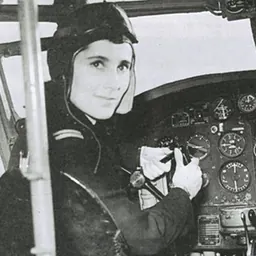



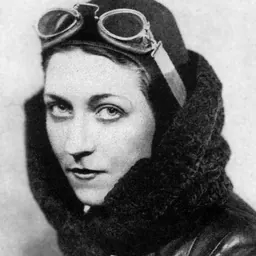

Contemporaries
People whose lives overlapped Stanley Orr's



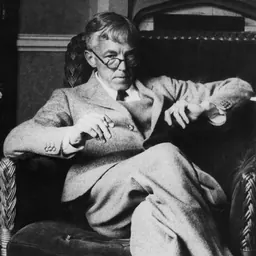
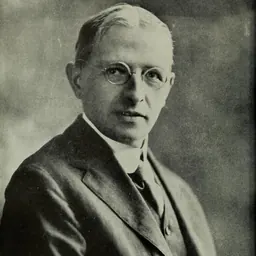
Frequently asked questions
Who was Stanley Orr?
British aviator and flying ace of the Second World War (1916-2003)
When was Stanley Orr born?
Stanley Orr was born on 28 September 1916 in London.
When did Stanley Orr die?
Stanley Orr died on 11 August 2003 in Fareham.
What was Stanley Orr's occupation?
Stanley Orr was an aircraft pilot and vospers.
What nationality was Stanley Orr?
Stanley Orr was British.
Sources & further reading
Cite this page
APA: Biography.guide. (2026). Stanley Orr. https://biography.guide/stanley-orr/
MLA: "Stanley Orr." Biography.guide, https://biography.guide/stanley-orr/.
Chicago: "Stanley Orr." Biography.guide. https://biography.guide/stanley-orr/.
Data last updated: 2026-09-20 · Spot an error? Report a correction.
Page generated 2026-09-27 05:12 UTC