
Stanley Anderson
British engraver, etcher and watercolour painter
About Stanley Anderson
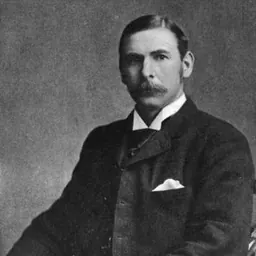
Lived 1884 – 1966 (aged 81–82). Stanley Anderson was a British painter, printmaker, visual artist, graphic artist, draftsperson and etcher.
Alfred Charles Stanley Anderson (11 May 1884 – 4 March 1966) was a British engraver, etcher and watercolour painter. Anderson was principally known for the series of highly detailed engravings of traditional British crafts that he completed over a twenty-year period beginning in 1933.
Early life and education Anderson was born in Bristol on 11 May 1884, the son of Alfred Ernest Anderson, a silver engraver.
Marriage Anderson married Lillian Phelps in 1910. They had children, Ivan (1911) and Maxim (1914–1959). Maxim became a documentary director and producer. From 1930 to 1952 he was a member of the Engraving Faculty at the British School at Rome. He participated in the Venice Biennale as a main artist in 1928 and as part of group shows in 1924, 1926, 1928, 1930 and 1938. By-Products (1922), in the tramp-like figures lounging in The National Gallery (1925), and in the flute playing busker in Pan in Fulham (1932).
In What a piece of work is Man (1936), Anderson deployed ironic humour in commenting on Hamlet's musing about the nature of man. The scene depicts two men having a discussion in a library reading room, where newspapers may be consulted for nothing by those that cannot afford to buy their own copy. The woman behind them has a hole in the heel of her stocking.
The stands on which the newspapers are displayed have the labels Weekly Blurb, Fleet St. Slush and Frycassee. One has the headline "Art Today by Blurbert Wede" in mocking reference to Sir Herbert Read, the influential critic of the day and his book Art Now (1933). On the facing page is an image of a child's stick drawing, referring to Read's interest in the art of children, and a crude Picassoesque portrait. Both reflect Anderson's disdain for modern tendencies in art and ask whether such things can even be art. The newspaper on the right has an article titled "Hollywood Divorce" on one page and a picture feature titled "CIVILIZATION!" on the other. This page includes images of weapons of war, people in gas-masks, a bishop blessing soldiers, a worker and a top-hatted boss on their knees praying before machinery in the shape of a £ sign, and a march of the unemployed.
In The Wayfarer (1941) three men sit at a pub table drinking beer. One is evidently a gentleman of the road. On the wall behind them a small poster advertises the performance of "Cinema Dope for Machine Slaves".
Country crafts series In 1933, Anderson bought a cottage ("Old Timbers") in Towersey, near Thame, Oxfordshire, and began producing the engravings of country crafts for which he is best known. Each was based on detailed preliminary sketches and sold in a limited edition of around 40 or 60, at the Royal Academy or other exhibitions. In many cases, background biographical information is known about the craftsmen featured and their tools and techniques. Anderson often knew them personally and saw them as his equals. His depictions are of real people carrying out their day-to-day work with the actual tools they used.
The Lacemaker, for instance, was based on studies of Dorcas Ing (aged 87 at the time) of Long Crendon near Thame made in 1939. Ing had died by the time the engraving was published the following year. She was the only woman featured in the series, though not the only woman in Anderson's work generally. By 1939, the hand making of lace, once common in the village, was very much in decline.
Exhibitions The exhibition, An Abiding Standard: The Prints of Stanley Anderson RA, curated by Professor Robert Meyrick and Dr Harry Heuser ran at the Royal Academy of Arts, London, 25 February – 24 May 2015.
Papers Material relating to Stanley Anderson may be found in the James Laver and Harold Wright collections at the University of Glasgow. James Laver (1899–1975) was a writer and art critic and a keeper at the Victoria and Albert Museum. Harold Wright (1885–1961) was a print dealer with Colnaghi & Co.
Don’t just read it —
keep it.
Full-length biographies made to live with: read them, listen on the way to work, watch them tonight.
- E-book
- Audio
- Video
Instant download · yours to keep · every purchase keeps this site free
Important facts
People in Stanley Anderson's life
Named in this biography and alive at the same time





Related people
Same field, nearest in time



Contemporaries
People whose lives overlapped Stanley Anderson's


Frequently asked questions
Who was Stanley Anderson?
British engraver, etcher and watercolour painter (1884–1966)
When was Stanley Anderson born?
Stanley Anderson was born in 1884 in Bristol.
When did Stanley Anderson die?
Stanley Anderson died in 1966 in Chearsley.
What was Stanley Anderson's occupation?
Stanley Anderson was a painter, printmaker, visual artist, graphic artist, draftsperson and etcher.
What nationality was Stanley Anderson?
Stanley Anderson was British.
Sources & further reading
· DBpedia: Stanley Anderson (artist)
Cite this page
APA: Biography.guide. (2026). Stanley Anderson. https://biography.guide/stanley-anderson/
MLA: "Stanley Anderson." Biography.guide, https://biography.guide/stanley-anderson/.
Chicago: "Stanley Anderson." Biography.guide. https://biography.guide/stanley-anderson/.
Data last updated: 2026-09-24 · Spot an error? Report a correction.
Page generated 2026-09-27 05:02 UTC