
About Stanislav Krakov
Lived 1895 – 1968 (aged 73). Stanislav Krakov was a Serbian journalist, film director, writer and military officer.
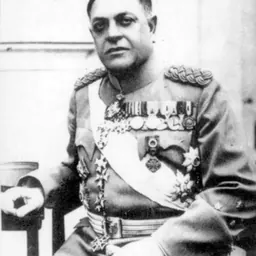
Stanislav Krakov (; 1895–1968) was a Serbian officer, Chetnik guerrilla, journalist, writer and film director. He participated in the Balkan Wars and First World War. During the Second World War, he supported his maternal uncle, General Milan Nedić, and was the editor of Nedić's newspapers Novo vreme and Obnova.
Early life Krakov was born in Kragujevac, Kingdom of Serbia. His father, Sigismund, was a doctor of Polish origin, and his mother Persida was a granddaughter of Nikola Stanojević, a lord from Zeoke and nephew of voivode Stanoje Mijailović, who was killed during the First Serbian Uprising.
Military service Not being able to enroll in the regular army, since he was only 17 years old, he joined the volunteer guard of Vojvoda Vuk, a Chetnik unit, in the war against the Ottoman Empire in 1912. The following year he was back on the frontline of the Serbian defence, this time against Bulgaria, where he was wounded near Kriva Palanka. In 1915 he participated in many battles, survived the Serbian army's retreat through Albania, and was one of the first who reached the top of the impregnable Kajmakčalan. In 1937 Krakov became chief of Propaganda for Zbor thanks to Dimitrije Ljotić and subsequently, the editor-in-chief of the pro-Nazi Obnova newspaper, hailing from Belgrade.
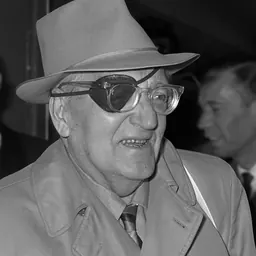
Literary and film career After the First World War, from 1919 to 1931, he published prose in almost all newspapers and magazines in Serbia. He wrote novels: "Kroz buru" (1921), "Krila" (1922), travel guide "Kroz južnu Srbiju" (1926), memoirs "Naše poslednje pobede" (1928), a book of short stories "Crveni pjero". When it comes to historical-fiction works, he wrote "Plamen četništva" (1930), "Prestolonaslednik Petar" (1933) and "General Milan Nedić" (1963-1968). "Život čoveka na Balkanu" ("Life of the Man from the Balkans") was his autobiography. He was editor of "Politika" and "Vreme", and CEO of Radio Belgrade (1940-1941). While working for Vreme magazine, Krakov traveled to Fritz Lang's house in 1932 and interviewed him. During the Second World War he supported his uncle, General Milan Nedić, and the rest of his life he spent in exile. He died in Switzerland.
In his autobiography "Život čoveka na Balkanu" ("Life of a Man from the Balkans"), which was published posthumously, Stanislav wrote: I felt all the high points of success and all the bitterness and humiliation when you reach the bottom of human society. If the adventure is always an unexpected twist, always a surprise, most commonly a danger, usually a dazzling success, and even more hursh fall, then I lived a crazy, often brilliant and painful adventure of my time and my native soil...
Don’t just read it —
keep it.
Full-length biographies made to live with: read them, listen on the way to work, watch them tonight.
- E-book
- Audio
- Video
Instant download · yours to keep · every purchase keeps this site free
Important facts
People in Stanislav Krakov's life
Named in this biography and alive at the same time

Related people
Same field, nearest in time




Contemporaries
People whose lives overlapped Stanislav Krakov's
Frequently asked questions
Who was Stanislav Krakov?
Serbian soldier and writer
When was Stanislav Krakov born?
Stanislav Krakov was born on 29 March 1895 in Kragujevac.
When did Stanislav Krakov die?
Stanislav Krakov died on 15 December 1968 in Geneva.
What was Stanislav Krakov's occupation?
Stanislav Krakov was a journalist, film director, writer and military officer.
What nationality was Stanislav Krakov?
Stanislav Krakov was Serbian.
Sources & further reading
Cite this page
APA: Biography.guide. (2026). Stanislav Krakov. https://biography.guide/stanislav-krakov/
MLA: "Stanislav Krakov." Biography.guide, https://biography.guide/stanislav-krakov/.
Chicago: "Stanislav Krakov." Biography.guide. https://biography.guide/stanislav-krakov/.
Data last updated: 2026-09-20 · Spot an error? Report a correction.
Page generated 2026-09-27 05:30 UTC