
About St George Daly
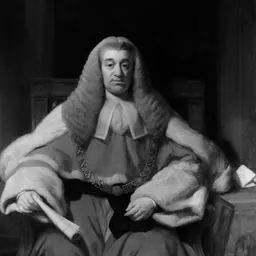
Lived 1758 – 1829 (aged 70–71). St George Daly was a judge, politician and barrister.
St George Daly (1758 – December 1829) was an Irish judge, who had a reputation for ignorance of the law. He owed his career advancement entirely to his support for the Act of Union 1801, which did nothing to enhance his standing in the legal profession.
Background He was the fifth son of James Daly MP, of Carrownakelly and Dunsandle, by his second wife Catherine Gore, daughter of Sir Ralph Gore, 4th Baronet and Elizabeth Ashe, daughter of St George Ashe, Bishop of Derry and Jane St. George. He was educated at Trinity College, Dublin, entered Lincoln's Inn, and was called to the Irish Bar in 1783. Galway's representation was reduced to one. The other MP, George Ponsonby, resigned, leaving Daly as the sole MP. He became Prime Serjeant-at-law in 1799, much against the wishes of the legal profession, who had greatly admired his predecessor James Fitzgerald (1742-1835); Fitzgerald had been dismissed for opposing the Union. He was appointed to the Irish Privy Council on 16 December 1800. He was the first MP for Galway Borough in the new House of Commons of the United Kingdom but vacated his seat on 21 February 1801 on appointment as a Baron of the Court of Exchequer (Ireland); John Brabazon Ponsonby was elected to succeed him on 10 March. On 3 November 1803 he transferred from the Court of Exchequer to the Court of King's Bench (Ireland), serving until his resignation in 1822. He was one of the judges at the trials following the Robert Emmet Rebellion in 1803. He presided in 1817 at the trial of the eccentric writer Roger O'Connor for highway robbery and is said to have pressed hard for an acquittal. O'Connor was duly found not guilty, though public suspicion about his guilt never died.
Reputation The reputation of the Irish Bench in the years after the Act of Union was very low: several High Court judges, including Daly, were universally believed to owe their elevation solely to their support for the Union, and his appointment was badly received by the legal profession. It was said of Daly that, while he had been a good student, and was reasonably well-read, he had never held even a dozen briefs in his whole career, and that barristers mocked his ignorance of the law in open court. He did at least come from a family with a tradition of judicial service: his great-grandfather, the first Denis Daly, had been a judge of the Court of Common Pleas (Ireland) during the reign of James II. He was also a man of blameless life, though retiring in disposition and generally unpopular.
Family He lived at Eyrecourt in County Galway. In 1803 he married his cousin Louisa, daughter of Richard Gore of Sandymount, County Wicklow and Martha Fiott, but had no children. She died in 1816
Don’t just read it —
keep it.
Full-length biographies made to live with: read them, listen on the way to work, watch them tonight.
- E-book
- Audio
- Video
Instant download · yours to keep · every purchase keeps this site free
Important facts
People in St George Daly's life
Named in this biography and alive at the same time


Related people
Same field, nearest in time
Contemporaries
People whose lives overlapped St George Daly's





Frequently asked questions
Who was St George Daly?
British politician
When was St George Daly born?
St George Daly was born in 1758.
When did St George Daly die?
St George Daly died in 1829.
What was St George Daly's occupation?
St George Daly was a judge, politician and barrister.
Sources & further reading
Cite this page
APA: Biography.guide. (2026). St George Daly. https://biography.guide/st-george-daly/
MLA: "St George Daly." Biography.guide, https://biography.guide/st-george-daly/.
Chicago: "St George Daly." Biography.guide. https://biography.guide/st-george-daly/.
Data last updated: 2026-09-20 · Spot an error? Report a correction.
Page generated 2026-09-27 05:18 UTC