
About Spiro Gulabchev
Lived 1856 – 1918 (aged 61–62). Spiro Gulabchev was a Bulgarian revolutionary and politician.
Spiro Konstantinov Gulabchev (12 June 1856 – January 1918) was a Bulgarian anarchist known for leading the siromahomilstvo movement, a Bulgarian left-wing, populist, and Russian nihilist movement that sought to create a society which protected the poorest among them. An avid opponent of inequality, and holding communitarian beliefs, Gulabchev organized educational associations and activities for the poor in multiple towns as clubs and libraries, through which he actively advocated for revolutionary action. In late 1880s, the siromakhomilstvo split between anarchism and socialism, with Gulabchev advocating for the former. In 1892, he formed an anarchist study group in Ruse.
Early life alt=Gulabchev's father; he holds a stick and a necklace of beads. He is wearing traditional Orthodox Christian clothing. Spiro Gulabchev was born on 12 June 1856 in Florina (known as Lerin in Bulgarian), the Ottoman Empire (today in Greece), to Catherine Gulabchev and Konstantin, a priest who was active in the Bulgarian Revival movement and headed a church of the Bulgarian Exarchate in Lerin. He was educated at a primary and secondary level in Constantinople, Edirne, and Plovdiv, throughout which his peers included Dimitar Blagoev, whom Gulabchev would later oppose.
In 1870 Gulabchev found work as a teacher in the village of Gorno Nevolyani, where he introduced the monitorial system of education. He initially taught in both Greek and Bulgarian but, by his second year, had begun to teach entirely in Bulgarian, providing his students with Bulgarian textbooks and teaching them to read and write.
Gulabchev was a favourite of both students and parents, but as news began to spread of his father's schismatic leanings (and as the Bulgarian Schism was reaching its climax), Gulabchev was pushed out of Gorno Nevolyani. In autumn of 1871 he left for Plovdiv to see a relative, Panaret Plovdivski.
While studying in Kiev, Gulabchev was exposed to the agrarian socialist and populist movements that had begun to emerge within the Russian intelligentsia; in particular, he came under the influence of the ideas of "popular enlightenment" proposed by the Narodniks and the conspiratorial revolutionary socialist methods of Narodnaya Volya. He was also impressed by the liberal values of the Enlightenment and the federalist beliefs of the Ukrainian academic Mykhailo Drahomanov. Gulabchev came to believe that in order to build a socially just society, populist ideas would have to be spread through a "book" movement in the Balkans; specifically, he focused his attention on the Bulgarian student diaspora, working to establish a network of "readers' friendly societies", which he also called "readers' fellowships" or simply "fellowships". Gulabchev planned to spread such fellowships internationally, covering all countries with a Bulgarian student population, with these fellowships being subordinate to a central fellowship in Kiev. He hoped that these cohesive student groups would produce propaganda when they returned to Bulgaria. but the state prosecutor was hesitant to bring a foreign citizen to trial. He was afterwards transferred to First Boy's Public School in Varna, where he had established the "Kapka" educational society the year before. By 1889 he was teaching in Veliko Tarnovo.
While he taught, Gulabchev continued to develop the political ideas he had been influenced by in Russia. His "readers' fellowships" continued to appear throughout Bulgarian cities and began attempts to build a more cohesive ideology; Gulabchev grew a movement, the siromakhomilstvo, around the belief that the poorest (siromasi) ought to be protected and shown love and mercy – contemporary Bulgarian histiography described the movement as a populist and Russian nihilist movement. The siromakhomilstvo condemned social inequalities and actively advocated for revolutionary action among the poor through events organised in clubs and libraries. Like many similar movements throughout the period, Gulabchev decried luxury, fashion, and other aesthetic focuses on the grounds that they were an affront to the poor. For similar reasons, he criticized government spending on higher education while the majority didn't have access to secondary education, but also emphasised the importance of solidarity between the intelligentsia and the impoverished. He employed populist techniques to demonstrate this solidarity, such as forbidding his immediate followers from wearing ties, which he felt were a symbol of alienation between the intellectual class and the common people.
Siromakhomilstvo groups communicated through ciphers after 1891, which had become popular among socialist organisations.
Gulabchev's image of an ideal future, which he referred to as 'primitively-communist', struggled to gain significant attention outside of the intelligentsia; by the late 1880s the siromakhomilstvo movement split off into anarchist, state socialist, and Marxist movements, with Gulabchev supporting anarchism.
In 1892 he founded the first anarchist group in Ruse, where members studied the works of Mikhail Bakunin and Peter Kropotkin. In response to a 1909 international anarchist congress, Gulabchev was involved in an unsuccessful campaign to organise anarchist groups in Bulgaria on a national level.
Footnotes
Don’t just read it —
keep it.
Full-length biographies made to live with: read them, listen on the way to work, watch them tonight.
- E-book
- Audio
- Video
Instant download · yours to keep · every purchase keeps this site free
Important facts
People in Spiro Gulabchev's life
Named in this biography and alive at the same time

Related people
Same field, nearest in time

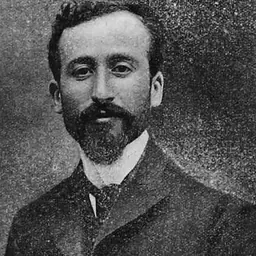

Contemporaries
People whose lives overlapped Spiro Gulabchev's
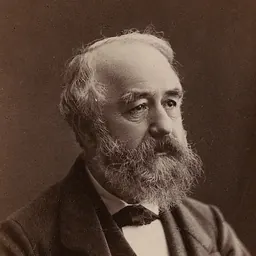





Frequently asked questions
Who was Spiro Gulabchev?
Bulgarian public figure
When was Spiro Gulabchev born?
Spiro Gulabchev was born on 12 June 1856 in Florina.
When did Spiro Gulabchev die?
Spiro Gulabchev died in 1918 in Sofia.
What was Spiro Gulabchev's occupation?
Spiro Gulabchev was a revolutionary and politician.
What nationality was Spiro Gulabchev?
Spiro Gulabchev was Bulgarian.
Sources & further reading
Cite this page
APA: Biography.guide. (2026). Spiro Gulabchev. https://biography.guide/spiro-gulabchev/
MLA: "Spiro Gulabchev." Biography.guide, https://biography.guide/spiro-gulabchev/.
Chicago: "Spiro Gulabchev." Biography.guide. https://biography.guide/spiro-gulabchev/.
Data last updated: 2026-09-20 · Spot an error? Report a correction.
Page generated 2026-09-27 05:19 UTC